Kyle Patrick Camilleri
Friday, 8 May 2026, 16:13
Last update: about 18 minutes ago

The Office of the Commissioner for Children has published its ‘Manifesto for Children 2026,’ a statement said.
This publication’s timing, amidst the general election campaign, was drafted “to ensure that political parties give due priority to children’s rights and include concrete measures conducive to their rights in their electoral proposals.”
The manifesto features proposals for eight separate ministries, namely the ministries responsible for employment, education, health, local government, social policy (which also covers children’s rights), the digital environment, foreign affairs, as well as the Office of the Prime Minister.
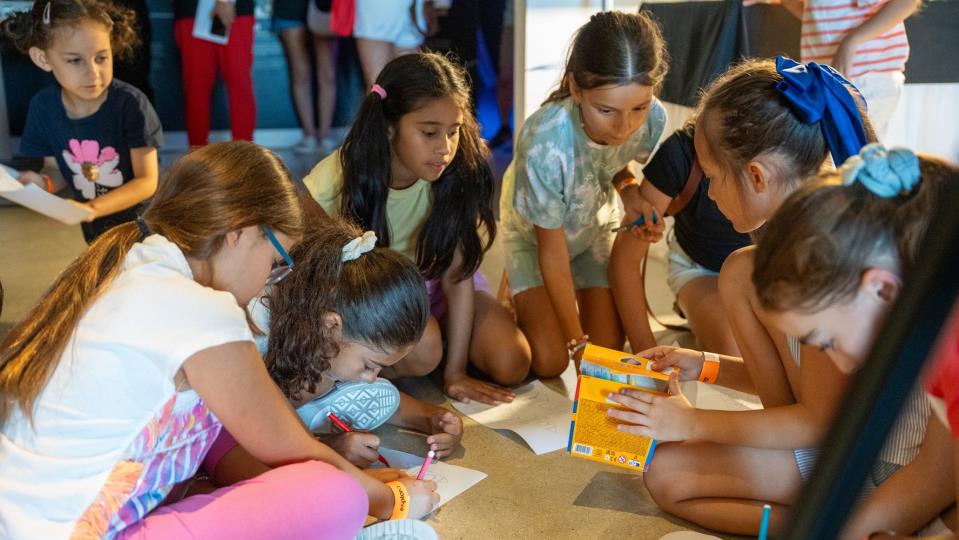
The report, entitled “Not Just Words” was drafted alongside the Children’s Advisory Board (CAB) (a board made up of 12 youths aged 12-17 years old) and was written following several focus groups at schools across Malta and Gozo, a two-day meeting with the European Network of Young Advisors (ENYA), two summer live-ins, and an online questionnaire.
The Office said that this manifesto is “of children, by children, for children.”
“As the country approaches the upcoming election, the Office of the Commissioner for Children reminds all political parties and candidates of their responsibility to safeguard the rights and wellbeing of children involved in political campaigns and public activities,” the Commission said Friday.
Children called for more accountability for those in politics, including the politicians in office.
They also wish for Malta to become “less chaotic and more efficient in its public services.”
Consulted children were very vocal on environmental issues, and for the Ministry for Environment, “children could not have said it more clearly and convincingly,” the report reads.
“They want to live in an environment that is much more alive, with the beauty of nature than with the dull sound and sight of cranes and construction sites. The delicate balance between the economy on one side, and heritage and the natural environment on the other side has tipped too far to the former side,” the manifesto said.
It mentioned that the time has come to “restore this balance and ensure sustainable development by heeding children’s call to preserve the natural and historical environment in Malta, let it thrive and make it more accessible.”
These adolescents and teenagers called for more plants and trees being planted in towns and villages, “especially in-built environments where they are most lacking.”
The report said that children want to see better protection of natural spaces and historical structures from vandalism, better integration of these two elements into new buildings, less trees felled, and less water being wasted.
Another demand was stronger investment in local agriculture.
It also called for “more and better measures to reduce the volume of polluting vehicles and industrial activity by making their cleaner alternatives, notably electric cars, more affordable and, as in the case of bikes, more available, through more and better bike lanes.”
Children also mentioned that they want to see more waste generated by households and businesses being reused, reduced, and recycled via phasing out plastic and more separation of waste, rather than see rubbish being littered.
A recurring point by children consulted were the dangers of doomscrolling and the importance to have “a healthier and more child-friendly physical outdoor environment” to help youths maintain the right balance between the real world and the digital world.
The manifesto noted that children are aware of the dangers of the online world, how AI can make threats more serious and insidious, and the rising presence of AI-generated virtual partners is disguising society’s growing loneliness phenomenon.
To protect themselves from online threats, children called for stronger mechanisms, Â notably through age verification for applications, parental controls on devices, better reporting on social media platforms, and privacy controls.
They also called for more positive content to be distributed online, like age-appropriate games, online support channels, and task managers.
Children in the report said that they did not feel safe moving around and playing in the towns and villages in which they live, and resultantly called for more local autonomy to allow for local governments to take, road safety, for example, more seriously.
They also said that they would love to walk to and back from school or the playground, though are put off by the dangers of roads around these areas.
Children hence advocated for safer roads via better upkeep, improved signage including zebra crossings, more “traffic-calming devices” such as sleeping policemen near schools and playgrounds, and stronger police presence in these areas.
The report said that children feel unsafe walking around their locality as well as within playgrounds.
It said that children complained that playgrounds are “poorly maintained, poorly secured and surveyed, poorly designed for them to enjoy themselves in a safe manner, are often damaged from misuse by older children, who have no other place to hang around in, and in some cases poorly sited.”
Within schools, young students appealed for better ventilation and the installation of air conditioners in all classrooms, as well as investment in more comfortable chairs in classrooms. They also expressed their desire for lessons to impart more practical skills.
Regarding the relatively new student-based assessments (SBAs), children criticised the “lack of coordination between teachers of different subjects” in its implementation.
Relating to education, young students noted that since they need to choose their academic and occupational pathway in their mid-teens, they would like to be presented with a clearer picture of career opportunities that these pathways could lead them to.
Hence, they want “more efficient and early career exposure,” singling out jobs in science, IT and AI, and healthcare as “jobs of the future.”
Finally, a salient point requested by children was more quality time with their parents.
The manifesto requested more maternity and paternity leave during children’s early development and better work-life balance throughout their children’s lives.
“There cannot be quality time for meaningful child-parent interaction if there is little or no free time for either parents or children,” the report said.
Children also stressed for parents to exercise more discipline on limiting their screen time to ensure that children get enough sleep, noting that “when there is too much free time or too little of it, children said they end up depriving themselves of sleep in order to play online games.”
Among several proposals related to the health sector, youths proposed introducing regulation on energy drinks for those aged 16 and over.
Overpopulation was a point of concern voiced by youth across the country, as were illegal activity and gang violences in places young people hang out.
For the latter, they called for more CCTV surveillance, community police, and other measures to discourage such activity and catch perpetrators.
Children also made strong calls for efforts that protect them against sexual abuse and exploitation, such as by bolstering prevention efforts, early recognition, re-offence prevention through offenders’ rehabilitation, and victim support.
The Office of the Commissioner for Children said that the messages within this report consolidate “everything” that it, the CAB, and many other children told the Commissioner for Children, Antoinette Vassallo, over the last scholastic year.
In its statement, the Office called for all political parties to shoulder the responsibility to safeguard children’s rights and wellbeing whenever they feature in political campaigns and activities.
It advocated for parties to accomplish this by adopting appropriate measures for children’s protection; ensuring prior informed consent from them and parents; assessing the potential impact of their participation; and protecting them from unnecessary exposure or harm.
“Remember that our best interests should be your primary concern. Take us seriously: listen and act!” the children involved in the drafting of the report said.
The full report can be found here.