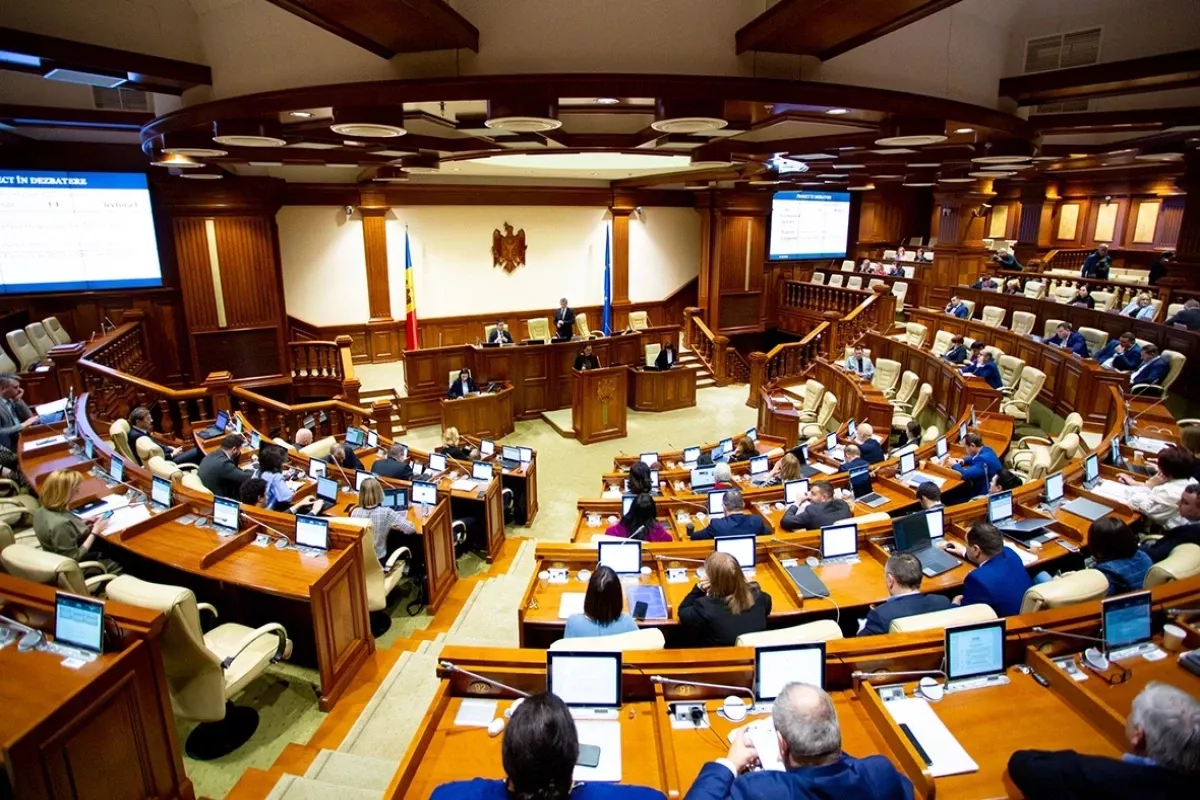
Moldova’s parliament has approved new procedural rules limiting the use of the Russian language in the chamber, prompting pro-Russian and right-wing opposition lawmakers to stage a walkout.
The legislature, controlled by the ruling “Party of Action and Solidarity” of pro-EU President Maia Sandu, introduced measures placing time limits on speeches and formally establishing Romanian as the parliament’s working language, as reported by Russian-language media outlets.
Russian had previously been treated as an “inter-ethnic� language, with parliamentary documents routinely translated.
Constantin Staris, a member of the communist opposition, argued that the new regulations weakened the legitimacy of parliament.
“Under this logic, the next step would be for the Party of Action and Solidarity to cancel elections,” he said on May 7, referring to the governing PAS party.
Alexandru Versinin of the right-wing “Democracy at Home” party also criticized the restrictions, claiming they undermined democratic norms.
“Today, they are shutting our mouths. Tomorrow they will decide which journalists can or cannot ask questions,” he said
Following the remarks, Parliament Speaker Igor Grosu ruled Versinin out of order for what he described as “rudeness,� prompting opposition lawmakers to leave the chamber in protest.
Romanian is constitutionally recognized as Moldova’s sole state language and has become increasingly dominant among younger generations seeking closer integration with European Union institutions. However, Russian remains spoken across the country, as can also be seen in several other former Soviet states, while it is also being used in the media.
In a 2024 referendum, Moldovan voters narrowly backed future EU membership, with Sandu aiming for accession by 2030.
Russia has previously accused Sandu’s administration of fueling anti-Russian sentiment through its pro-European policies.
By Nazrin Sadigova