Thank you for opening your Chartbook email.
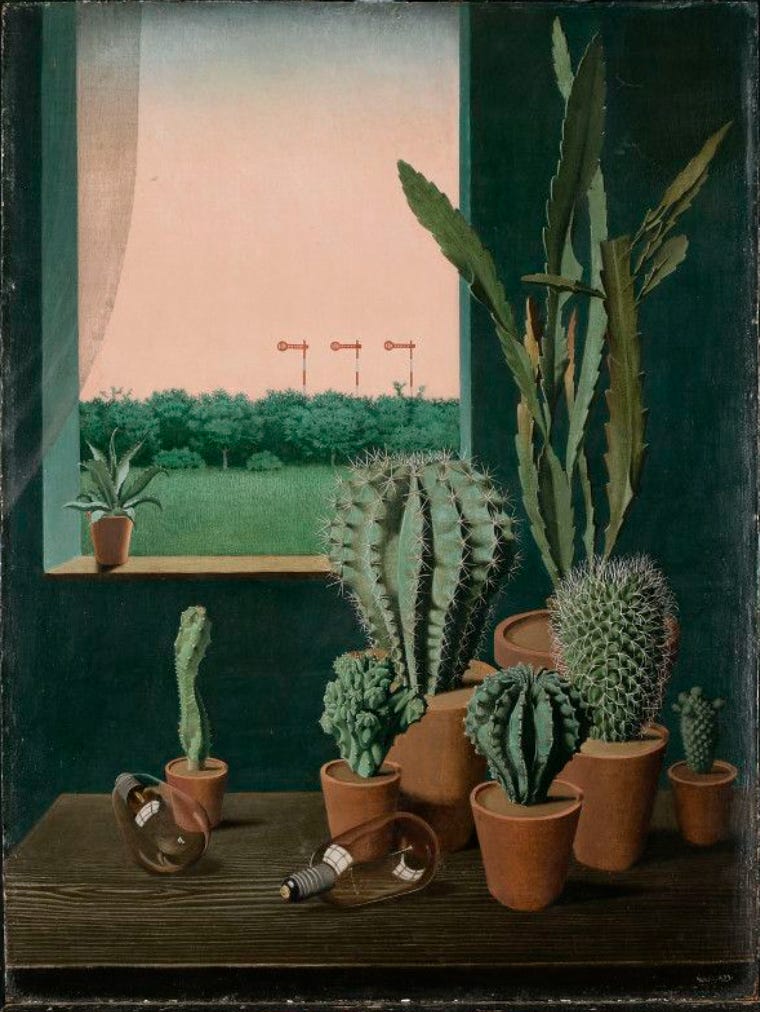
Georg Scholz, Kakteen und Semaphore, 1923
The US federal government payroll is now at levels last seen in 1966 when the population was 150 m smaller and the economy was one quarter its current size.
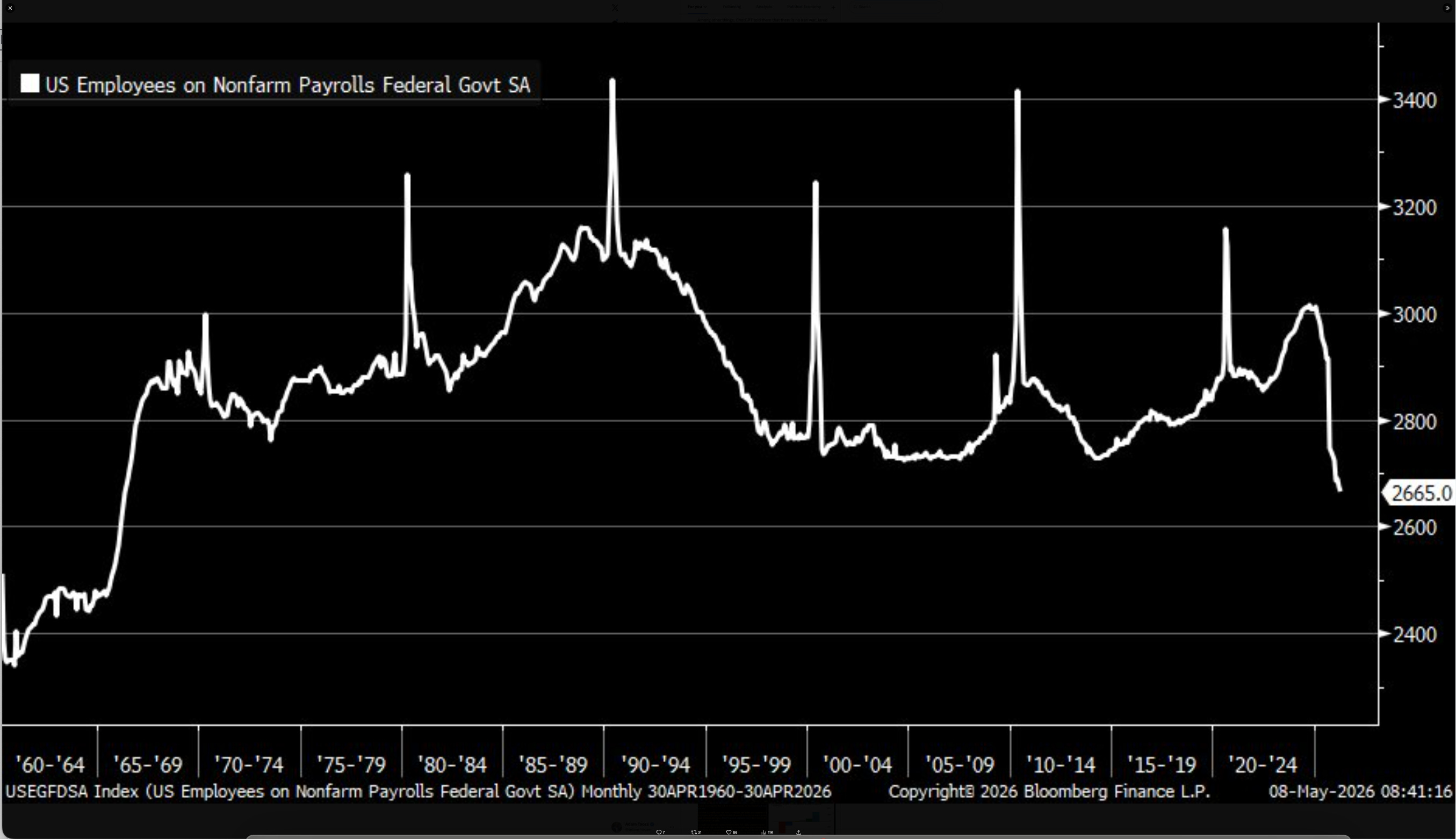
Source: H/t Kevin Gordon (Schwab)
One aspect of “economic strength� that is not often mentioned with regard to Europe, is its formidable net creditor position in international investments.
Since 2019 there has been a 15 point divergence in the real effective exchange rates of the US and China.
A bit odd that strong evidence of convergence is producing consternation amongst Europe-watchers!

Benjamin Wolf 🇺🇦@benbawan
This chart is making the rounds.
But the values for 2000 don’t really chime with actual IMF (PPP) data – and a solid comparison is 2025 (not forecasts for 2030).
So I made my own chart with more reliable numbers from the @IMFNews.
Looks different, doesn’t it?


Jesús Fernández-Villaverde @JesusFerna7026
I rarely post on Europe because @lugaricano always has better takes than mine. It is hard to be the second act!
His post this morning:
https://t.co/Q9ZpUTpDmM
on the two Europes is particularly striking. Figure 1, which I reproduce here, is something European policymakers
5:21 PM · May 7, 2026 · 7.19K Views
8 Replies · 17 Reposts · 54 Likes
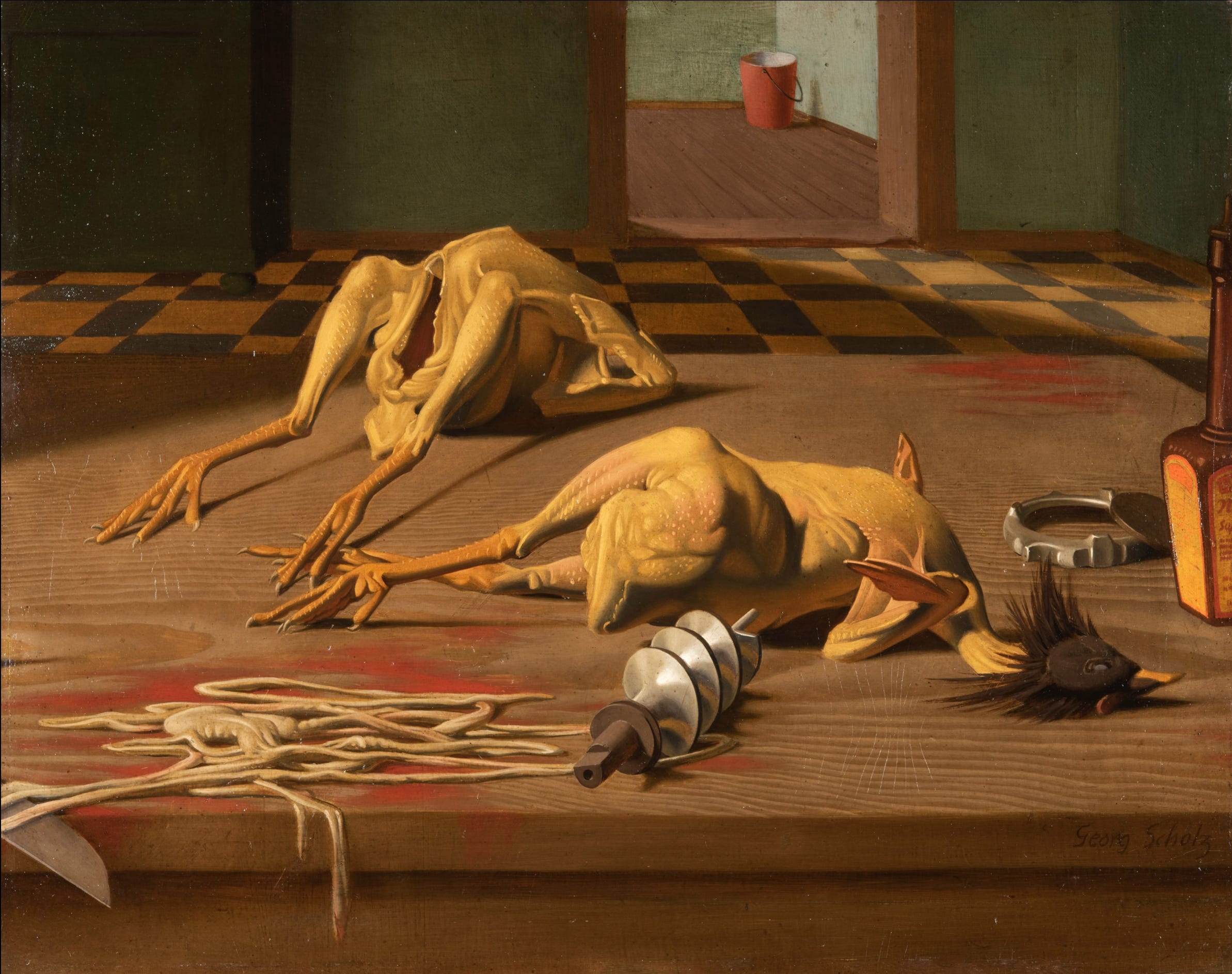
Georg Scholz, Dead Chickens, 1926
HEY READERS,
THANK YOU for opening the Chartbook email. I hope it brightens your day.
I enjoy putting out the newsletter, but tbh, what keeps this flow going is the generosity of those readers who clicked the subscription button.

If you are persuaded to click, please consider the annual subscription of $50. It is both better value for you and a much better deal for me, as it involves only one credit card charge. Why feed the payments companies if we don’t have to.
Norway’s Cod Alliance with Russia
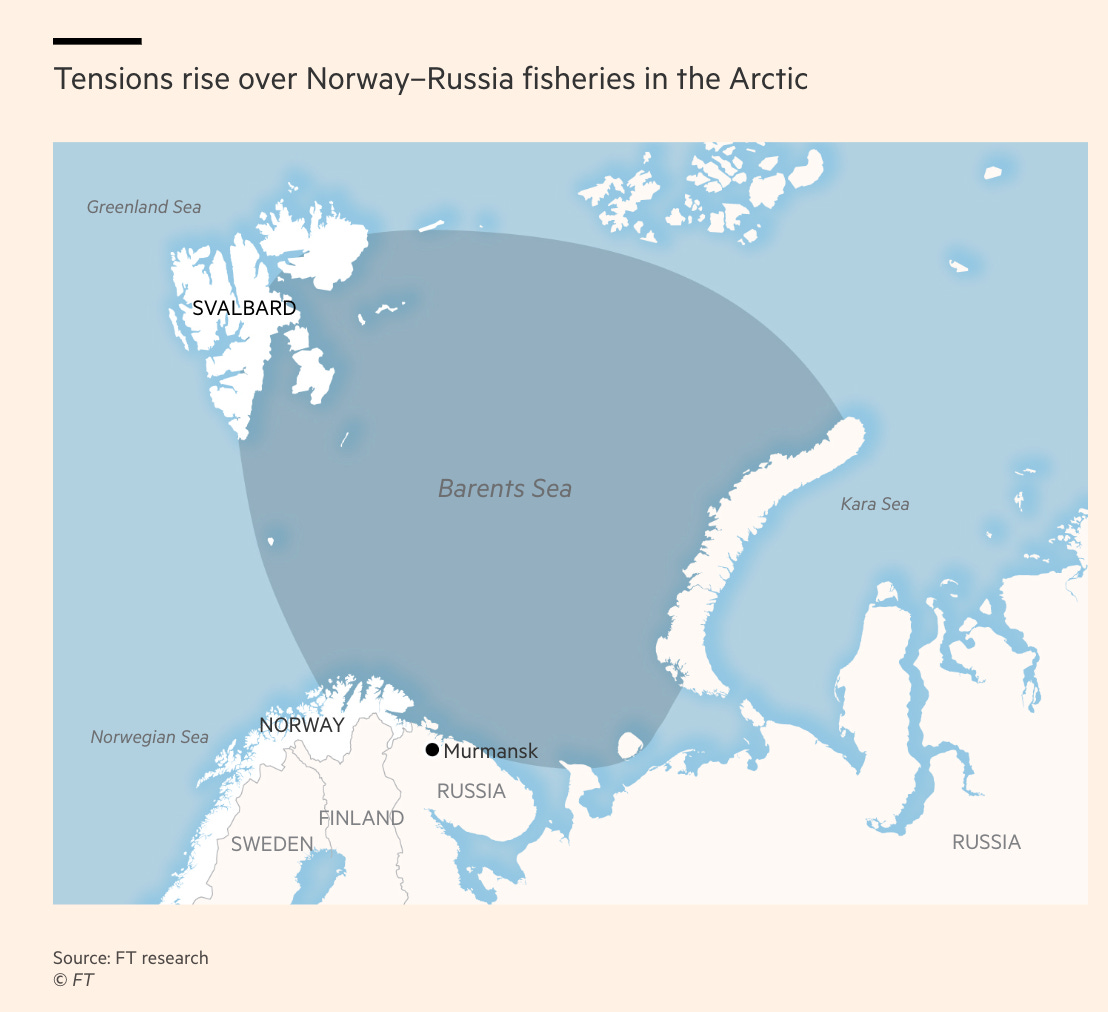
European capitals are growing alarmed over Norway’s cod alliance with Russia, fearing a continued fisheries co-operation in the Arctic might raise security risks for the continent. The Barents Sea, between Norway and Russia in the Arctic, is home to the world’s largest cod stock as well as a locus for some of Moscow’s efforts to map and disrupt Europe’s critical infrastructure. Yet Oslo has continued to co-operate with Moscow over management of the Barents Sea’s fisheries under a formal 1975 pact widely seen by scientists as essential to prevent overfishing. Much of the stock grows in waters under Russian jurisdiction before migrating westwards to spawn in Norwegian zones, making joint management lucrative for both nations. Cod and other seafood that landed in Norwegian ports generated roughly $2bn last year, according to Norges Råfisklag, a seafood sales organisation. … The EU is updating its Arctic strategy to address security challenges, including hybrid threats and protection of critical infrastructure such as undersea cables. But diplomats say the issue is rarely discussed openly, given Europe’s reliance on Norway for energy following Russia’s full-scale invasion of Ukraine and the Middle East war. “It is a very, very sensitive topic,� said one northern European diplomat. “It is raised at lower levels but doesn’t enter the political level . . . too many countries are dependent on Norway’s energy supplies.�
Source: Financial Times
Tishoumaren (ⵜⵉⵛⵓⵎⴰⵔⴻ� in Neo-Tifinagh script) or assouf, internationally known as desert blues, is a style of music from the Sahara region of northern and west Africa.
Critics describe the music as a fusion of blues and rock music with Tuareg, Malian or North African music.[2] Various other terms are used to describe it[1] including desert rock, Saharan rock,[3] Takamba,[2] Mali blues,[4] Tuareg rock[5] or simply “guitar music�.[6] The style has been pioneered by Tuareg musicians in the Sahara region, particularly in Mali, Niger, Libya, Algeria, Burkina Faso and others; with it also being developed by Sahrawi artists in Western Sahara.[7] The musical style took shape as an expression of the culture of the traditionally nomadic Tuareg people, amid their difficult sociopolitical situation, including rebellions, widespread displacement and exile in post-colonial Africa.[7] The word Tishoumaren is derived from the French word chômeur, meaning “the unemployed�.[1]
The genre was first pioneered by and popularized outside of Africa by Ali Farka Touré and later Tinariwen. In recent years, artists like Mdou Moctar and Bombino have continued to adapt Saharan rock music and have achieved international success. The Tuareg people live in a region of North and West Africa that covers large portions of the Sahara across the modern-day national boundaries of Mali, Algeria, Niger, Libya, and Chad, and to a lesser extent, reaching into Burkina Faso and Nigeria. They had been nomadic pastoralists involved in trans-Saharan trade for many hundreds of years. At the turn of the 20th century, the Tuareg were subjected to French colonial rule, after a lengthy resistance movement and defeated rebellion. With the departure of colonial powers in the 1950s and 1960s, the lands inhabited by the Tuareg population were split primarily between the six new countries of Mali, Algeria, Niger, Libya, Burkina Faso and Chad, making them ethnic minorities across the region.
For the next few decades, natural resources diminished due to increasing desertification and the Tuareg minorities have since been involved in a series of conflicts and rebellions, creating hardship for the survival of Tuareg people and their culture. In 1973, a major drought forced many of the Tamasheq-speaking people throughout the deserts to reconsider their traditional way of life as nomadic herders. Many took refuge in urban centers across the region, but with many lacking formal education, the Tamasheq were largely unemployed. The term ishumar began to be used describing young Tamasheq. A unique culture began to arise among many of the economically and politically marginalized youths, sometimes rebellious or revolutionary in nature, reasserting a cultural pride.[citation needed] Many young men, including future members of Tinariwen, took employment in a Tamasheq military unit being assembled by Libyan military leader Muammar al-Gaddafi.[10] Besides receiving military training and weapons in the Gaddafi-sponsored camps, many of the young Tamasheq men were also exposed to revolutionary ideas, pan-Africanism, and popular music.
In the decades to follow, the Tamasheq were involved in extended episodes of violence and rebellion against the various governments in the region, both as victim and perpetrator. The stories of socio-political unrest have been relayed through music, contributing to and partially shaping the Tamasheq people’s culture and ideals. The music of the young, uprooted men who often wandered from town to town was guitar-driven, first acoustic and then electric. These were the men referred to as ishumar, a term derived from the French word chômeur, a term for an unemployed person.[11]
The originators of the musical genre were Tinariwen, a group of musicians within camps sponsored by Gaddafi who formed their group in 1979.[1] Tinariwen was the first Tamasheq group to feature electric guitars; they are considered the originator of the style. During rebellion against the government of Mali, Tinariwen’s music was spread via audio cassette through the camps. … Songs are generally sung in Tamasheq language.[10][16] Lyrics have been described as being rooted in traditional Tuareg poetry, with topics including rebellion, war and beauty, and often mention the Sahara desert itself.[1] Homesickness and longing for maintaining Tuareg traditions in the face of exile is also explored. Musically, the tende drum and three-stringed teherdent Malian lute are the roots of the style. Chaabi music of the Maghreb is another influence.[1] Many Saharan rock musicians have cited Jimi Hendrix as a key influence, including Mdou Moctar, who has been described as the “Hendrix of the Sahara�.[16][17]
Staying at home
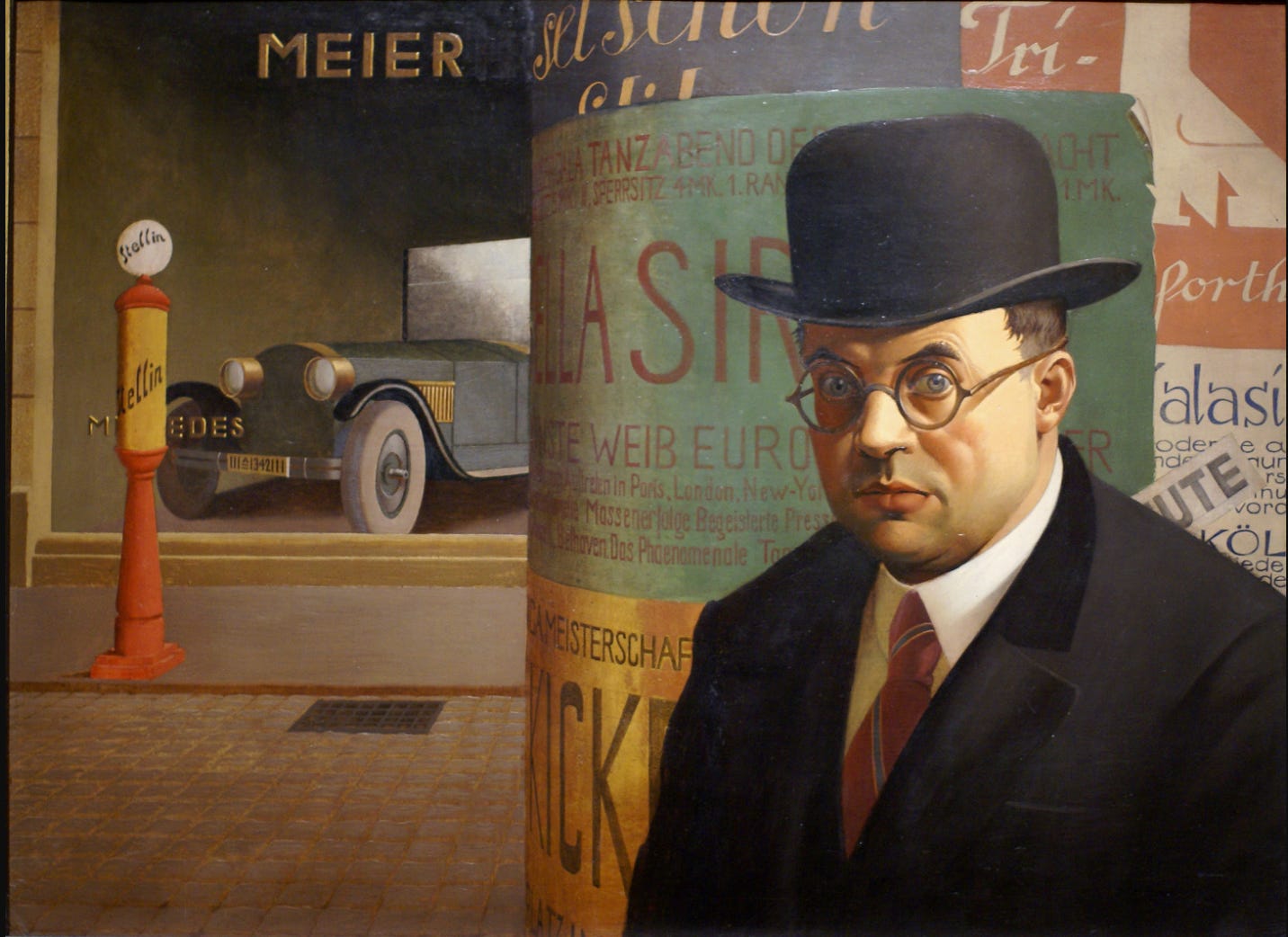
Georg Scholz, Selbstporträt vor der Litfaßsäule, 1926