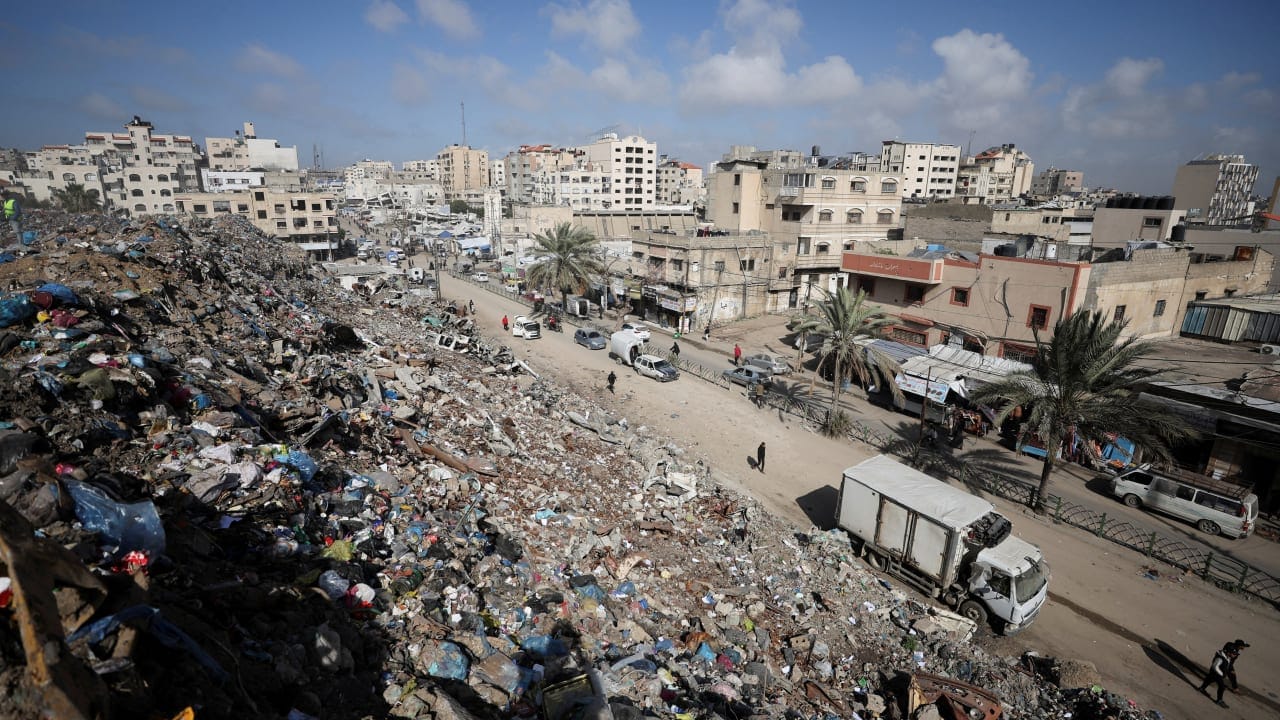
Palestinians living in both the West Bank and Gaza are becoming increasingly supportive of a two-state solution, according to a poll published in April by the independent nonprofit think tank the People’s Company for Polls and Survey Research (PCPSR).
The data, based on face-to-face interviews conducted with 1,655 Palestinians across the West Bank, Gaza, and east Jerusalem from October 8 until October 26, 2025, found that support for a Jewish and Palestinian state rose by 10 points in Gaza based on a comparison of data collected two years prior. The margin of error was ±3%.
A majority (64%) of the 855 participants in Gaza answered that they supported a two-state solution, while 56% of the 800 asked in the West Bank responded the same. Only 6% of all the Palestinians asked said they wanted to see a single state, with 12% envisioning a confederation, 16% another solution, and 5% unsure entirely.
The most favorable solution to the Israeli-Palestinian conflict remains a division of land based on the 1967 borders. Despite this, 47% of respondents (57% from the West Bank and 31% from Gaza) said they would strongly oppose Arab-Israeli normalization even if a Palestinian state was established along the aforementioned borders with east Jerusalem named as Palestine’s capital. An additional 18% of Gazans and 11% of West Bank-based Palestinians said they would somewhat oppose normalization in such circumstances.
Palestinians in Gaza remain more supportive of Arab-Israeli normalization, under the condition of 1967 border divisions, with 49% somewhat or strongly supporting the relations compared to only 28% of those in the West Bank.
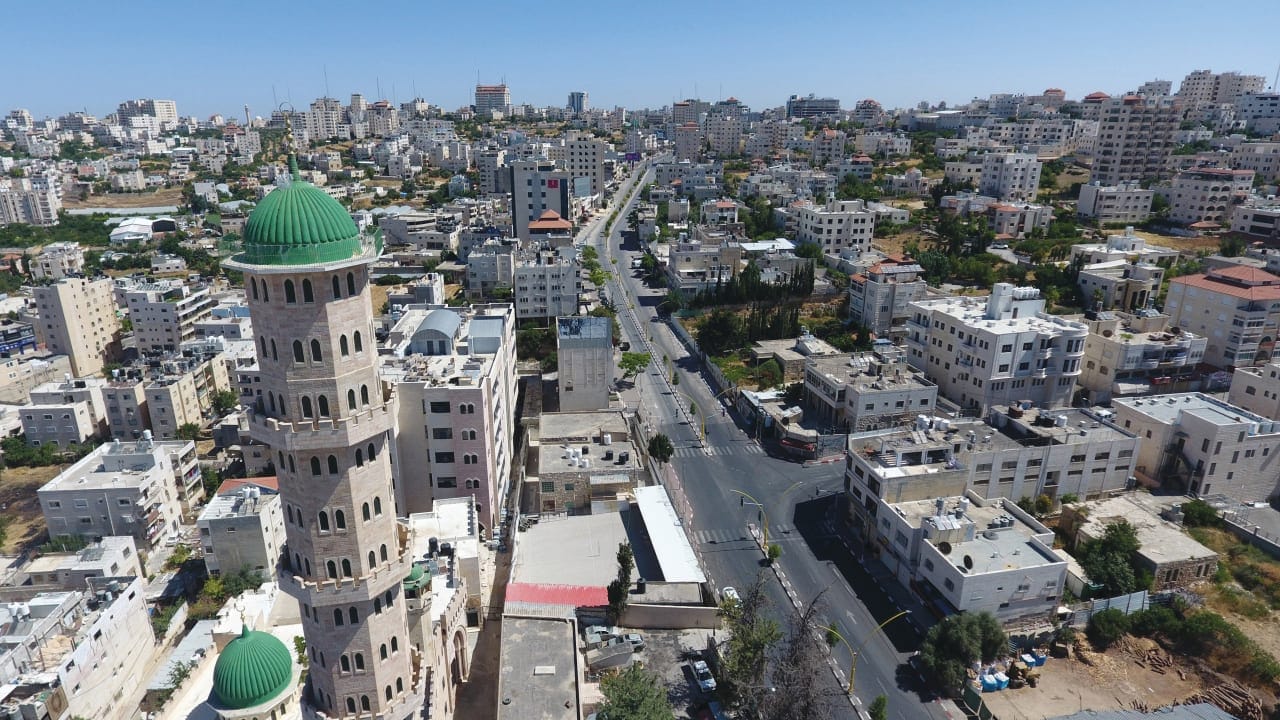 Palestinians hold mixed views on Iran
Despite the survey being conducted before the breakout of the latest war with Tehran, which has seen both Palestinians and Israelis killed by the regime’s illegal use of cluster munitions, a slight majority (56%) of Palestinians hold an unfavorable opinion of Iran. Iran’s popularity has grown among Palestinians since the previous survey, with 42% saying they now have a favorable opinion of the regime compared to the 28% reported years prior.
The majority (76%) also view Iran’s nuclear program and Iran’s political influence in the region (70%) as either a critical threat to Palestinian national interests, though Israeli “occupation� of Palestinian territories and Israeli airstrikes on Lebanon were both considered a greater threat.
Qatar and Turkey remain the countries most favored by Palestinians, receiving a majority approval at 54% and 51% respectively, while Israel, the United States, and European countries were largely viewed negatively.
Minimal percentage hold favorable opinion of IsraelOnly 2% of Palestinians answered that they had a favorable opinion of Israel, 11% of the United States, and 22% of Germany. The large majority (67%) also view the United Arab Emirates, which is a member of the Abraham Accords, unfavorably.
Those in the West Bank expressed more negative perceptions of foreign powers across the board, a trend attributed by PCPSR to Gazans responding positively to nations that sent aid to the territory during the war with Israel.
Though there is no data to suggest how Palestinians feel about Iran’s Supreme Leader Ayatollah Mojtaba Khamenei, 47% of respondents said that his predecessor Ayatollah Ali Khamenei’s policies were very bad for the region, though his popularity has rapidly increased in recent years.
The most popular foreign leader in both the West Bank and Gaza is Turkish President Recep Tayyip Erdogan. US President Donald Trump is the least popular, with only 20% of Gazans and 7% of West Bank-based Palestinians positively assessing his foreign policy.
When asked which countries would be appropriate mediators for an end to the Israeli-Palestinian conflict, respondents expressed a clear preference for regional countries over Western powers.
The countries selected most often as appropriate mediators were Egypt at 31%, Qatar at 30%, and Turkey at 19%. The countries that were seen as inappropriate for mediation included Germany at 98%, France at 96%, the UAE and Ireland at 94% each, Russia at 93%, China and the UN at 92% each, Saudi Arabia at 91%, and Spain at 90%.