
Hezbollah has increasingly deployed low-cost fibre-optic first-person-view (FPV) drones against Israeli troops in southern Lebanon, adopting tactics seen in the war in Ukraine to counter Israel’s advanced military defences.
Videos released by Hezbollah in recent weeks show small explosive-laden drones striking Israeli tanks, bulldozers and soldiers in south Lebanon, underscoring a growing challenge for the Israeli military as cross-border tensions persist despite an April ceasefire, The Guardian reports.
The drones, connected to operators through fibre-optic cables rather than radio signals, are difficult to jam using conventional electronic warfare systems. Hezbollah sources said the group had turned to locally manufactured drones costing roughly $300-$400 each, using 3D-printing technology and commercially available electronic components.
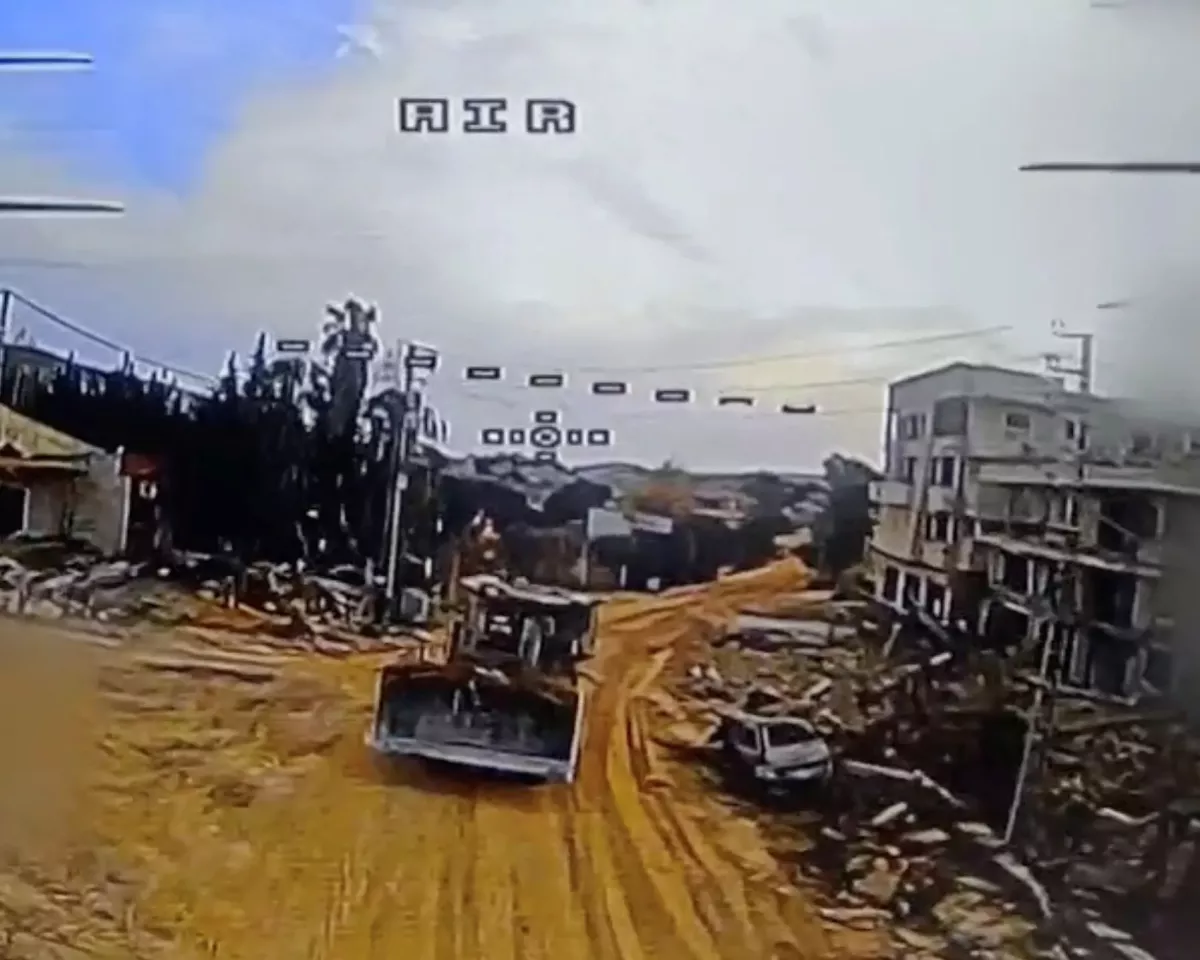
“The development is viewed as part of efforts to overcome supply challenges following the disruption of the Syrian supply route after the fall of Bashar al-Assad in late 2024,” a Hezbollah source said.
The source added that the drones were produced using “commercially available electronic components that can be adapted for dual civilian and military use”.
An Israeli military official said Israel “recognised the UAV [unmanned aerial vehicle] threat” and that it was working to develop “capabilities for the detection and interception of weapons”. The official added that Israeli military research bodies were developing “more effective alert models” and advanced countermeasures against the drones.

The increasing use of FPV drones reflects broader shifts in Hezbollah’s military strategy following last year’s conflict with Israel. Analysts say the group has returned to guerrilla-style tactics after suffering setbacks during Israeli operations in southern Lebanon.
The drones’ extended range is also forcing Israeli planners to reassess the depth of buffer zones near the Lebanese border. Previous Israeli assessments had favoured a security zone extending at least 11 kilometres into southern Lebanon, based on the range of Hezbollah anti-tank weapons.
Military analysts said fibre-optic drones have become increasingly prominent since first appearing in the Ukraine war in late 2024.
“Fibre optic cable FPVs can’t be jammed with electronic warfare and it is more difficult to detect them,” said Rob Lee, a senior fellow at the Foreign Policy Research Institute’s Eurasia programme.
He added that governments worldwide were trying to develop systems to counter the “Ukraine-style” use of drones now spreading across multiple conflicts.
Videos released by Hezbollah appear to show increasing sophistication in drone operations, including the use of secondary drones filming attacks to confirm strikes on targets — a tactic widely seen in Ukraine.
The Hezbollah source acknowledged that the group had studied the battlefield use of fibre-optic drones during the Ukraine conflict.
Retired Lebanese Brigadier General Mounir Shehadeh, a former Lebanese government coordinator to the United Nations Interim Force in Lebanon, said the drones could significantly affect asymmetric warfare.
“The goal in guerrilla warfare is not a quick victory, but rather the gradual attrition of the enemy,” Shehadeh said.
“If used intelligently, [FPV drones] are capable of altering the balance of power on the battlefield, especially in asymmetric conflict environments,” he added.