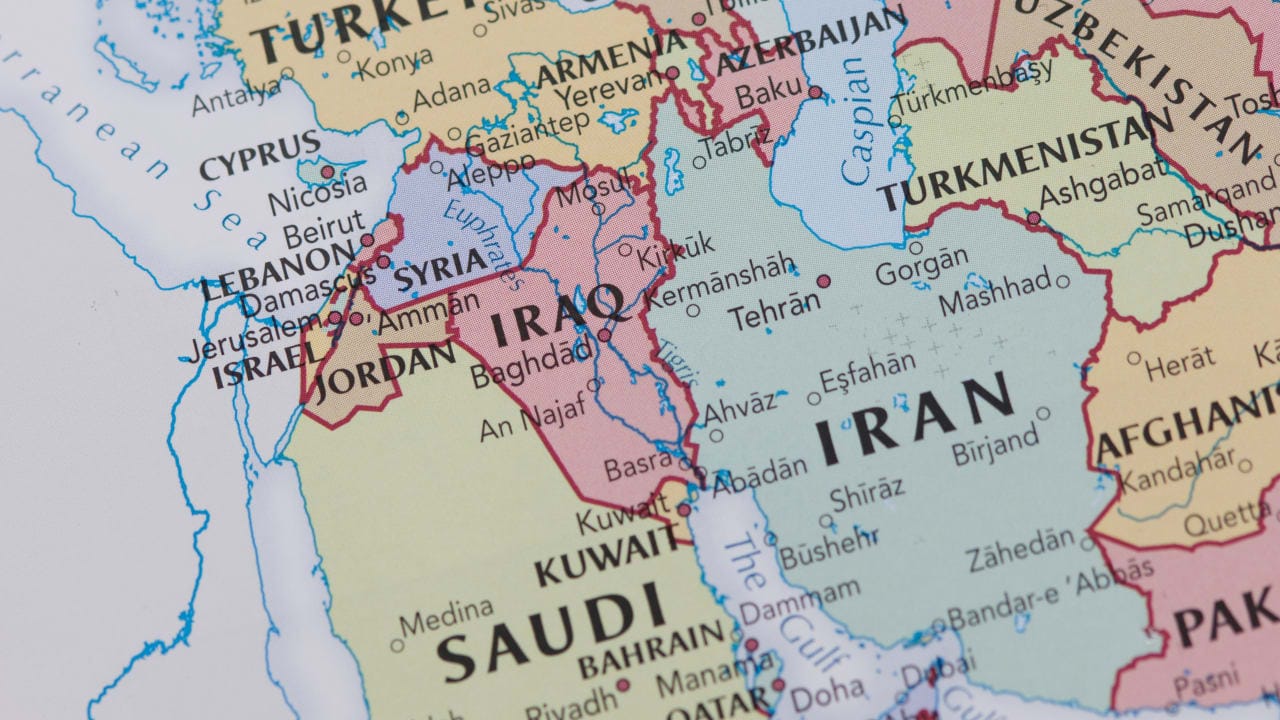
The Gulf states were victims of Iranian attacks during the war that began with US and Israeli airstrikes on Iran on February 28. Iran lashed out, attacking a dozen countries in the region.
Iran’s major target was the United Arab Emirates, but it also attacked Saudi Arabia, Bahrain, Israel, Oman, Qatar, the autonomous Kurdistan Region of Iraq, Kuwait, Jordan, and other countries.
In addition, Iran targeted US bases and made it clear that it can strike wherever it wants.
During the conflict, the Gulf states created the impression that they were taking blows without responding. They were able to increase the effectiveness of their air-defense systems. The feeling was that they wanted to stay out of the war, even though they had a right to respond.
Iran’s narrative was that some of the Gulf states hosted US forces, or in the case of the UAE and Bahrain, had signed the Abraham Accords with Israel. Therefore, Iran could target them at will.
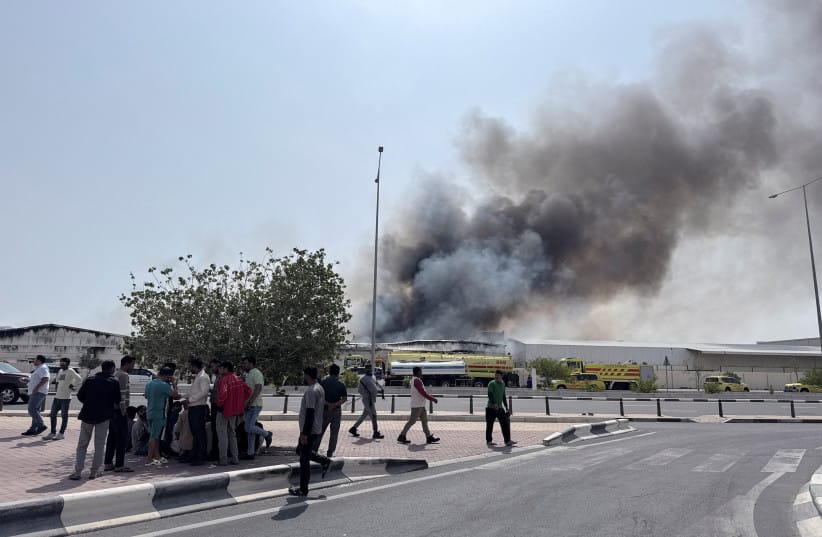 People gather as smoke rises at the Industrial Area after reported Iranian missile attacks, following United States and Israel strikes on Iran, in Doha, Qatar, March 1, 2026 (credit: REUTERS/MOHAMMED SALEM)
Some perceptions of the Gulf’s role have now changed. Some Gulf states have taken a more proactive role to both defend themselves and also to build up their strength, according to media reports this week.
Saudi Arabia struck militias in Iraq
“Saudi fighter jets bombed targets linked to powerful Tehran-backed Shi’ite militias in Iraq during the Iran war, while retaliatory strikes were also launched from Kuwait into Iraq, multiple sources familiar with the matter said,” Reuters reported.
This was part of a broader series of responses across the Gulf, the report said.
Saudi Arabia struck Iran
Saudi Arabia also struck Iran, according to another report that cited Western officials.
“Saudi Arabia launched numerous, unpublicized strikes on Iran in retaliation for attacks carried out in the kingdom during the Middle East war, two Western officials briefed on the matter, and two Iranian officials said,” Reuters reported.
This was said to be the first time that Riyadh has carried out direct action against Iran. In September 2019, Iran attacked Abqaiq, a city in Saudi Arabia. That means Riyadh has had the right to respond for years.
UAE struck Iran and received Iron Dome
The United Arab Emirates struck several Iranian sites in April, The Wall Street Journal reported Tuesday. According to the France 24 news channel, this included “an oil refinery on Lavan Island in the Persian Gulf.”
“As Tehran unleashed its drones and missiles against the Emirates, Israel sent Iron Dome anti-air missile batteries to the UAE, as well as personnel trained to use them, to help the country stave off further attacks,” France 24 reported.
The report cited analysts who explained why the UAE and Saudi Arabia had retaliated.
Sending the Iron Dome system to the UAE was an example of the positive relationship created by the Abraham Accords, US Ambassador to Israel Mike Huckabee said.
On Wednesday, the Prime Minister’s Office said: “In the midst of Operation Roaring Lion, Prime Minister [Benjamin] Netanyahu secretly visited the United Arab Emirates, where he met with UAE President Sheikh Mohamed bin Zayed. This visit has led to a historic breakthrough in relations between Israel and the UAE.”
The UAE pushed back about this statement and appeared to deny the visit took place as described. The importance of the Israeli claim, however, is that it somewhat indicates UAE-Israel ties have improved during the war.
Kuwait confronts Iran in Gulf
Iran had tried to attack a Kuwaiti island in the Gulf, Kuwait said Tuesday. Several Islamic Revolutionary Guard Corps members were said to have been detained for involvement in the incident.
“General Secretariat of the Organization of Islamic Cooperation (OIC) strongly condemned the hostile infiltration of Kuwait’s Bubiyan Island by armed elements of the Iranian Revolutionary Guard Corps (IRGC) and their clash with the Kuwaiti Armed Forces, which resulted in the injury of a member of the Kuwaiti Armed Forces,” Saudi Arabia’s official Saudi Press Agency (SPA) reported.
The Associated Press reported: “Kuwait said on Tuesday that Iran launched a failed attack earlier this month on an island where China is helping build a port in the Gulf Arab country. The accusation came just hours before US President Donald Trump was to depart for Beijing on a high-stakes visit over the Iran war and other issues.”
Kuwait was also said to have struck militias in Iraq.
Crackdown on IRGC and Hezbollah in the Gulf
As Gulf countries weighed military responses, they have also detained people linked to Iranian activity. This has included a number of cells busted in Bahrain.
Meanwhile, the UAE cabinet added 16 individuals and five Lebanon-based companies to its local terrorist list over links with Hezbollah, the UAE’s official news channel, WAM, reported.
“The move forms part of the UAE’s ongoing efforts, both domestically and internationally, to disrupt and dismantle networks linked to the financing of terrorism and related activities, whether direct or indirect,” the report said.
The Bahraini Interior Ministry said an organization linked to the IRGC and the Wilayat Al-Faqih Shi’ite political ideology consisted of members of the dissolved “Islamic Scholars Council,” London-based newspaper Asharq Al-Awsat reported.
“The members of the organization had formed and led a terrorist organization, financed terrorism, coordinated with Iran and groups in Iraq and Lebanon classified as terrorist organizations, and received military training in support of those activities, said the ministry in a statement carried by Bahrain’s state news agency BNA,” the report said.