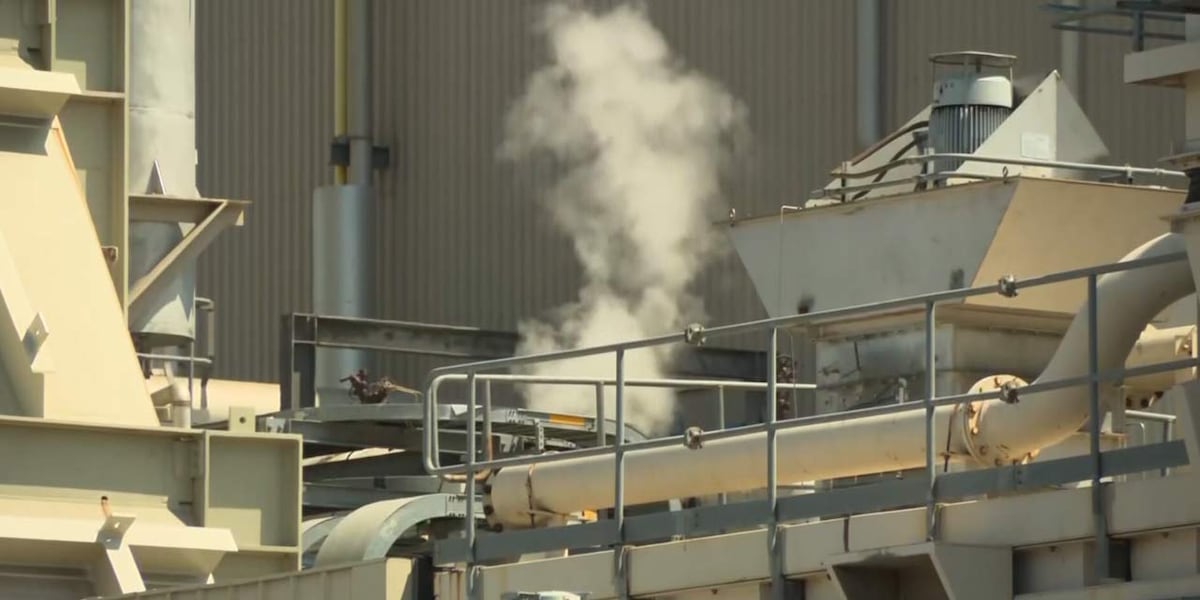
CANADYS, S.C. (WCSC) — The South Carolina Public Service Commission voted 7-0 Thursday to approve an application by Dominion Energy South Carolina and Santee Cooper to jointly build Canadys Station, a 2,200-megawatt natural gas combined-cycle plant in Colleton County on the banks of the Edisto River.
Utilities say the project is needed to serve South Carolina’s rising energy demand. The proposed plant would generate enough electricity to power more than 1 million homes, using what the companies described as advanced, proven technology and state-of-the-art environmental protections.
“While Canadys Station will help meet the state’s growing energy demand, its benefits will extend beyond powering homes and businesses,” Santee Cooper President and CEO Jimmy Staton said in a statement. “Canadys Station is good for the community, respectful of the environment and an excellent value for customers. We appreciate the time and effort the Commissioners spent understanding our plans for this critical energy project, considering the perspectives of interested stakeholders, and making a timely decision.”
Dominion and Santee Cooper said the combined-cycle facility will be built on a former Dominion Energy coal plant site about 40 miles northwest of Charleston. They said using the established brownfield site will avoid clearing large areas of new land and provide efficient access to existing and planned transmission lines.
“For 50 years, the former Canadys generating station provided reliable energy across the South Carolina Lowcountry while providing economic benefits in partnership with Colleton County,” Dominion Energy South Carolina President Keller Kissam said. “With its ruling today, the Public Service Commission authorizes Santee Cooper and Dominion Energy to sensibly repurpose this existing site with state-of-the-art technology to power future generations of the Palmetto State.”
The companies also said the project will bring an economic boost to the area, with hundreds of contracting jobs during construction and full-time jobs to operate the plant. They said additional regulatory approvals are still needed.
Environmental and clean energy groups have opposed the project for years, raising concerns about impacts to nearby communities, the ACE Basin and other natural resources. The Southern Environmental Law Center, representing the Coastal Conservation League and the Southern Alliance for Clean Energy, intervened in the proceeding, citing environmental impacts and rising costs tied to the plant and a proposed 71-mile greenfield pipeline.
“This massive, polluting plant has already doubled in cost from $2.5 to $5 billion in the last year, and the utilities admitted at the hearing that its final costs would likely be even higher,” said Kate Mixson, a senior attorney at the Southern Environmental Law Center. “We’re certainly worried that the plant and pipeline will negatively impact communities and raise customers’ bills. We will closely monitor the project’s next steps to ensure its impacts are as mitigated as possible.”
Taylor Allred, the Coastal Conservation League’s state energy and climate program director, said the group is “deeply concerned about the environmental, public health, and economic impacts” of the plant and pipeline. Allred also criticized what the group described as repeated delays in retiring coal units the gas plant was supposed to replace.
“It would be a deep injustice to allow the utilities to raise rates for families and small businesses to fund tens of millions of dollars needed to keep their aging coal units online, on top of the billions spent on this massive gas plant, to serve potential future energy demand from big data centers,” Allred said.
Eddy Moore, decarbonization director for the Southern Alliance for Clean Energy, compared the project’s potential cost to the failed V.C. Summer nuclear expansion.
“When you count the all-in cost to customers to build, finance, and operate this gas infrastructure, our predictions two years ago that this project would cost as much as the failed $9 billion VC Summer nuclear project are coming true,” Moore said. He added that the environmental damage could include “millions of tons per year of new air pollution for fifty years,” and warned the pipeline could further industrialize the ACE Basin.
Copyright 2026 WCSC. All rights reserved.