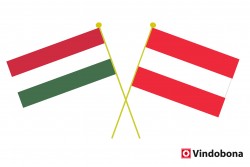
This is only Péter Magyar’s second trip abroad since he was sworn in last Tuesday, but it is highly symbolic. Following his triumphant election victory on April 12, in which his TISZA party secured a historic two-thirds majority (approximately 53.1% of the vote and 138 out of 199 seats), Vienna is at the top of the new head of government’s agenda, signaling the importance he places on this neighboring relationship.
“Constructive Cooperation” Instead of Obstructionist Politics
Looking ahead to the meetings, the Federal Chancellery announced in advance that, in dealing with the now “clearly pro-European” government in Budapest, the focus must once again be on constructive cooperation. Stocker and Magyar intend to work in unison, particularly on the issues of EU competitiveness and the upcoming EU budget.
Magyar is accompanied by his Deputy Prime Minister and Foreign Minister, Anita Orbán. The prominent energy expert and former Vodafone manager, who is not related to the former prime minister, is seen as a guarantor of a “Western-Atlantic” reorientation of Hungary. On the Austrian side, Minister for European Affairs Claudia Bauer will support the talks.
Economic Relations and Legacy Issues
A key item on the agenda is Austrian companies’ interests in Hungary. Austria is the second-largest investor in its neighboring country after Germany; around 1,400 Austrian company branches are active there. In the past, these companies frequently complained about regulatory hurdles and a lack of legal certainty under the Fidesz regime—problems that Magyar now aims to resolve.
At the same time, security issues, EU enlargement, and the consequences of Russia’s war of aggression will be discussed. Unlike his predecessor, Viktor Orbán, Magyar is clearly committed to Western ties and to supporting Ukraine.
End of a Four-Year Diplomatic Freeze
Magyar’s upcoming visit marks a turning point in bilateral relations, which had largely ground to a halt since the summer of 2022. The last time a Hungarian head of government was received at the Federal Chancellery for an official working visit was in July 2022. At the time, Viktor Orbán’s visit to Karl Nehammer made international headlines, as Orbán had recently caused outrage with racist remarks about a “mixed-race world,” which cast a massive shadow over the talks at Ballhausplatz.
Since that frosty encounter, contacts at the government level have been limited almost exclusively to trilateral migration summits, such as the one held in Budapest in October 2022, in which Serbia also participated. Genuine bilateral dialogue on forward-looking European policy issues had all but ceased due to Orbán’s increasing isolation within the EU and his pro-Russian stance. Most recently, in the fall of 2024, Orbán caused a rift in the chancellery when he visited Vienna but accepted only an invitation from the FPÖ leadership, without meeting the incumbent federal government.
The meeting between Stocker and Magyar marks a return to traditional diplomacy between the neighboring countries. Whereas isolationism and border security were once the only remaining topics of discussion, this inaugural visit signals a return to a shared European agenda. For Austria, this means a shift from a crisis-driven alliance of convenience with Budapest to a strategic partnership with a government that shares the Union’s values and puts economic cooperation back at the center of neighborhood policy.
Difficult Handover of Government in Budapest
While Magyar is planning for the future in Vienna, the mood at home is still marked by the ruins of the Orbán era, as reported by ORF. The official handover of government affairs took place only today in Budapest under frosty conditions. While the new ministers used the main entrance, the outgoing Fidesz representatives fled through the back entrance to avoid journalists’ questions.
Magyar leveled serious accusations: He claimed that the previous government had destroyed documents on a massive scale and left the country in “poor condition.” He also announced comprehensive investigations into former ministers. The new cabinet also marks a break in terms of personnel: While Orbán’s last government consisted entirely of men, Magyar’s 16-member cabinet now includes four women in key positions.
Following talks with Chancellor Stocker, Péter Magyar will also be received by President Alexander Van der Bellen at the Hofburg, officially sealing the relaunch of the Austro-Hungarian axis.