
DUBAI, United Arab Emirates — After facing barrages of Iranian missiles that threatened its economic future, the UAE has moved closer to Israel, widening a split with ally-turned-rival Saudi Arabia and placing it in defiant opposition to Tehran.
This gamble granted the UAE, a tourism hub where 90 percent of the population is foreign, access to Israeli air defense systems to help fend off more than 2,800 drones and missiles — effectively placing protection above all else to preserve a model based on stability, analysts said.
But its closer cooperation with Israel risks further antagonizing Iran, which the UAE views as its biggest threat, and puts Abu Dhabi at even greater odds with Saudi Arabia, which, along with much of the Gulf, has come to see Israel as the region’s main rogue actor.
Security cooperation
“The UAE is thinking about the future and sees Israel as the best security partner that can provide cover for its economic recovery,” said Sanam Vakil, director of the Middle East and North Africa Programme at Chatham House.
Their bet appears to have paid off in terms of security and defense.
On Tuesday, US Ambassador to Israel Mike Huckabee confirmed Israel had sent its Iron Dome air defense batteries and personnel to the UAE during the war.
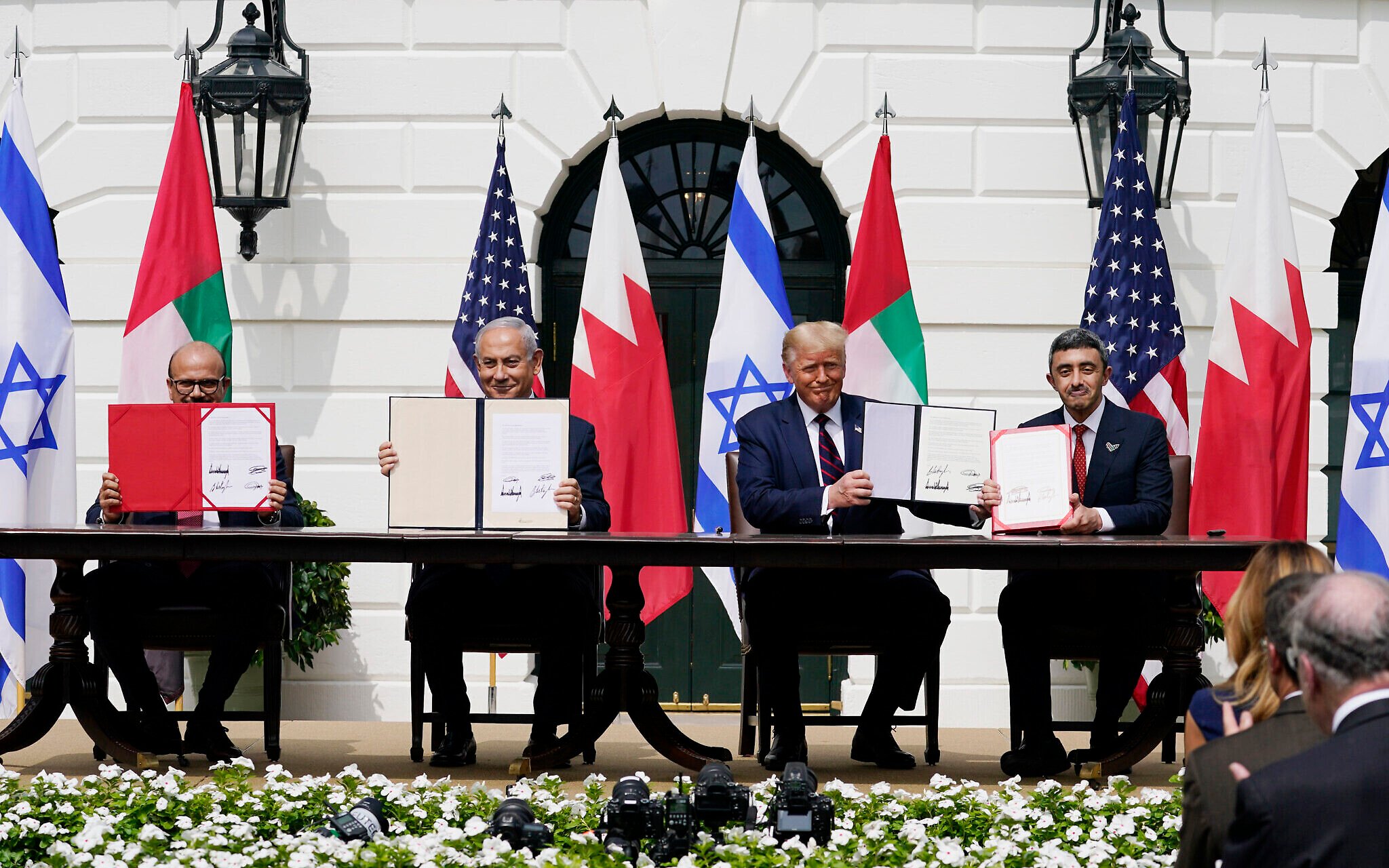
From left, Bahrain Foreign Minister Khalid bin Ahmed Al Khalifa, Prime Minister Benjamin Netanyahu, US President Donald Trump, and United Arab Emirates Foreign Minister Abdullah bin Zayed al-Nahyan, sit during the Abraham Accords signing ceremony on the South Lawn of the White House, in Washington, September 15, 2020. (AP Photo/Alex Brandon)
The UAE became the first Gulf country, alongside Bahrain, to recognize Israel in 2020 under the US-mediated Abraham Accords.
Throughout the war, Emirati officials have lambasted unnamed Arab countries for showcasing hollow solidarity as attacks rained.
“There wasn’t enough of a sense of urgency, while this is the most existential threat that we have dealt with since the inception of the country,” said Nadim Koteich, a Lebanese-Emirati media executive and policy adviser close to the UAE government.
“But in this war, the Israelis showed up for the UAE when they had to show up.”
Israel launched its campaign against Iran, alongside the US, to degrade the Iranian regime’s military capabilities, distance threats posed by Iran — including its nuclear and ballistic missile programs — and “create the conditions” for the Iranian people to topple the regime, the military and other Israeli leaders have said.
The ceasefire declared by Trump in April left the core declared goals of the war largely unfulfilled.
Sensitivities remain
Emirati officials have sometimes touted Israeli cooperation as a model for the post-war Gulf.
Last month, UAE presidential adviser Anwar Gargash said Israeli and American influence in the Gulf would only increase as a result of Iran’s “strategy” in the region.
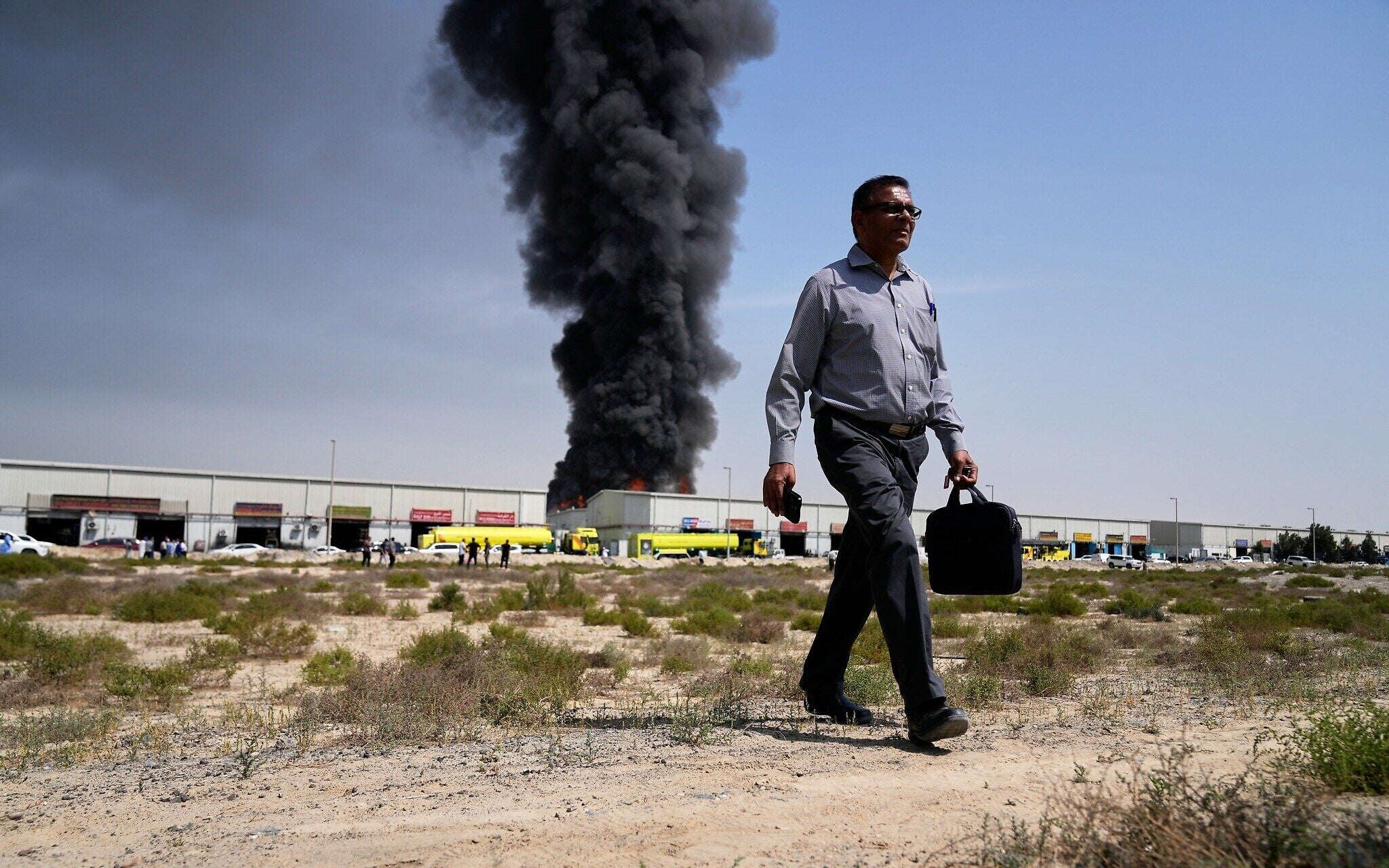
A man walks away after watching as a black plume of smoke rises from a warehouse in the industrial area of Sharjah City, United Arab Emirates, after an Iranian strike, March 1, 2026. (AP Photo/Altaf Qadri)
But so far, Bahrain and the UAE are still the only Gulf states to have normalized ties with Israel — a sensitive prospect for Arab countries.
On Wednesday, Prime Minister Benjamin Netanyahu said he made a secret visit to the UAE during the war, a claim swiftly denied by Abu Dhabi.
While the Abraham Accords initially gave normalization efforts momentum, the trend came to a grinding halt when Hamas-led terrorists carried out the October 7, 2023, massacre, causing the war in Gaza, which sparked fury across the Arab world, with Netanyahu becoming its public face.
His move to publicize the UAE visit was a means of projecting “statesmanship in the run-up to the elections” in Israel, according to Andreas Krieg of King’s College London.
“The Israelis are trying to oversell the relationship,” Vakil told AFP, adding, “This is more like a practical security and economic partnership.”
The UAE will continue to diversify its partnerships, she added, and expand relations with European and Asian allies crucial to its defence and economy.
UAE-Saudi rift
UAE-Israel ties have presented challenges for the Gulf state since the onset of the Middle East war.
Its status as a cosmopolitan finance hub and a top American ally that hosts US military assets and has ties to Israel has made it a prime target for Iran, analysts say.
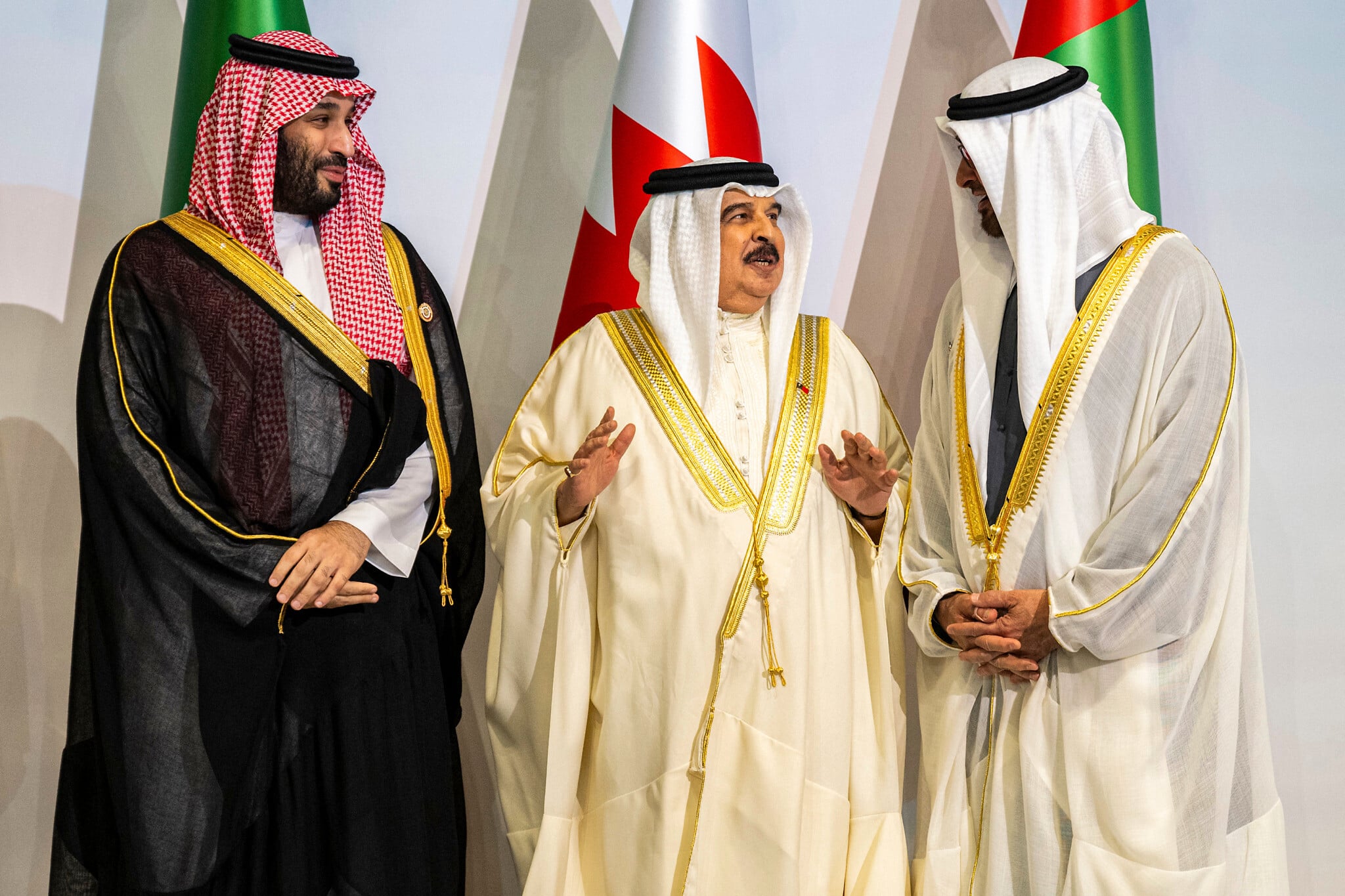
Saudi Arabia’s Crown Prince Mohammed bin Salman bin Abdulaziz al-Saud, Bahrain’s King Hamad bin Isa Al Khalifa and United Arab Emirates’ President Sheikh Mohammed bin Zayed al-Nahyan attending a Gulf Cooperation Council meeting in Doha, on December 5, 2023. (Abdulla AL-NEYADI / UAE PRESIDENTIAL COURT / AFP)
Deepening Israeli ties have also highlighted UAE-Saudi disagreement over whether Israel or Iran poses the bigger threat to Gulf stability — increasing the gap between the pair since their row in December over Yemen.
Abu Dhabi has signaled it is charting its own path, even if it means shedding traditional alliances, exiting Saudi-dominated OPEC this month, and earlier lambasting the Arab League.
It has also taken a more hawkish stance on Iran, labeling it an enemy and expressing maximalist demands for any peace deal.
“There are those who are obsessed about the idea of Israeli supremacy, and others, who are more pragmatic and see it like any other country… that we can integrate” into the region, Koteich said about the UAE position.
Saudi Arabia was contemplating normalizing ties with Israel after the Abraham Accords, before the Gaza war abruptly derailed the efforts.
Now, the kingdom, along with much of the Gulf, views Israel as a rogue actor.
Israel launched the Gaza war after the October 7, 2023 Hamas massacre that killed some 1,200 people and saw another 251 taken hostage. It has also since battled Iranian proxies Hezbollah in Lebanon, the Houthis in Yemen, which both joined the fighting to support Iran.
It has also since fought two wars with Iran in a bid to remove Iran’s nuclear and missile threats.
However, Israel’s lack of willingness to accept threats to its existence have not gone down too well with some other powers in the region.
In a recent op-ed, former intelligence chief Prince Turki al-Faisal accused Israel of planning to “ignite war” between Saudi Arabia and Iran in a bid to impose “its will on the region.”