
For most people, helium is the quirky gas used to inflate party balloons and make silly voices.
But the very property of this gas that makes it so attractive to party planners is the same reason it has become a hot property globally.
Helium is the second-lightest gas in the world and this low weight means when it is extracted from underground, it floats up into the atmosphere, never to be recovered, making it a finite resource.
Global supplies took a massive hit when about one-third of the world’s helium was taken out by Iranian missile strikes on Qatar’s Ras Laffan gas plant in March.
Spot prices have doubled since then and long-term contract rates have also been trending upwards.

Microchip production requires precision technology, including helium. (AP: Darin Oswald/Idaho Statesman)
Arup George is an engineer from the University of New South Wales.
He said in the digital age, the gas was in high demand because it was used in the manufacture of microchips and semiconductors. Consequently, it was essential for the expansion of data centres and artificial intelligence.
Engineers also use helium’s tiny molecules to check for gas leaks in microchip labs and even clear the jets of hydrogen rockets.
“It is inert, that means it does not interact with other materials, it does not contaminate things,” he said.
Helium essential to health care
Helium’s most essential uses come from the fact it is the coldest liquid substance known to man, not becoming liquid until -269 Celsius, making it an effective coolant.

Brisbane startup Magnetica is developing low helium MRI machines. (ABC News: Tanya Love)
It is critical to cool the superconducting magnets in MRI machines.
“The liquid helium will evaporate over time. So it does require topping up,” Duncan Stovell, of MRI company Magnetica, said.
He is the chief executive of a Brisbane-based startup developing special small-scale MRI machines that will focus on scanning limbs, with the aim of setting up in smaller hospitals.
“Having a lot of the equipment closer to the joint that we’re imaging means that we’re able to get excellent resolution,” Mr Stovell said.

Duncan Stovell says they are developing low helium MRIs. (ABC News: Michael Lloyd)
Their design uses far less helium than a typical MRI and only uses it in gas form, as opposed to liquid form.
That is because globally, helium is scarce.
It is only produced when radioactive elements like uranium and thorium break down deep in the Earth’s crust.
It makes its way upwards and is usually found in deposits alongside natural gas.
LoadingLNG industry opportunity
The co-location of helium and natural gas presents a clear opportunity for Australia’s gas industry.
Professor Eric May is the chief executive officer of the Future Energy Export Cooperative Research Centre, a not-for-profit designed to bridge the gap between industry and academia.

Eric May says Australia has underground reserves of in-demand helium. (ABC News: Mitchell Edgar)
They estimate helium is likely to be present in commercial quantities in up to six of Australia’s 10 natural gas plants.
Yet, the country’s only operator in Darwin closed in 2023 after its deposits ran out.
At present, any helium extracted as part of LNG mining is released in tail gases and into the atmosphere, never to be recovered.
One of those looking to capitalise on the helium reserves is Gold Hydrogen, an ASX-listed company focusing on the discovery and development of natural hydrogen and helium.
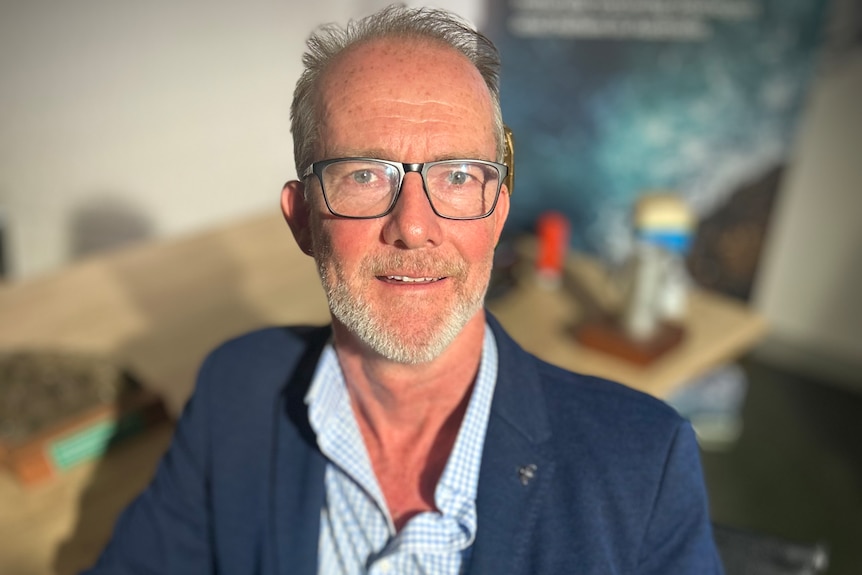
Neil McDonald says they have discovered helium deposits in South Australia. (ABC News: Paul Adams)
“We found the world’s best purities in helium at 36.9 per cent, and it’s extraordinary,” managing director Neil McDonald said.
“And we’re a green helium. We’re not part of a natural gas formation or an LNG supply.”

A helium well at a site run by Gold Hydrogen on the Yorke Peninsula. (Supplied)
The company is aiming for commercial production within two years, but building the extraction technology requires hundreds of millions in investment.
“We believe that what we have encountered should be fast-tracked with the conditions that we’re seeing at the moment,” Mr McDonald said.
Calls to return helium to critical minerals list
Estimates suggest there is somewhere between 20 and 150 years of commercially extractable supply of helium left underground.
That is why advocates like Eric May and Arup George are calling for it to be returned to the federal government’s critical minerals list, three years after it was dropped in 2023.
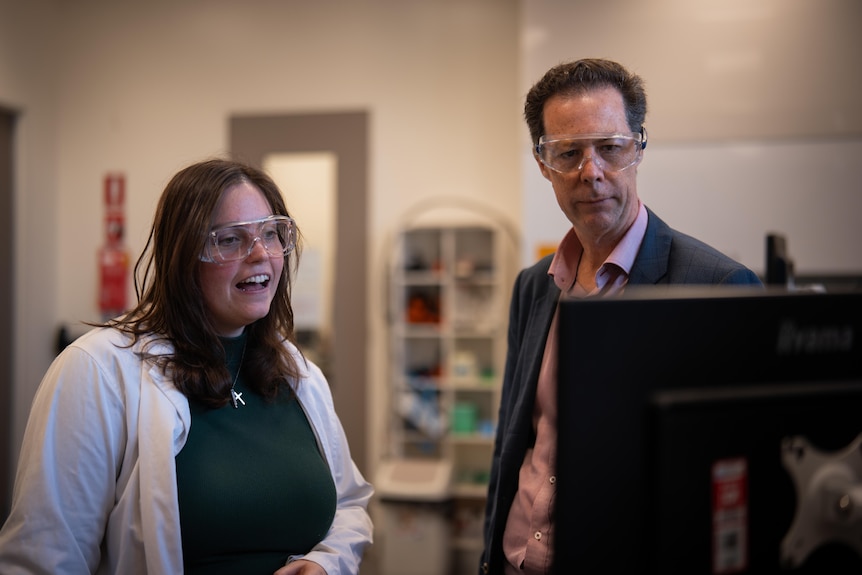
Eric May says helium is an essential gas for modern society. (ABC News: Mitchell Edgar)
Listing means producers unlock a range of government tax breaks and investment supports.
The government said at the time it aligned with its strategic partnerships to delist the gas.
“We should be incentivising its production and recovery as much as we possibly can.”
Arup George said, without listing, Australian LNG operators did not have commercial reasons to invest in equipment to capture helium alongside their commercial operations.

Arup George says helium is essential for making semiconductors. (ABC News: Dan Irvine)
With Qatar out, and the world’s number three producer Russia, curtailed by sanctions, he said global chip supply was at risk.
He said profitability could be maximised if it was processed and refined on shore as well.
“Having the raw material is one thing, but having a highly refined processed material that the chip fabricators or the other industries can use as their input, that is where the most value is made,” Dr George said.
Resources Minister Madeleine King did not respond to concerns about helium’s removal from the critical minerals list, but in a statement, a spokesperson said the government would continue to monitor potential supply chain disruptions, noting the United States also produced the gas.
“The Department of Industry, Science and Resources routinely monitors a range of critical supply chains that underpin Australia’s economy, including inputs used in medical and scientific applications such as helium,” a spokesperson said.

A helium plant on the Yorke Peninsula west of Adelaide. (ABC News: Gold Hydrogen)