For decades, globalization was built on the assumption that deeper economic integration would strengthen international cooperation, reduce geopolitical tensions and create mutually beneficial growth.
Countries expanded trade partnerships, multinational corporations built global supply chains and manufacturing networks spread across continents in pursuit of efficiency and lower costs.
Today, however, that model is increasingly under pressure.
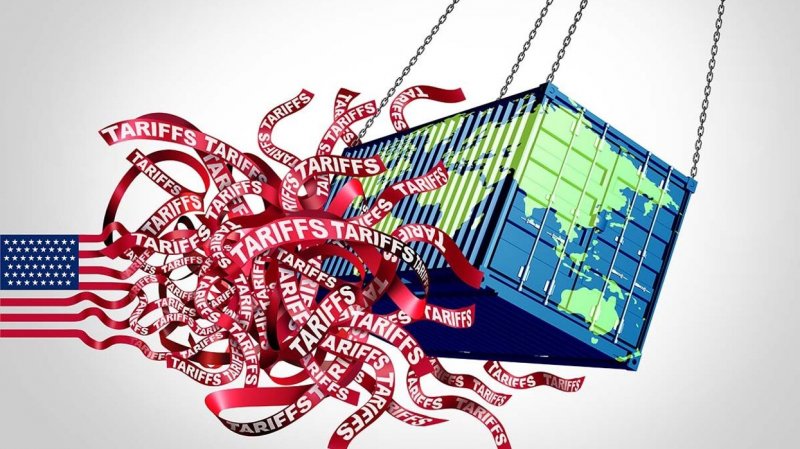
The growing rivalry between United States and China has transformed global trade from a primarily economic issue into a strategic and geopolitical battlefield. Tariffs, sanctions, export controls and supply chain restrictions are reshaping how governments and corporations think about international commerce.
What began as a trade dispute has evolved into a broader struggle over technology, industrial power, manufacturing dominance and national security. Governments worldwide are now reassessing economic dependencies that were once considered normal under globalization.
As a result, analysts increasingly ask whether the world economy is gradually dividing into competing economic and technological blocs.
The central question is no longer simply who wins the trade war.
It is whether the era of highly integrated globalization itself is entering a period of fragmentation.
What triggered the modern U.S.–China trade war?
Economic tensions between Washington and Beijing developed gradually over many years.
For decades, American companies benefited from lower cost manufacturing in China, while China benefited from export driven growth and integration into global markets.
However, concerns steadily grew inside the United States regarding:
Large trade deficits
Intellectual property disputes
Technology transfer practices
Industrial subsidies
Market access restrictions
Manufacturing job losses
American policymakers increasingly argued that China’s economic rise was challenging long term U.S. industrial and technological leadership.
The situation escalated significantly when tariffs were introduced on hundreds of billions of dollars worth of goods traded between the two countries.
What initially appeared to be a commercial dispute soon expanded into broader strategic competition affecting technology, semiconductors, energy systems and critical supply chains.
Why are tariffs used in trade conflicts?
Tariffs are taxes imposed on imported goods.
Governments often use tariffs to:
Protect domestic industries
Encourage local production
Pressure trading partners
Reduce trade deficits
Respond to unfair trade practices
In the U.S.–China dispute, tariffs became tools of economic pressure and negotiation.
Supporters of tariffs argue they can strengthen domestic manufacturing and reduce overdependence on foreign production.
Critics, however, warn that tariffs often increase costs for businesses and consumers because companies may pass higher import costs onto buyers.
Trade wars can therefore create inflationary pressures and supply chain disruptions affecting global markets.
The broader impact often extends far beyond the countries directly involved.
How did supply chains become geopolitical issues?
Globalization created highly interconnected supply chains stretching across multiple countries.
Modern products such as smartphones, vehicles and computers often rely on components manufactured in different regions worldwide.
For years, efficiency and cost reduction were the main priorities guiding supply chain development.
However, recent crises exposed vulnerabilities in this system.
The COVID 19 pandemic, geopolitical tensions and shipping disruptions demonstrated how heavily many economies depended on concentrated production networks.
Governments increasingly realized that overreliance on foreign suppliers for strategic goods could create major national security risks.
This became especially clear regarding:
Semiconductors
Pharmaceuticals
Rare earth minerals
Energy infrastructure
Battery production
Medical equipment
As a result, supply chains themselves became geopolitical assets rather than purely economic systems.
Why are semiconductors at the center of the conflict?
Semiconductors, or computer chips, have become one of the most strategically important products in the global economy.
Advanced chips power:
The United States and its allies currently dominate many advanced semiconductor technologies, while China remains dependent on imported high end chips.
Washington has introduced export controls limiting Chinese access to advanced semiconductor equipment and AI related technologies.
American officials argue that unrestricted access could strengthen China’s military and technological capabilities.
China, meanwhile, views these restrictions as attempts to contain its development and preserve American technological dominance.
The semiconductor conflict increasingly symbolizes the broader technological struggle shaping global trade relations.
How are companies responding to geopolitical tensions?
Multinational corporations are increasingly restructuring supply chains in response to geopolitical risks.
For decades, many companies relied heavily on Chinese manufacturing because of:
Scale
Infrastructure
Labor capacity
Supplier networks
Logistics efficiency
Today, however, businesses are seeking greater diversification.
This trend is often called:
Companies are expanding operations into countries such as:
India
Vietnam
Mexico
Indonesia
Malaysia
The goal is reducing dependence on any single country while maintaining access to global markets.
However, moving supply chains is expensive and time consuming.
China still retains major advantages in industrial infrastructure and manufacturing scale that are difficult to replace quickly.
Is globalization ending completely?
Most experts do not believe globalization is disappearing entirely.
Instead, many argue globalization is becoming more fragmented and strategically selective.
Trade and investment continue globally, but governments increasingly prioritize:
This means countries may remain economically interconnected while limiting cooperation in sensitive sectors.
Some analysts describe this shift as:
The future global economy may therefore become more regionalized and politically divided than during earlier decades of rapid globalization.
How are critical minerals becoming strategic assets?
The transition toward clean energy and advanced technologies has increased competition over critical minerals.
Materials such as:
Lithium
Cobalt
Nickel
Rare earth elements
are essential for:
China currently plays a dominant role in processing many critical minerals.
This has raised concerns in Washington and other capitals regarding strategic dependence.
As a result, governments are investing heavily in:
Competition over resources is therefore becoming increasingly central to geopolitical and economic strategy.
Why are electric vehicles part of the trade war?
Electric vehicles have become another major area of competition.
China has rapidly expanded EV manufacturing capacity and now plays a leading role globally in:
American and European policymakers increasingly worry that heavily subsidized Chinese EV exports could weaken domestic automotive industries.
This has contributed to:
The EV sector illustrates how climate policy, industrial competition and geopolitics are becoming increasingly interconnected.
Future economic leadership may depend heavily on control over clean energy technologies.
How is the Global South affected?
Many developing countries are navigating growing pressure from competing economic blocs.
At the same time, they may also benefit from supply chain diversification as companies seek alternative manufacturing locations outside China.
Countries across:
Southeast Asia
South Asia
Latin America
Africa
The Middle East
are increasingly competing for:
Industrial investment
Logistics infrastructure
Technology partnerships
Manufacturing expansion
However, geopolitical fragmentation also creates risks.
Smaller economies may face pressure to align strategically with either Washington or Beijing in sensitive sectors such as:
Many governments therefore seek balanced economic relationships with both powers simultaneously.
How are industrial policies returning globally?
For years, many governments favored free market approaches and reduced industrial intervention.
Today, however, industrial policy is returning strongly.
Countries increasingly provide subsidies and strategic support for sectors viewed as nationally important.
These include:
Semiconductors
Artificial intelligence
Renewable energy
Defense industries
Battery manufacturing
Biotechnology
The United States, China and the European Union have all expanded industrial investment programs.
Governments increasingly view economic competitiveness and national security as closely connected.
This marks a major shift away from earlier assumptions that markets alone should determine industrial development.
Could the world split into technological blocs?
One major concern is the possibility of technological fragmentation.
As competition intensifies, countries may increasingly adopt separate:
This could create partially separate economic spheres centered around different technological infrastructures.
For example, digital ecosystems linked to American technologies may diverge from those associated with Chinese systems in some sectors.
Complete separation remains unlikely because global markets remain deeply interconnected.
However, strategic decoupling in critical technologies is already underway in several areas.
Why are shipping routes and logistics becoming strategic?
Global trade depends heavily on maritime transportation and logistics networks.
Recent crises demonstrated how vulnerable shipping systems can be to:
Geopolitical tensions
Military conflict
Port disruptions
Supply chain bottlenecks
Governments increasingly view:
Ports
Rail corridors
Shipping routes
Logistics hubs
as strategic assets.
Infrastructure projects linking Asia, the Middle East, Europe and Africa are therefore gaining major geopolitical importance.
Competition over connectivity increasingly shapes global economic strategy.
How does this affect inflation and consumers?
Trade wars and supply chain disruptions often increase costs globally.
Tariffs can raise prices for:
Consumer electronics
Vehicles
Industrial components
Household products
Meanwhile, supply chain diversification may improve resilience but can also increase production costs because companies lose some efficiency associated with highly concentrated manufacturing systems.
Consumers worldwide therefore feel the effects of geopolitical competition through:
Higher prices
Product shortages
Delayed shipments
Technology costs
The economic consequences of fragmentation extend far beyond state level politics.
Could economic competition become more dangerous?
Economic confrontation increasingly overlaps with national security.
Sanctions, export controls and technology restrictions can create escalating cycles of retaliation and mistrust.
Some analysts worry that economic fragmentation could increase geopolitical instability by weakening incentives for cooperation.
Others argue that strategic de risking may reduce vulnerabilities and strengthen resilience.
The balance between security and economic openness remains one of the most difficult policy challenges facing governments today.
How are alliances changing because of trade tensions?
Economic alliances increasingly overlap with security partnerships.
Countries now cooperate not only militarily, but also through:
Economic diplomacy has therefore become more strategic.
Trade relationships are increasingly shaped by:
This represents a major transformation in how globalization functions.
What role does artificial intelligence play in fragmentation?
Artificial intelligence is accelerating competition because advanced AI systems depend heavily on:
Control over these technologies increasingly determines economic and military influence.
As the AI race intensifies, governments are becoming even more protective of strategic technologies and supply chains.
This may deepen technological fragmentation further.
What could the future global economy look like?
The future international economy may remain interconnected but less globally integrated than during previous decades.
Possible trends include:
Regionalized supply chains
Strategic industrial policies
Technological blocs
Selective decoupling
Increased state intervention
Greater emphasis on resilience over efficiency
Globalization itself may not disappear.
However, it is increasingly evolving into a system shaped as much by geopolitics and security concerns as by market forces alone.
Why does this matter globally?
The restructuring of global trade and supply chains affects nearly every country and industry.
It influences:
Inflation
Employment
Technology access
Energy transition
Industrial development
Economic growth
International stability
The outcome of U.S.–China economic competition may shape how globalization functions for decades.
The world is entering an era where trade is no longer viewed purely as commerce.
It is increasingly viewed as strategy, power and security.
The central question is no longer whether geopolitical rivalry is changing globalization.
It already is.
The real question is whether the international economy can remain sufficiently connected to avoid deep fragmentation while governments simultaneously pursue strategic independence in an increasingly competitive world.