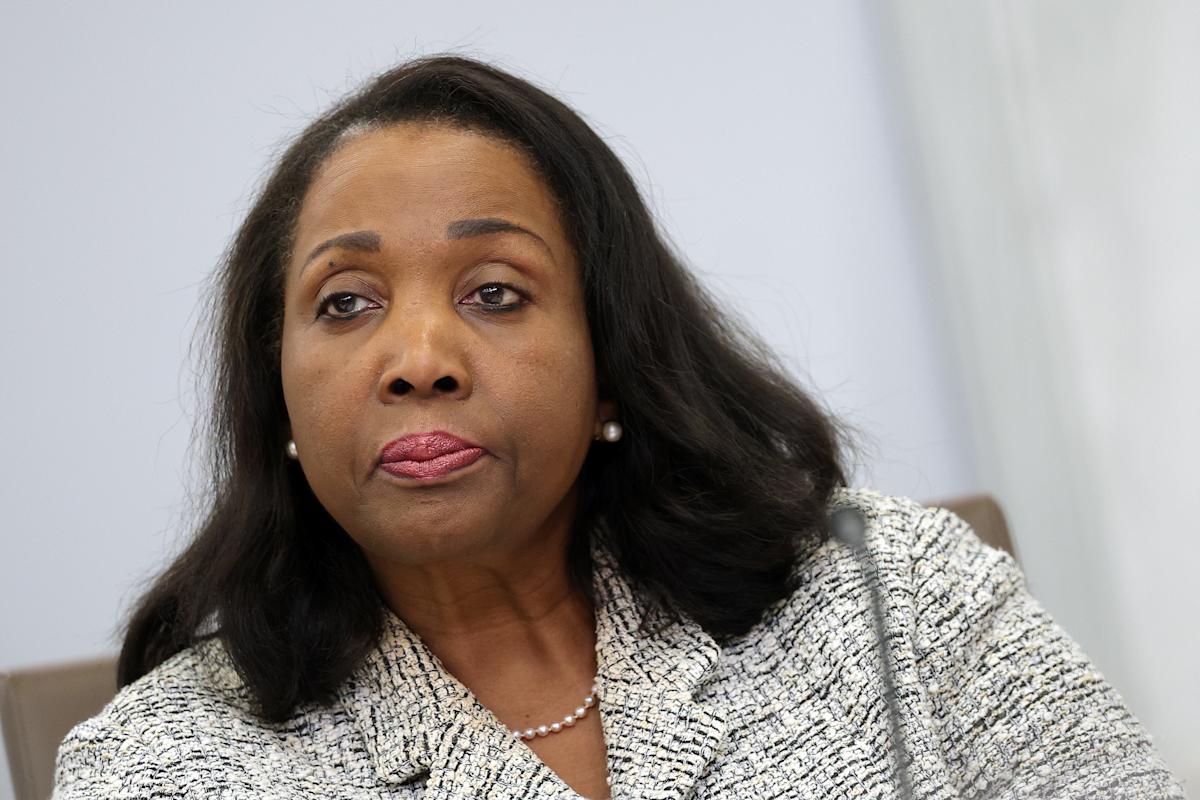
Federal Reserve governor Lisa Cook said Wednesday that inflation is moving in the wrong direction and that while she expects to hold interest rates steady, she’s prepared to hike them if needed.
“After five years of above-target inflation, I am particularly attuned to the risk that elevated inflation will become embedded in price- and wage-setting behavior,” Cook said in a speech at Stanford University. “I am prepared to raise rates if the expected disinflation does not appear in a timely manner.”
While Cook expects inflation to come down in the coming months, she is attuned to the risk that even temporary, short-lived shocks could influence inflation over the medium term. She noted that companies could embed higher energy prices into the prices they set while workers incorporate them into the wages they negotiate.
Cook stressed that, on top of the surge in energy prices, artificial intelligence could also be contributing to higher prices, given the large investment in the space. She noted that prices for chips, other high-tech equipment, and software have risen considerably, and that electricity and water prices have each increased by about 5% over the past year.
Cook, however, expects inflation to fall back without the Fed having to raise rates. She also said she expects the job market to remain stable without having to lower rates.
Cook’s comments come right before the Fed’s preferred inflation gauge — the Personal Consumption Expenditures index — is released Thursday. It’s expected to show that inflation rose to nearly 4% in April due to higher energy prices. Excluding energy and food prices, “core” PCE is estimated to have risen by 3.3% in April — its highest reading since 2023.
Read more: How jobs, inflation, and the Fed are all related

Federal Reserve governor Lisa Cook arrives for a board meeting at the Federal Reserve on March 19, 2026, in Washington, D.C. (Kevin Dietsch/Getty Images) · Kevin Dietsch via Getty Images
Minneapolis Fed president Neel Kashkari, in a Q&A in Japan on Wednesday, said the Fed needs to contain inflationary risks that appear to be rising, Reuters reported. However, he said it’s too soon to say whether that would require a rate hike. He said the risk of inflation is now greater than the risk of deterioration in the job market.
Kashkari said the “inflationary shockwave” sent around the world by the Middle East war could persist.
The 2-year Treasury yield, a leading indicator of the Fed’s interest rate policy, remains around 4% this week, 25 basis points above the upper end of the Fed’s target range of 3.5%-3.75%. The bond market is pricing in higher inflation and the prospect of one rate hike this year.
Jennifer Schonberger is a veteran financial journalist covering markets, the economy, and investing. At Yahoo Finance she covers the Federal Reserve, Congress, the White House, the Treasury, the SEC, the economy, cryptocurrencies, and the intersection of Washington policy with finance. Follow her on X @Jenniferisms and on Instagram.