Manufacturing by Informa’s European event continues to grow through an expansive education slate and innovative activations.
STUTTGART, Germany, May 28, 2026 (GLOBE NEWSWIRE) — The Battery Show Europe and Electric & Hybrid Vehicle Technology Expo Europe, (June 9–11, Messe Stuttgart), the region’s only dedicated event for battery manufacturing, electric and hybrid vehicle technology industries, has announced new show experiences and its 2026 conference program addressing the industry’s most pressing challenges, from EU Battery Passport compliance and the future of electric mobility to moving beyond import dependence and circular economy considerations.
With Europe’s lithium-ion battery market projected to reach €130-150 billion by 2035 and the Battery Passport deadline approaching in February 2027 for the European Union, the 2026 event provides the strategic guidance, technical solutions, and industry connections manufacturers need to navigate regulatory change while scaling production and competing globally.
The Battery Passport, set to launch in February 2027, requires manufacturers to implement digital tracking systems for battery lifecycle data, sustainability metrics, and supply chain transparency. The event’s dedicated Compliance & Regulations track will feature implementation roadmaps and case studies from early adopters while connecting manufacturers with compliance solution providers and data management platforms to meet the deadline.

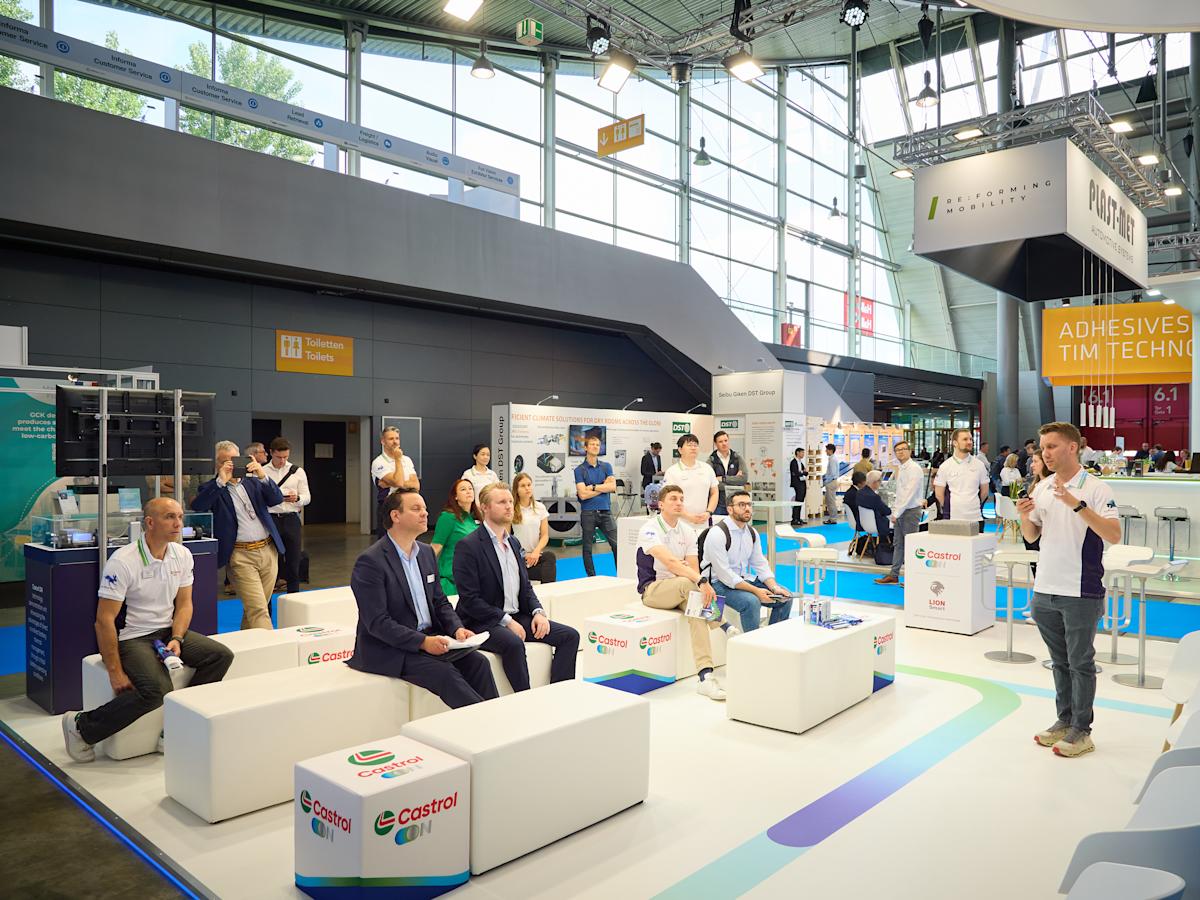
Battery Show Europe 2025.
Conference Programming: Tackling Europe’s Battery Industry Challenges
The 2026 conference addresses the critical questions facing European battery manufacturers, equipping companies with the knowledge to compete globally. Featuring leading OEMs, battery cell and pack producers, materials and chemistry suppliers, machinery and production, and more, the program spans eight key themes: Manufacturing, Machinery & Equipment; Chemistry, Materials & Components; Market Insights & Industrial Strategy; Recycling, Second Life & Circular Economy; Future of Electric Mobility; Compliance & Regulations; Battery System Design, Integration & Thermal Management; and Software Simulation, Data, & AI.
Highlighted sessions include:
Cost-Competitive Battery Chemistries for Mass-Market EVs, presented by Mathias Le-saux, General Manager Costing department – Battery & powertrain, Ampere, will explore how battery chemistry selection works in practice whilst dealing with cost targets, which are set early at vehicle and system level, long before sourcing decisions are made.
Strengthening the European Battery Industry: The Reality of Competing at Giga-Scale, an in-depth look at the industrial realities behind Europe’s battery ambitions. Featuring Johan Lannering, Senior Director, Negotiation Team, Volvo Cars Battery Factory at Volvo Cars, the talk will focus on the practical conditions required to build a viable European battery value chain, including cost competitiveness, scale, speed of decision-making and the consequences of continued policy uncertainty.
The Reality of Building a Battery Manufacturing Facility in the UK, from Earl Wiggins, Vice President Manufacturing Operations, Agratas, examining what it takes to develop a large-scale facility in the UK, using the Agratas Somerset factory as a live case study.
Diversifying Demand Beyond Passenger EVs: Saft’s Vision for Battery Innovation, featuring Cedric Duclos, CEO, Saft, exploring how battery innovation is reshaping a multitude of industries and applications, unlocking new opportunities and driving sustainable growth.
Heavy-Duty Battery Strategy: Balancing Chemistry Choices for Long-Life Electric Trucks, from Dr. Dragoljub Vrankovic, Manager Cell Predevelopment, Daimler Truck AG, examining how heavy-duty transport can continue to evolve with new limitations on warranty growth, second-life residual value and more.
Battery Demands in Marine and Safety-Critical Applications, Chris Kruger, President, AYK Energy, providing insight into marine applications reshaping battery requirements across voltage levels, safety architecture, environmental resilience and system integration.
Story Continues
