
On the surface, the stock market appears untouchable. In recent weeks, the time-tested Dow Jones Industrial Average (DJINDICES: ^DJI), broad-based S&P 500 (SNPINDEX: ^GSPC), and tech-fueled Nasdaq Composite (NASDAQINDEX: ^IXIC) all closed at record highs.
But do a bit of digging into U.S. Treasury bond yields, and you’ll discover that Wall Street’s historic rally is more precarious than investors realize.
Will AI create the world’s first trillionaire? Our team just released a report on the one little-known company, called an “Indispensable Monopoly” providing the critical technology Nvidia and Intel both need. Continue »
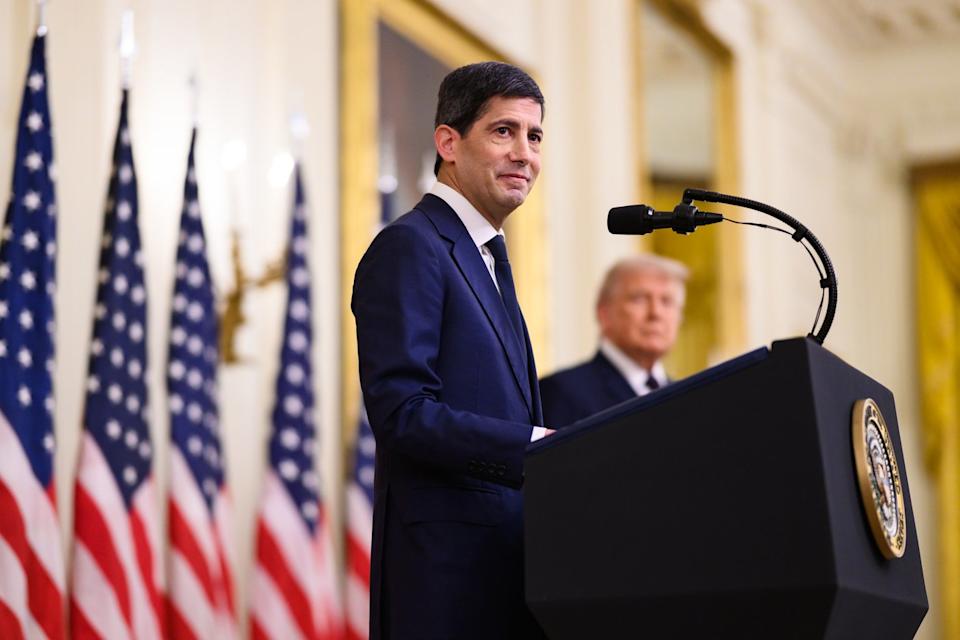
New Fed Chair Kevin Warsh delivering remarks. Image source: Official White House Photo by Daniel Torok. Treasury yields are soaring, and new Fed Chair Kevin Warsh is partly to blame
Recently, the 10-year U.S. Treasury yield neared its 2023 high of 4.9%, while the yield on the 30-year T-bond pushed to a 19-year high of almost 5.2%. While this is great news for investors in fixed-income securities, it’s terrible news for the stock market. As yields push higher in ultra-safe Treasury bonds, investors may choose bonds over stocks.
This surge in Treasury yields has multiple catalysts, including rapidly rising inflation tied to the Iran war and U.S. national debt surpassing $39 trillion. But make no mistake about it: T-bond yields soaring as Kevin Warsh ascends to the Federal Reserve’s lead post is no coincidence.
Warsh previously served on the Board of Governors of the Federal Reserve and was a voting member of the Federal Open Market Committee (FOMC) from Feb. 24, 2006, to March 31, 2011 (i.e., during the financial crisis). Over this five-year period, Warsh’s voting record demonstrates a hawkish monetary approach.
Even as the unemployment rate soared during the financial crisis, Warsh cautioned his peers against lowering interest rates to avoid a resurgence of inflation. In other words, Warsh has shown a tendency to favor higher interest rates to stabilize prices. The surge we’ve observed in 10- and 30-year Treasury bond yields suggests that interest rates will remain higher for longer.

Image source: Getty Images. Deleveraging the central bank’s balance sheet comes with potentially serious consequences
The 30-year T-bond yield hitting a 19-year high may also be spurred by the new Fed chair’s plans to shake up the central bank’s balance sheet.
Story Continues