
Pope Leo XIV made history Monday by issuing the Vatican’s clearest apology yet for the Catholic Church’s role in legitimizing slavery, directly acknowledging that past popes granted European powers authority to conquer and enslave non-Christians during the colonial era. In his first encyclical, Magnifica Humanitas (“Magnificent Humanity”), Leo called the Church’s historical record on slavery “a wound in Christian memory” and asked forgiveness for centuries of suffering tied to the trans-Atlantic slave trade.
According to The Associated Press, the apology arrived as part of a broader manifesto focused on artificial intelligence, human dignity, and what Leo described as modern forms of exploitation emerging through the digital revolution.
But one of the document’s most striking moments centered on the Vatican’s own history. Leo specifically referenced the Holy See’s role in “regulat[ing] and legitimiz[ing] forms of subjugation” during the early modern period, including the enslavement of “infidels.”
No previous pope had publicly apologized for papal decrees that explicitly authorized slavery. On the contrary, in 1452, Pope Nicholas V issued the papal bull Dum Diversas, granting Portugal the right “to invade, conquer, fight and subjugate” non-Christians and “reduce their persons to perpetual slavery.”
A second decree, Romanus Pontifex in 1455, reinforced those permissions and later became part of the legal and religious framework behind European colonial expansion in Africa and the Americas.
Historians note that later popes renewed or confirmed those permissions well into the 16th century.
Leo’s encyclical also acknowledged how long it took the Church to formally condemn slavery. While Pope Paul III’s Sublimis Deus in 1537 prohibited the enslavement of Indigenous peoples in the Americas, the order was widely ignored by colonial powers and did not directly protect Africans caught in the growing slave trade.
It was not until 1839 that Pope Gregory XVI formally condemned the enslavement of both Indigenous peoples and Africans in In supremo apostolatus. Leo noted that the Church recognized the full incompatibility between slavery and Christian teaching only after “eighteen centuries.”
“It is impossible not to feel deep sorrow when contemplating the immense suffering and humiliation endured by so many,” Leo wrote. “For this, in the name of the church, I sincerely ask for pardon.”
Per The Associated Press, historian Shannen Dee Williams called the apology a “monumental step” toward long-awaited truth-telling about the Catholic Church’s involvement in slavery and anti-Black racism.
The moment is also deeply personal for Leo. According to genealogical research published by Henry Louis Gates Jr., the pope’s American family history includes both enslaved people and slaveholders, with at least 17 ancestors identified in historical records as Black, Creole, mulatto, or free people of color.
Leo, the first U.S.-born pope, recently visited Angola and prayed at a Catholic shrine located at a major hub of the African slave trade during Portuguese colonial rule.
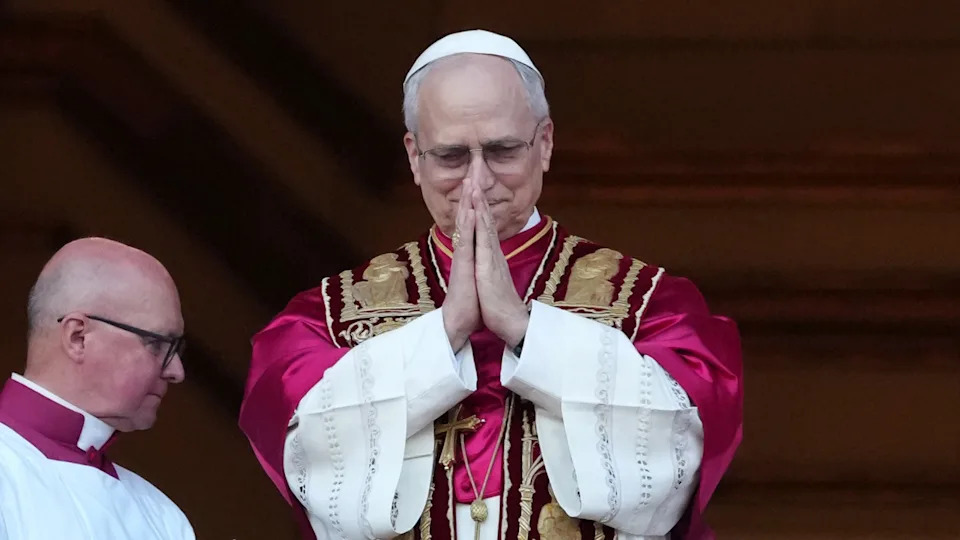
Pope Leo XIV Canonizes First Millennial Saint, Known as ‘God’s Influencer’
Gwen Stefani Faces ‘MAGA Makeover’ Backlash After Promoting Catholic Prayer App

Gwen Stefani Claims Prayer Led to ‘Miracle’ Pregnancy at 44
Related News
Zohran Mamdani Sets New Precedent for Elected Officials by Launching Twitch Series
Tennessee Man Wins $835K Settlement After Being Jailed for Posting Memes About Charlie Kirk’s Death