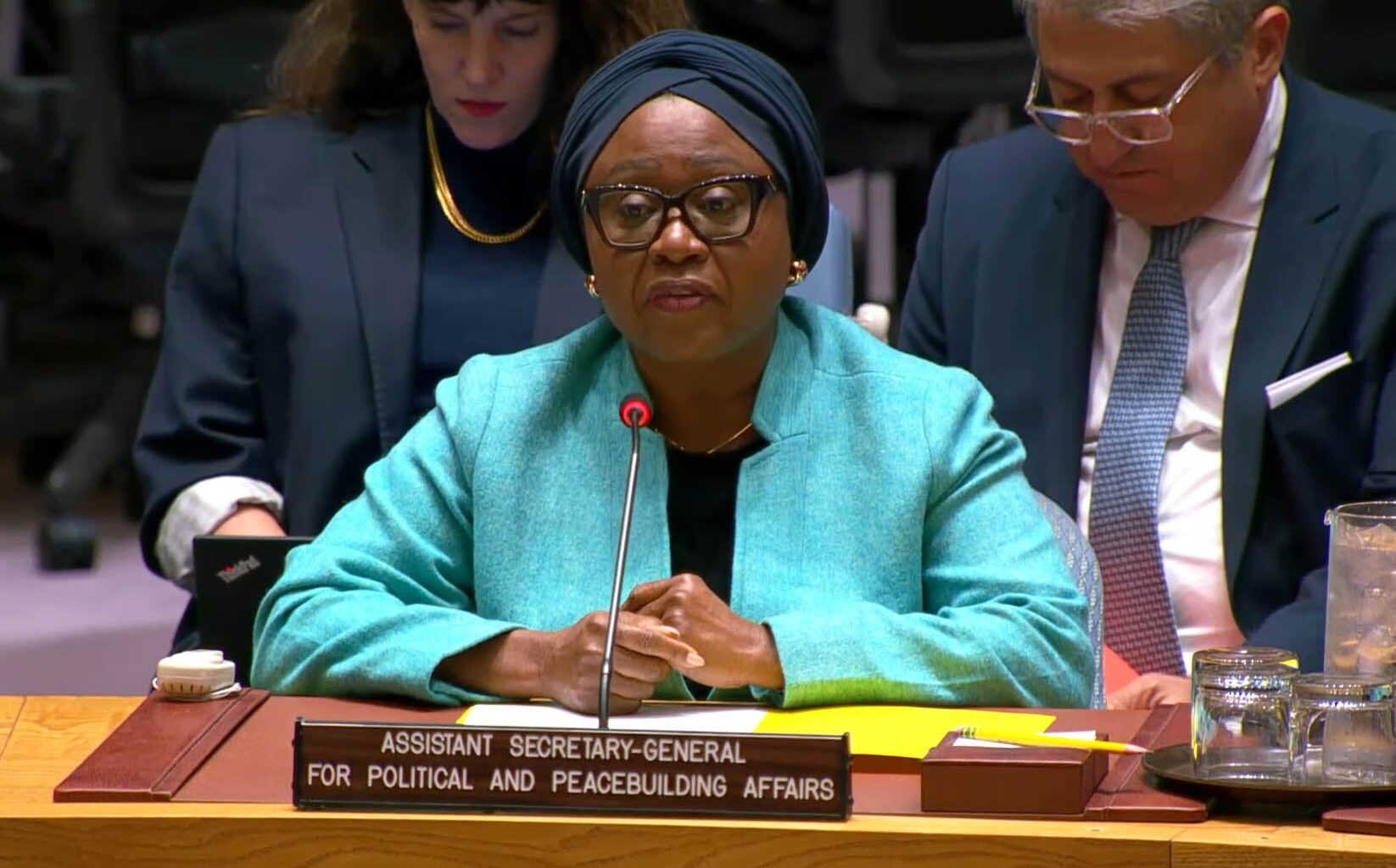
United Nations Assistant Secretary-General Martha Pobee told an emergency meeting of the Security Council on Monday that Israel’s push into Lebanon violates Lebanon’s territorial integrity and the 2006 council resolution requiring Israel to withdraw south of the UN-drawn border with Lebanon.
Pobee also accused Hezbollah of violating the resolution, which requires the terror group to disarm, and said the ultimate objective is “a durable, permanent ceasefire adhered to by all sides.”
“The situation in Lebanon is deeply alarming,” Pobee said in a statement about the meeting on the UN website.
France had called for the meeting, citing the escalating violence in Lebanon, its foreign ministry said in a statement.
“It is Hezbollah, supported by Iran, that bears responsibility for the outbreak of hostilities,” France said at the meeting.
While recognizing Israel’s right to defend itself, the French representative said that the scale of Israel’s operations in Lebanon cannot be justified and is a “major strategic mistake.”
US Ambassador Mike Waltz said de-escalation and peace will come quickly “if Hezbollah immediately ceases its attacks, as apparently it’s promised, and the government of Lebanon asserts its full sovereignty, rebuilds, and brings its people home,” a reference to a ceasefire announced Monday by US President Donald Trump, though of unclear circumstances and commitment by both sides.
Lebanon’s UN Ambassador Ahmad Arafa accused Israel of “capitalizing, as usual, on a tense regional climate” and engaging in a “systematic campaign of destruction” that in many instances “amount to war crimes.”
Arafa said that if Israel commits to a ceasefire, “the state pledges that, once this is achieved, it alone will be held accountable and answerable for any subsequent violations.”
Israeli envoy Danny Danon pointed out that Israel “did not wake up one morning and decide to enter Lebanon,” saying that rather, it “had no choice” after Hezbollah attacked Israel on March 2 in support of its sponsor, Iran, which was under assault in a joint US-Israeli campaign.
Addressing the French envoy, he asked if France would wait “until the drones were buzzing over Paris” before it eliminated the threat.
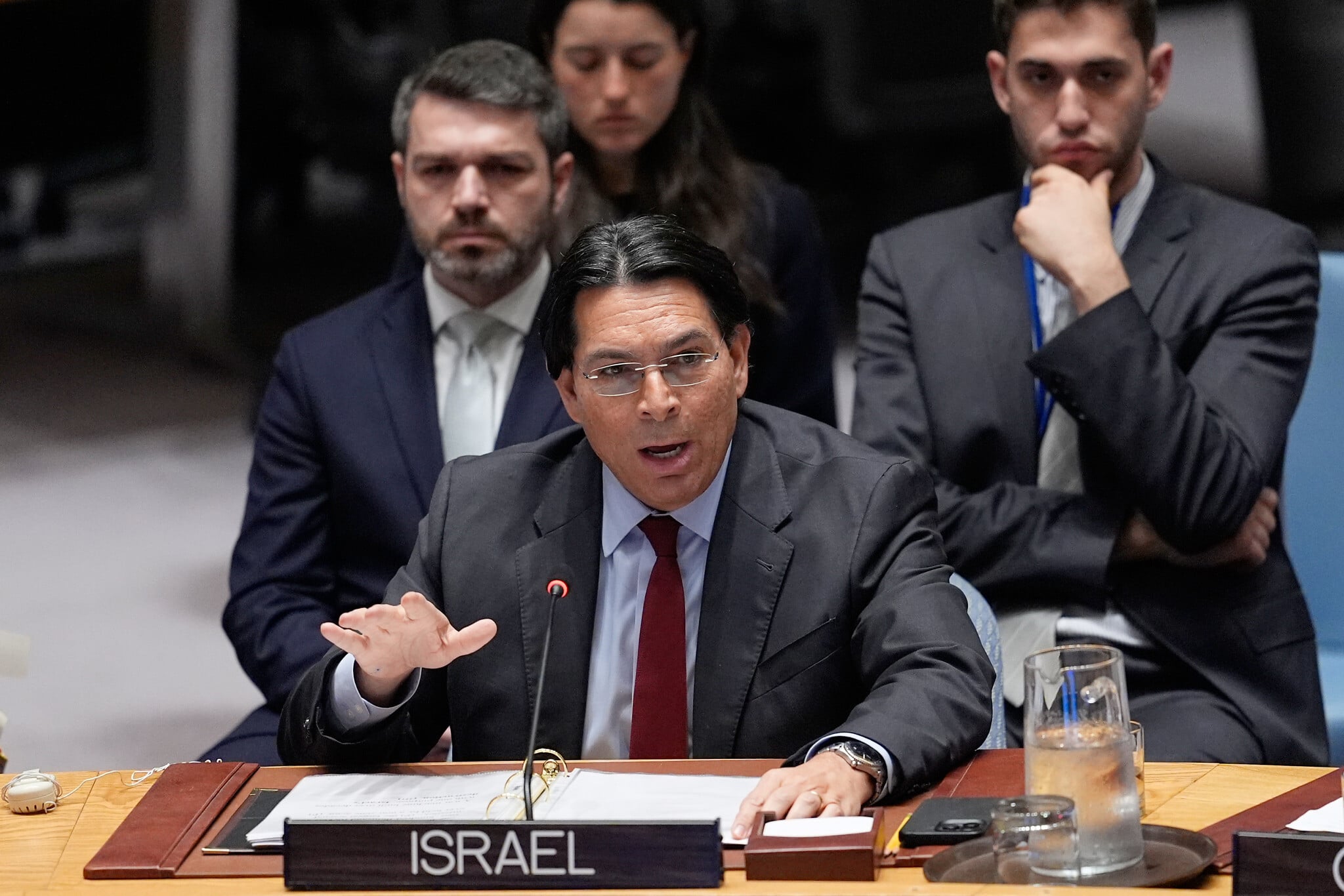
Israel’s Ambassador to the United Nations Danny Danon speaks during a meeting of the Security Council at UN headquarters, March 11, 2026. (AP Photo/Seth Wenig)
Stephane Dujarric, spokesman for UN Secretary-General Antonio Guterres, urged all sides “to respect the cessation of hostilities.”
Three months of intensified fighting
The latest round of fighting between Israel and Hezbollah began on March 2, when Hezbollah fired rockets into northern Israel two days after the US and Israel attacked its main backer, Iran. Since then, 26 IDF soldiers and one Defense Ministry civilian contractor have been killed in southern Lebanon, 14 of them since a ceasefire was introduced on April 16. Two civilians were also killed by Hezbollah rockets, and an Israeli civilian was mistakenly killed in the north by Israeli artillery shelling.
In Lebanon, the Israeli military has said that it has killed over 2,500 Hezbollah operatives, including hundreds of members of the terror group’s elite Radwan Force, since early March.
Since March 2, Hezbollah has fired some 5,500 rockets at IDF troops operating in the south of the country, as well as around 2,500 at Israel, according to the military. There were at least 75 rocket impact sites in Israel.
In addition, Hezbollah launched around 300 drones, of which 25 struck Israel, according to the IDF.
The IDF believes Hezbollah still possesses thousands of short-range rockets, along with hundreds of longer-range projectiles. The IDF has said that Hezbollah is launching most of its attacks from deeper within southern Lebanon, north of the Litani River, and not from areas close to the border.
UN chief urges peacekeepers must remain
UN chief Antonio Guterres said Monday that peacekeepers will be needed in Lebanon after the mandate of the current mission expires at year’s end — a prospect likely to face opposition from the United States and Israel.
Last August, the UN Security Council, under US pressure, decided to end the mandate of the United Nations Interim Force in Lebanon (UNIFIL) on December 31, 2026.
However, it asked Guterres to propose options by June 1 to allow UN peacekeepers to remain in Lebanon, particularly to monitor the Blue Line, which stretches for 120 kilometers (75 miles), marking the de facto border between Lebanon and Israel — now the middle of the Israel-Hezbollah war.
Israel has long argued that the observer force has failed in its mission, doing little to block Hezbollah from building up its forces near the Israeli border over the decades.
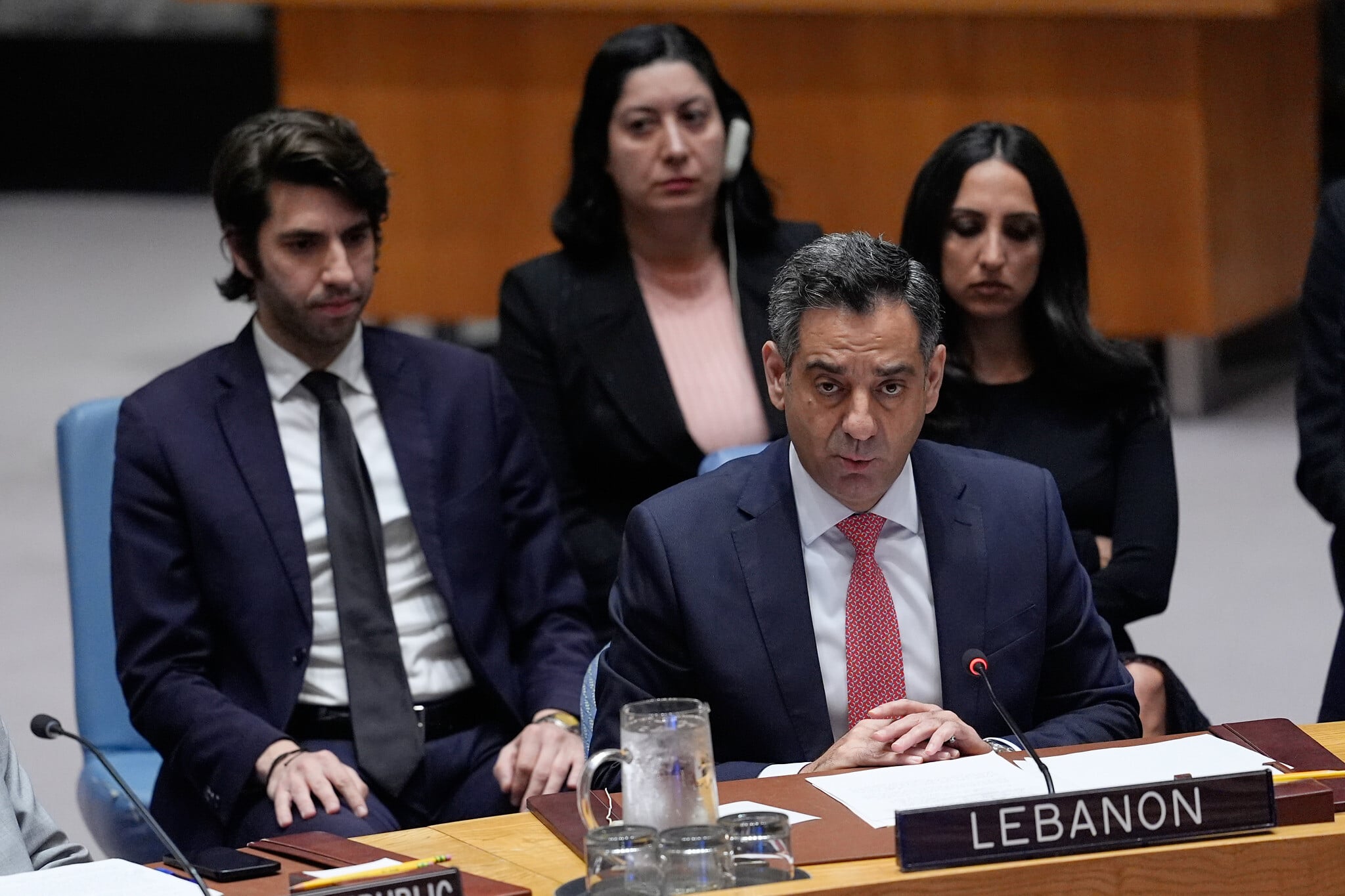
Lebanon Ambassador to the United Nations Ahmad Arafa speaks during a meeting of the Security Council at UN headquarters, March 11, 2026. (Seth Wenig/AP)
In a report to the Security Council seen by AFP on Monday, Guterres proposed three options ranging from nearly 2,000 to more than 5,500 UN personnel to monitor the ceasefire and support the Lebanese armed forces.
“Under all proposed options, a uniformed United Nations presence working to facilitate de-escalation, dialogue, liaison and coordination, and support for the Lebanese Armed Forces, would be necessary… towards the overarching objective of a long-term solution to the conflict,” the report said.
UNIFIL currently counts some 7,500 peacekeepers from nearly 50 countries. They are deployed in south Lebanon near the Blue Line.
The force has been a buffer between Lebanon and Israel since 1978, although its presence has not prevented repeated outbreaks of conflict.
Several Lebanese sources told AFP that Beirut, which has pledged to disarm Hezbollah but has so far not fulfilled the promise, supports maintaining a UN presence after the departure of UNIFIL.
“Recent developments have only heightened Lebanon’s urgent need for continued UN and international assistance, specifically to facilitate an Israeli withdrawal on the one hand, and to enable the state to extend its authority over its entire territory on the other,” said Lebanon’s ambassador to the UN, Arafa, thanking Guterres for his report.
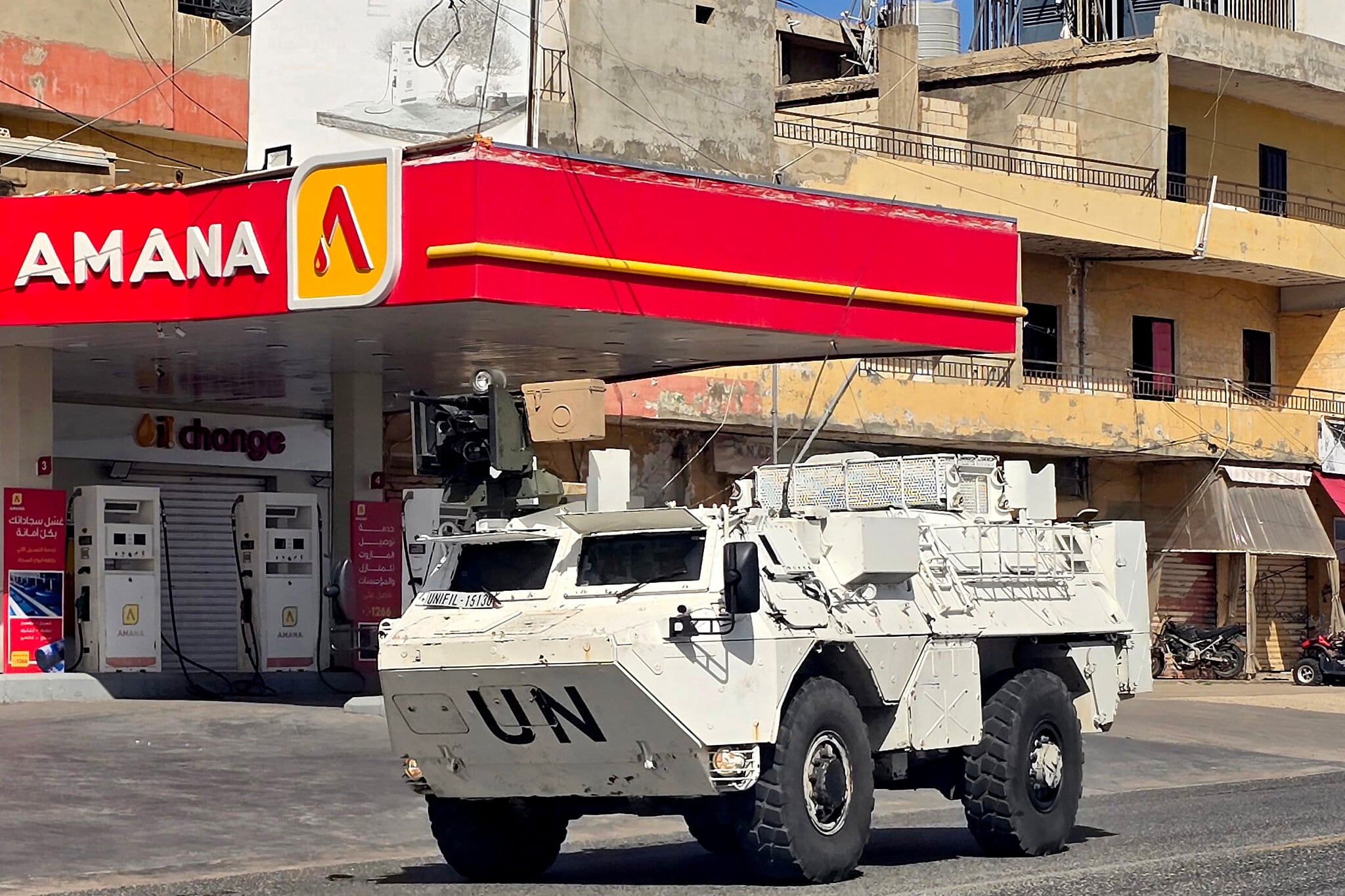
A vehicle of the United Nations Interim Force in Lebanon (UNIFIL) moves along a street in Lebanon’s southern coastal city of Tyre on March 18, 2026. (Kawnat HAJU / AFP)
Several members of the Security Council also support replacing UNIFIL, particularly China and Russia.
“As UNIFIL’s mandate is about to expire, the Security Council must make a responsible decision to ensure the continued UN presence in Lebanon, and to prevent a security vacuum,” said Fu Cong, China’s UN envoy.
But the US and close ally Israel welcomed the vote last summer that ended UNIFIL.
The Trump administration has questioned the effectiveness of UN peacekeeping missions and has withheld part of the US financial contribution to support them, forcing the UN to reduce its troops worldwide.