
All of Hope Springs from Field PAC’s [website] planned canvasses for 2026 are now all in the field. Arizona, California, Florida, Georgia, Iowa, Maine, Michigan, Nevada, New Jersey, North Carolina, Ohio, Pennsylvania, Texas, Virginia & Wisconsin. We’ve now added one Congressional District in Colorado to the list. That’s 16 states, probably all we can do.
 2026 Gubernatorial Map
It has been my practice on Fridays to highlight the state where the most volunteers showed up the previous Saturday. This week, that was Florida, where a whopping 1,284 volunteers came out. Turnout continues to be heavily weighted in Volusia, where volunteers had anticipated a resignation by Cory Mills.
But three consecutive weeks for Florida doesn’t really allow us to highlight all the states we are canvassing, so instead i want to focus attention on Michigan, a critical state to build a Democratic majority in the Senate.
Michigan is the most Democratic state we are canvassing — which may not be saying much. It’s voted for president felon two out of three times but by incredibly tight margins. 53% of the electorate is registered Democratic, Michigan remains above the national average in Union households (13%, but down significantly from its heyday in the 80s (30%)) and the swing vote has virtually collapsed. One organizer here told me that “voters have basically gone to their corners.” Michigan’s Senate seat is open — and the senate primary on the Democratic side is considered quite contentious by some. On August 4th, Michiganders can choose which party’s ballot they want — they don’t need to be registered with that party. But there’s not much of a primary on the Republican side, so swing voters who vote in August will probably flock to the Democratic ballot.
As you can see from the maps included in this post, the Cook Political Report rates the 2026 Michigan Senate race as one of just four toss-ups among the 35 upper-chamber seats up for grabs in November. Sabato’s Crystal Ball has it as one of just three toss-ups.
Voters are very aware of how important this race is. “I was already going to delay vacation until after (the primary),” one voter told a Hope Springs volunteer. “If I can still afford it; might just be a stay-cation for us this year.”
But that’s how important this election is to voters here. Apparently on both sides.
Michigan’s open Senate seat is now emerging as a GOP hedge against a potential takeover for Democrats, who need to net four seats to flip the chamber. Losing Michigan would make the Democrats’ task almost impossible, a major reason why a leading Republican outside group just announced plans to pour $45 million into the state – more than any other pickup opportunity – to boost former Rep. Mike Rogers, the likely GOP nominee.
Republicans are hoping that the ultimate Democratic nominee emerging from the August 4 primary emerges battered and cash-strapped, giving Rogers a leg up.
In a sense, they already know Republicans have to thread the needle here. And Democrats are getting excited.
Democrats are increasingly optimistic about retaking the Senate in the midterm elections — an aspiration that appeared all but out of reach at the start of President Donald Trump’s second term.
The political terrain heading into November remains forbidding for Democrats, who need to win races in at least five states that Trump carried in 2024 to recapture the Senate. But Trump’s crumbling approval ratings and the Iran war’s weight on the economy have given the party fresh hope less than six months from Election Day, even as big hurdles remain.
Which makes the primary for Senate all the more critical.
No Senate primary has generated more Democratic angst than the one in Michigan, where Rep. Haley Stevens, state Sen. Mallory McMorrow and Abdul El-Sayed, a former Wayne County health official, are locked in a tight race that has split Senate Democrats. Schumer and his allies see Stevens as the most competitive candidate in November. Other Senate Democrats have endorsed McMorrow; Sanders is backing El-Sayed.
Michigan is a Toss-Up state with regards to governor, as well.
With Ms. Whitmer term-limited, Democrats will have to beat both a Republican and an independent candidate, the former Detroit mayor Mike Duggan, in order to hold the governorship. Secretary of State Jocelyn Benson is seen as the likeliest Democratic nominee, while Representative John James has led in Republican primary polling.
On Saturday, 817 volunteers come out to canvass in MI-3, MI-4, MI-7, MI-8 & MI-10. They knocked on 46,078 doors, talked to 3,677 voters and had in-depth conversations with 2,309 of them, respectively, guided by our Issues Questionnaire on Saturday.

We already wondered how many volunteers and organizers would be willing to canvass with us before the primary. We continue to be pleased with the turnout here.
Hope Springs from Field PAC started knocking on doors again this year on March 7th. We continue to target Democrats and unaffiliated voters with our systematic approach that reminds them not only that Democrats care, but that Democrats are determined to deliver the best, most affordable government possible to all Americans. The voters we talk to continue to tell us they come away more invested in governance and feel more favorably towards Democrats in general because of our approach.
Obviously, we rely on grassroots support, so if you support field/grassroots organizing, voter registration (and follow-up) and our efforts to protect our voters, we would certainly appreciate your support:
https://secure.actblue.com/donate/UNRIGtheMidterms
Hope Springs from Field understands that volunteer to voter personal interactions are critical. Knocking on doors has repeatedly been found to be the most successful tactic to get voters to cast a ballot and that is the goal of what we do.

Yes, we really need your help here! Our printer’s bills are — like most things — much higher than we had anticipated for the year. Adding extra states (like California) did not help the budget!
On May 30th, the Economy and Cost of Living was the Number 1 issue for the voters we talked to. Rising Prices was second and the Health Care concerns was third.
We’ve added two things to our questionnaire, both of them driven by president felon’s insistence on the Save Act. These are just in case that thing passes so we can protect our voters for November.
Other than that, the Issues Surveys haven’t really changed. Voters like to tell us what is important to them!
1% of the voters we talked to had a favorable impression of the job Trump was doing, while 68% disapproved. For this canvass, we knocked on more Democratic doors than unaffiliated doors, about 58% to 42%, depending on the walk list.
We asked about Job Approval for incumbent Members of Congress: 3% of the voters who responded Approved of the job their Republican member was doing while 52% expressed Disapproval. 52% approved of what Gov. Whitmer was doing, 6% disapproved.
We registered 3 new voters and re-registered 16 voters, updating their current address. One of those had the house across the street listed as their address and never updated it at the poll. *shrug*
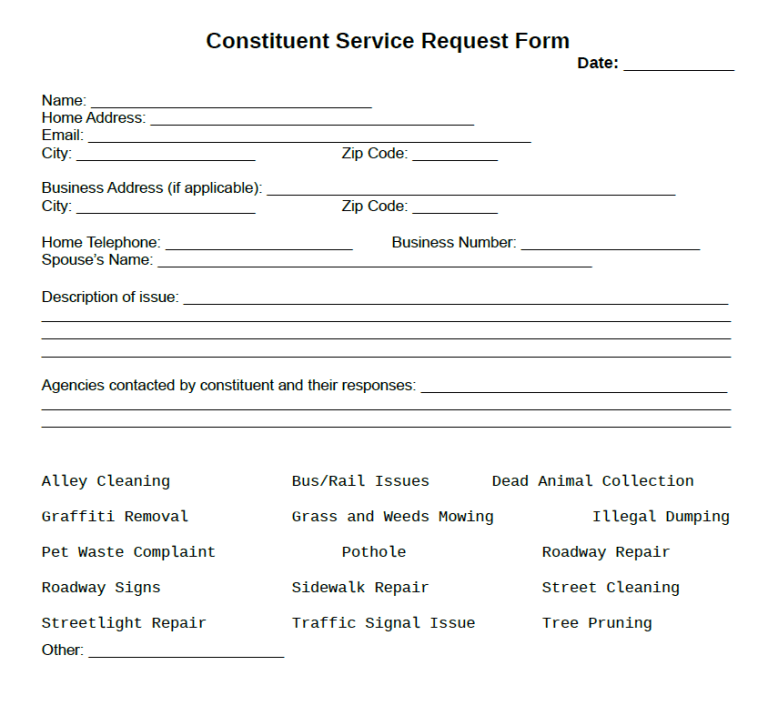
192 voters filled out Constituent Service Requests. We send completed CSRs to Democratic elected officials responsible for the requested functions, but if the appropriate office is held by a Republican, we still send it along. For Democrats, though, we encourage them to reach out immediately to the voter who filled out the Constituent Service Request forms and let them know they are working on the issue. This credit-taking is enormously valuable to the Democratic office-holder.

2 voters filled out Incident Reports. Incident Reports are used to plan Election Protection activities, and will be combined with other, historical incidents and handed over to District and State Attorneys, Attorney Generals and the DoJ Civil Rights Division right before Election Day as a precaution against Election Day Incidents in November. Past polling place activity is a predictor of future voter intimidation or suppression activity.
The Senate is not the only race of interest. The Rigged ReMap prompted lots of questions, as well. And the statewide offices, too. It sounds exciting for Michiganders this year. Lots of things up in the air until this Summer.
Michigan was one of those states where Elon Musk sent in his own field team. This was something we talked about when i visited over the Winter. There’s not a lot we can do until we see evidence of such, i reminded them, especially noting that Musk canvassers repeatedly tried to recruit our volunteers in 2024. But we found in that cycle that their targets were not our targets — the greatest fear expressed by our volunteers has always been knocking on the same doors — o running into a rabid MAGA supporter.
In that visit, some of these volunteers told me that their canvassing experience makes them feel empowered, which is interesting (to me — we don’t think a lot about impressions people have outside of data gathering; feelings aren’t exactly quantifiable afaik). This is one of the reasons why we send canvassers out with clipboards and train them to show voters the paperwork we use, whether it is the Issues Survey, the Constituent Service Request form, an Incident Report or even the Observation sheet, if a volunteer has observed something about the voter or their family (eg, they have children) they think they can write in front of them. Some of our volunteers have referred to this as transparency (that’s how they think about it) but it’s not really transparency. It’s more like voter confidence-building and data-collection. The way *i* think about it is that data is valuable, incredibly valuable, and that’s what voters are giving us at their doors.
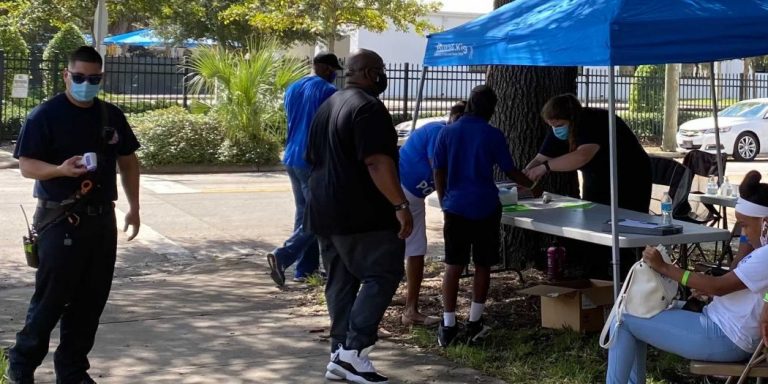 Voter Protection Tabling outside Polling Precinct
We continue to discuss Voter Protection tables outside of polling locations where we think Republicans might try to play games in November. Michigan is one of the states where we think this is a real possibility. We are also identifying lawyers amongst our volunteers and their families for Election Day.
We knock on the doors of Democratic and Independent voters and use a voter-driven approach to guide them through the Issues Survey, the CSR and Incident Report. We record questions voters raise with a Q(uestion)-slip and record other relevant observations on an Observations form. Q-slips are sent to the relevant Democrat to respond to and Observations are entered into VAN. At every door, we leave a piece of “show the flag” lit, something that tells them we were there and hopefully reinforces the Democratic brand. The lit focuses on the things voters told us were important to them last fall, aiming to appeal to every voter.

But the main focus of our canvassing is the Issues Survey, asking voters for their input and concerns. Voter responses to the questionnaire are entered into VAN and made available to all Democratic candidates who use VAN in the state after the primary. Creating this kind of data isn’t done with a specific goal in mind but has the purpose of engaging voters and creating a dataset that any Democratic candidate can use in opposition to a Republican.
Hope Springs has targeted states that have competitive Senate races and/or Congressional Races in 2026. There is a lot of work to be done! Especially since we have had to expand the map this year.
By starting early, and aiming towards super-compliance with some really, really onerous new voter regulations, Hope Springs from Field seeks to undermine that strategy, while informing voters about the new laws and regulations aimed at them and helping them to check their current voter registration status, if they cannot access it online themselves.
Our biggest expense is Printing the Walk Lit that we leave at every door. Access to the Voter File is our second largest cost. But it is also a fixed cost. That won’t change as we raise and spend more money. Printing and mailing our our Post Cards to New Voters is our third cost and paying the fees for ActBlue is the smallest of our monthly costs.
Hope Springs is a seat-of-the-pants grassroots-driven operation. We don’t have employees (yet) but we realize that to formalize and professionalize this effort that will have to change eventually.
Hope Springs has been called “the most comprehensive, organized grassroots voter contact project out there right now. It is truly astonishing that it is grassroots-based!” Not sure why it is “astonishing,” but i probably have more faith in grassroots or self-organized efforts because of my experience with Barack Obama’s early days in 2007.
No other Democratically-aligned org has been methodically trying to circumvent MAGA efforts to rig the House Midterm elections. And we need your help to continue.
If you are able to support Hope Springs from Field’s efforts to protect Democratic voters, especially in minority communities, expand the electorate, and believe in grassroots efforts to increase voter participation and election protection, we would appreciate your support:
https://secure.actblue.com/donate/UNRIGtheMidterms
If you would rather send a check, you can follow that link for our mailing address at the bottom of the page. Thank you for your support. This work depends upon you!