
Lebanese President Joseph Aoun accused Iran Friday of using Lebanon as a “bargaining chip” in negotiations with the United States, and called on both Hezbollah and Israel to embrace diplomacy in a bid to end the fighting between them.
His comments in an interview with CNN came after Israel and Lebanon agreed on Wednesday to renew a truce in the conflict. Hezbollah has rejected the ceasefire deal, but on Friday, Lebanese Parliament Speaker Nabih Berri, an ally of the Iran-backed terror group, said he agreed to its withdrawal from southern Lebanon as long as the IDF also pulls out of the area.
Israel and the Lebanese government both support efforts to disarm Hezbollah and remove it from southern Lebanon. But Iran has rebuffed those calls and has sought to tie a ceasefire in Lebanon to its own peace talks with the US.
Aoun has repeatedly sought to distance Lebanon from regional conflicts and has said decisions concerning the country’s sovereignty and security must be made by the Lebanese state alone. Speaking to CNN, he slammed the Islamic Republic’s interference in Lebanon, noting that Iran’s Islamic Revolutionary Guard Corps opposed the truce deal.
“It’s not your country, it’s our country,” he said, referring to Iran. “It’s our obligation. It’s not your job to interfere in our country… Our people [are] being killed, our people, our house is being destroyed.”
Get The Times of Israel’s Daily Edition
by email and never miss our top stories
By signing up, you agree to the terms
He added, “They are using Lebanon as a bargaining chip in their negotiation with the United States. It’s unacceptable.”
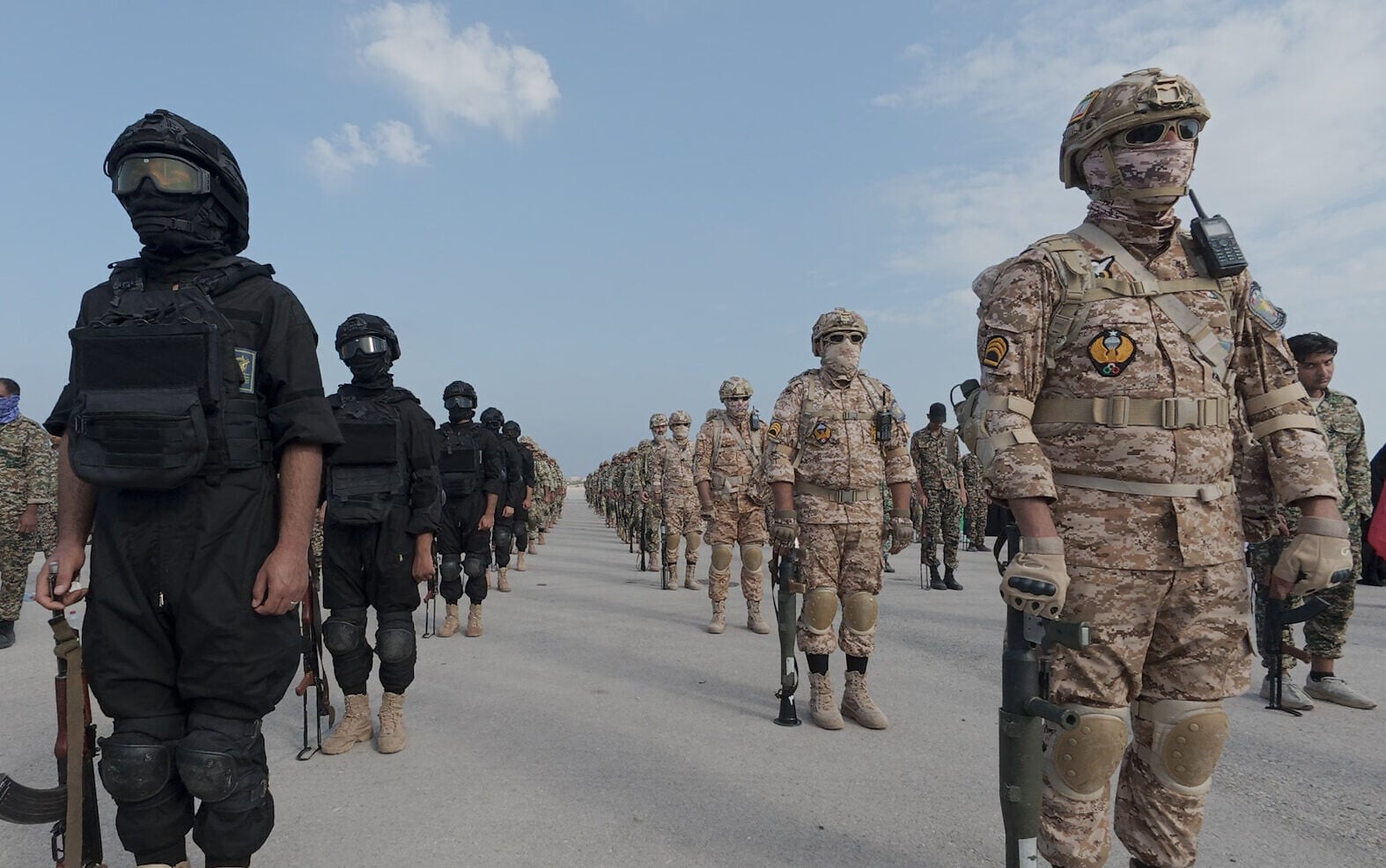
Illustrative: This image provided by Sepahnews of Iran’s Islamic Revolutionary Guard Corps on February 16, 2026, shows troops standing at attention during the IRGC’s drill in the Persian Gulf. (Sepahnews via AP)
In Wednesday’s ceasefire agreement, following Israeli-Lebanese talks in Washington DC, the countries pledged to create a number of “pilot” security zones inside Lebanon from which Hezbollah terrorists would be banned.
A joint statement said the truce “is contingent on a complete cessation of Hezbollah fire and the evacuation of all Hezbollah operatives” from areas south of the Litani River, and said the deal would “enable progress towards a comprehensive peace and security agreement.”
But Hezbollah’s chief, Naim Qassem, rejected the deal as “surrender.” Qassem said that his group would keep bombarding northern Israel as long as strikes continue in Lebanon. Qassem also urged the Lebanese government to quit the “farce” of direct talks with Israel.
Berri also criticized the agreement in written comments distributed by his office, calling it unfair and saying it should have included an “unconditional ceasefire by land, sea and air.”
But he added that he “agrees to… Hezbollah’s withdrawal from south of the Litani River, in parallel with the Israeli withdrawal from the areas it occupied.”
Berri is the senior-most Shiite politician in Lebanon, and his Amal Movement has historically had close ties to Hezbollah.
In Israel, meanwhile, a report said some government ministers were unhappy with the ceasefire and had unsuccessfully demanded a cabinet vote on it. Prime Minister Benjamin Netanyahu answered that he wouldn’t call a vote on the latest iteration of the US-brokered truce until Hezbollah has accepted its terms, the Ynet news site reported.
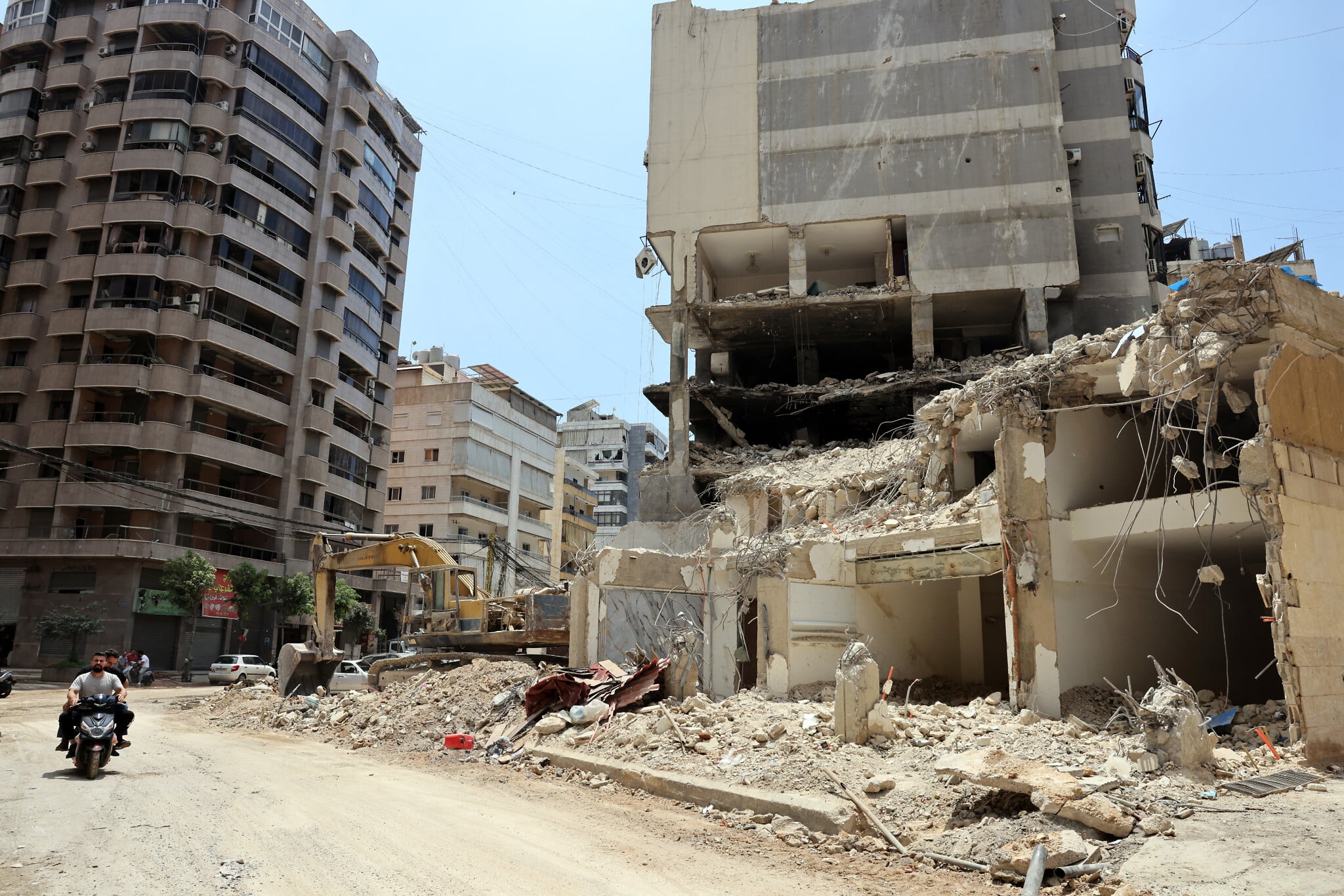
A man rides a motorbike past a destroyed building in a neighborhood in Beirut’s southern suburbs on June 2, 2026. (Anwar AMRO / AFP)
Aoun, for his part, touted the negotiations and called on both Hezbollah and Israel to choose diplomacy over fighting.
“Hezbollah must understand that [there is] no other way but to sit and talk, no other way to solve this problem and to save what’s left except through negotiation and diplomacy,” he said.
He also urged Israel to stop fighting in Lebanon, and suggested his country was ready to consider a peace deal.
“Aren’t you fed up with war since 1948?” he said. “Do you want, really, to live in peace? Let’s sit and talk. For the Israeli government, it’s a time for the power of reason to prevail over the reason of power. Military activities or [a] military solution will never provide you with security and safety to the northern people [in Israel]. We are ready to sit and talk.”
The conflict between Israel and Hezbollah reignited in March, days after the beginning of the US-Israeli war with Iran, as the terror group began launching rockets and drones at Israel. Israel responded with heavy airstrikes and by expanding its ground troops’ presence in southern Lebanon.
Israel and Lebanon have held successive rounds of negotiations since then, but efforts at a ceasefire have unraveled. Israel has expressed skepticism at the Lebanese government’s capacity to disarm Hezbollah or uproot it from the border area, despite its stated commitment to doing so.
In the CNN interview, Aoun said he was “committed to save the country.”
“I’ll do whatever it takes,” he said. “When there is a will, there is always a way. I’m not saying that it’s very easy… Have you ever seen a 40-year conflict or a 50-year conflict end in one day or overnight? But we have to struggle in order to save what’s left of the country.”
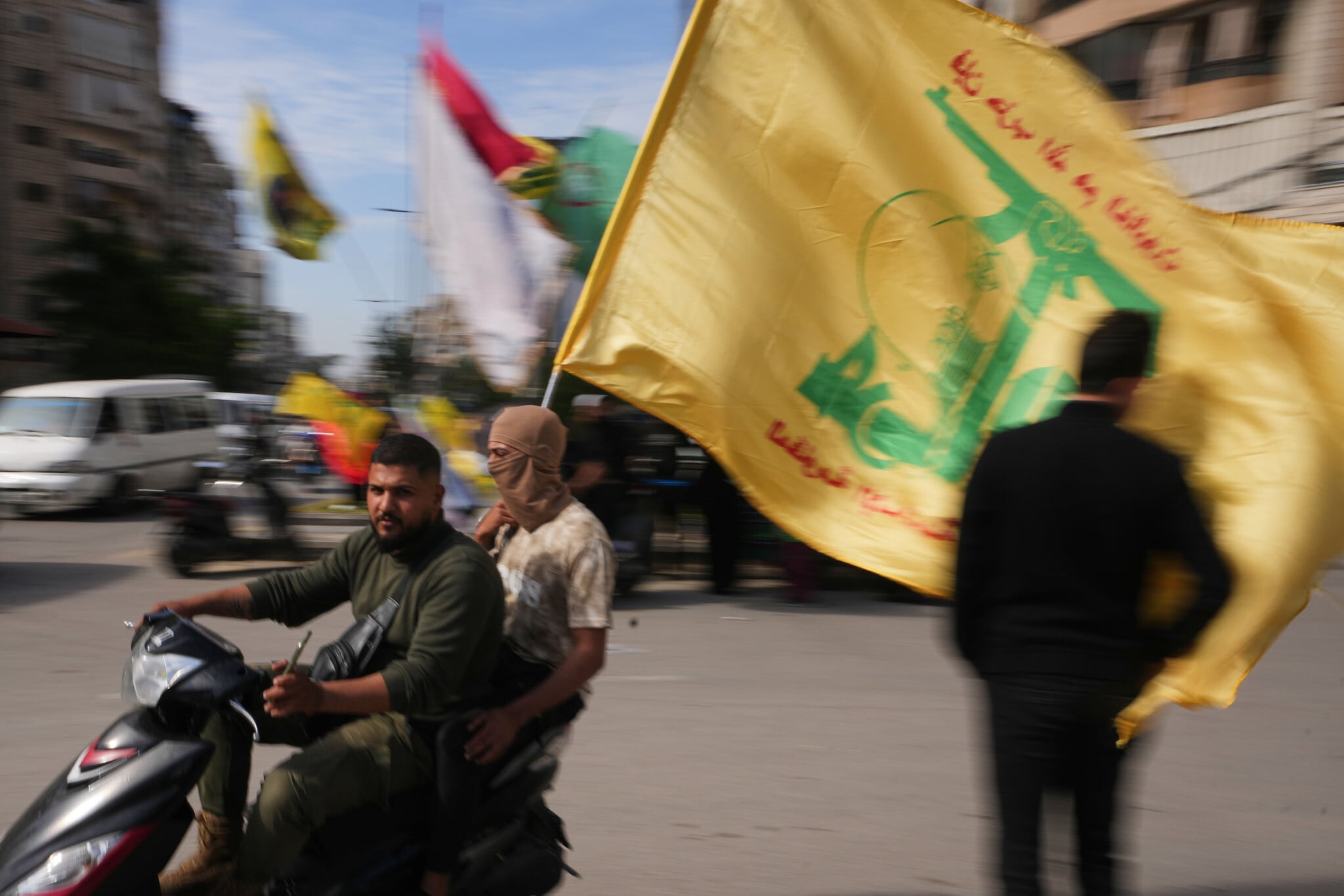
Men ride a scooter while waving a Hezbollah flag during a small gathering in Dahiyeh, Beirut’s southern suburbs, Lebanon, April 25, 2026. (AP Photo/Hassan Ammar)
Lebanon sentences activists for inciting Israeli attacks
In parallel with those pledges, Lebanon’s judiciary charged two anti-Hezbollah activists in absentia with inciting Israeli attacks against the terror group, and sentenced them to 15 years in prison, a judicial official told AFP on Friday.
It was the harshest sentence yet against activists expressing support for Israel. Lebanon has previously arrested people accused of spying for Israel.
The official, who requested anonymity, said the two individuals, Ahmed Yassine and Joumana Gebara, both living outside Lebanon, were charged with “collaborating with Israel and inciting it to continue its military operations against Hezbollah in Lebanon” by the military tribunal, in a trial that began in November 2024.
Yassine, a Paris-based university professor, is accused of “inciting the Israeli army to bomb the historic Baalbek Citadel by disseminating information claiming that the citadel housed Hezbollah weapons depots.”
Yassine also has a YouTube channel where he shares political commentary to more than 140,000 subscribers.
Gebara is accused of “praising Israeli army spokesman Avichay Adraee and thanking him for the bombings of Lebanon, as well as calling for normalization with Israel” during the Israel-Hezbollah conflict in 2024, the official said.
You’re a dedicated reader

That’s why we started the Times of Israel – to provide discerning readers like you with must-read coverage of Israel and the Jewish world.
So now we have a request. Unlike other news outlets, we haven’t put up a paywall. But as the journalism we do is costly, we invite readers for whom The Times of Israel has become important to help support our work by joining The Times of Israel Community.
For as little as $6 a month you can help support our quality journalism while enjoying The Times of Israel AD-FREE, as well as accessing exclusive content available only to Times of Israel Community members.
Thank you,
David Horovitz, Founding Editor of The Times of Israel
Already a member? Sign in to stop seeing this