
MEPs raised concerns about the weakening of democratic standards in Slovakia at a plenary debate on Wednesday (11 February) — while representatives of Slovak governing coalition parties called it a deliberate humiliation of the country.
“No corruption, no problems with the rule of law. These are your inventions, so you can smear your own government,” responded MEP Ľuboš Blaha from Smer, Slovakia’s main centre-left party led by prime minister Robert Fico.
The ruling Smer party found allies in the debate among several conservative MEPs, mainly from the Polish Law and Justice party (PiS), Hungarian Viktor Orbán’s Fidesz, and German far-right AfD.
But concerns about the possible weakening of democratic standards in Slovakia were raised mainly by MEPs from liberal Renew Europe, the Greens/EFA, and the centre-right European People’s Party groups.
The plenary discussion highlighted the danger of the collapse of key anti-corruption institutions, changes in the Criminal Code, and legislation on whistleblower protection.
The special prosecutor’s office, which handled high‑level corruption and organised crime cases, was abolished as part of a broader criminal justice reform in 2024, when the National Crime Agency (NAKA) was also dismantled.
Slovakia’s 2024 criminal law reforms, rushed through via accelerated procedures, were also a source of concern. As of February 2026, Slovakia’s whistleblower system remains functional under the independent Whistleblower Protection Office (WPO), due to a Constitutional Court suspension of government efforts to abolish it.
‘Incredible level of corruption’
However, independent Polish MEP Michał Wawrykiewicz pointed out the decline of the rule of law in Slovakia in several areas and also highlighted the “incredible level of corruption.” According to him, the situation now has crossed both legal and moral boundaries.
German MEP Daniel Freund from the Greens recounted his experience from a January visit to Slovakia, where he met Pirate Party politician Zuzana Šubová.
She was a former chief of the anti-corruption unit in Slovakia’s Agricultural Payments Agency – a state institution that distributes European and national subsidies in the field of agriculture and rural development.
“Shortly after my visit, in the early hours of the morning, 13 police officers appeared, turned her apartment upside down, took her to the police station, where she was held for hours without being told why she was detained.
“And all of this happens directly in an EU member state,” Freund told MEPs.
He added that regarding Slovakia, he sees not only no progress but actually regression. “This is a serious risk for the Union’s financial interests, and I think it’s time to start acting according to the rule-of-law mechanism, because when Fico finances luxury villas for his friends and family from EU funds, it is not in line with the Union’s financial interests,” the German MEP said.
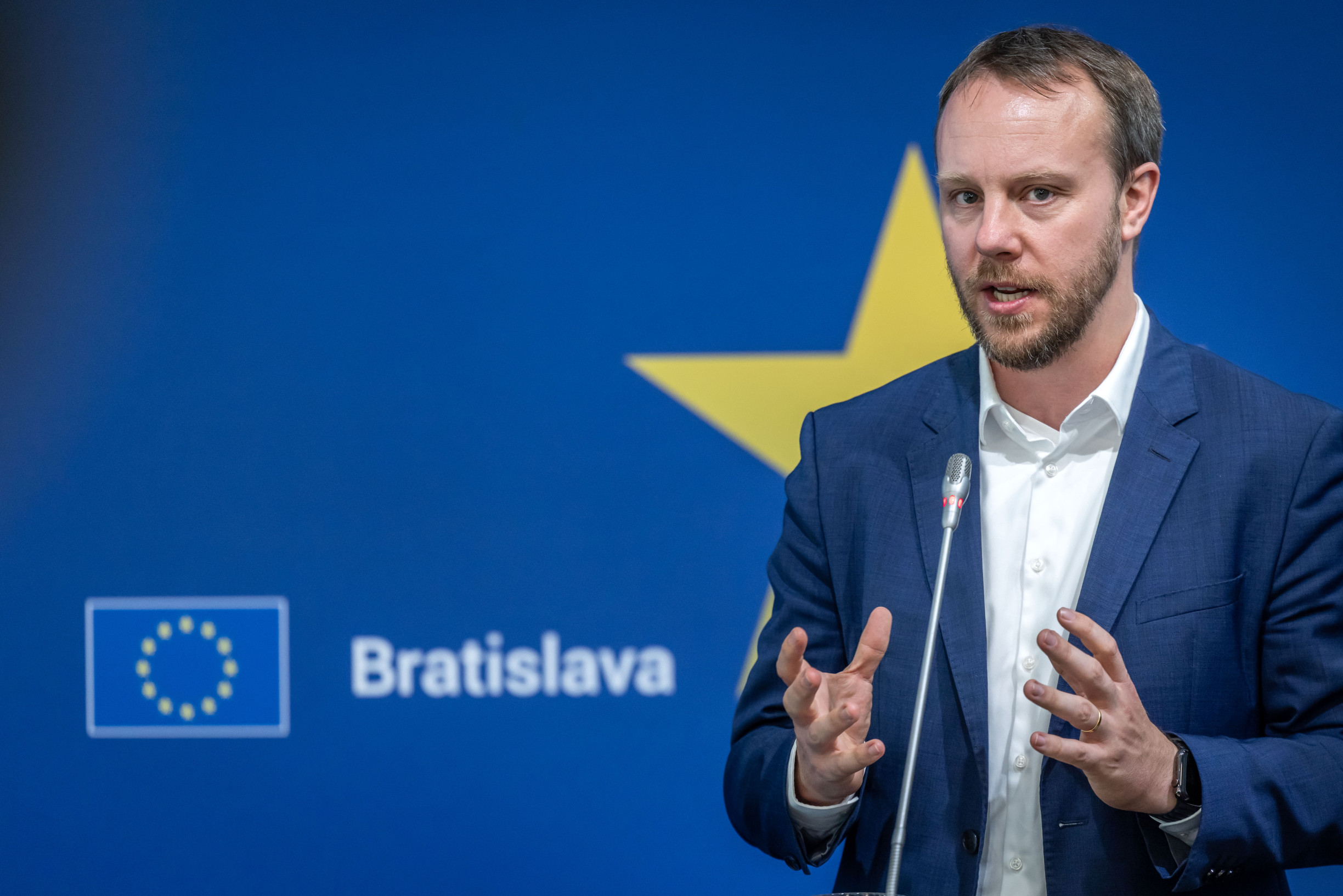 German Green MEP Daniel Freund. (Source: Tomáš Benedikovič)
Likewise, centre-right Czech MEP Ján Farský said that the result of Fico’s government is a country where infrastructure is lacking in the regions, development is slowing, and citizens are worse off.
“The economy is stagnating, and citizens must watch as the ruling party enriches itself,” he added.
Farský also pointed to the conclusions of a recent European Parliament mission to Slovakia, which, according to him, showed a hostile atmosphere toward civil society, pressure on independent media, and attacks on journalists.
“These are not minor offences; this is a systematic strategy,” Farský said, adding that the Czech Republic and other countries should not follow this path of concentrating power and weakening the rule of law.
From Hungary, through Slovenia, to Poland and Slovakia
For her part, liberal Slovenian MEP Irena Joveva highlighted the spread of “illiberal practices” in Europe, from Hungary through Slovenia and Poland to Slovakia.
According to her, PM Fico’s leadership style is not only authoritarian but also paranoid.
“As we see elsewhere, illiberal politics turn opponents into traitors and critics into enemies,” Joveva said, refering to the fact that Fico deliberately labels the opposition, journalists, or judges as part of a conspiracy.
She also claimed Fico’s policy is not aimed at solving Slovakia’s problems but at protecting his own position and a corrupt circle of close associates.
“This destruction of democracy is the price of his power, the price he is willing to pay for Slovak citizens. But Fico is not Slovakia, just as Orbán is not Hungary. The commission must stand with the people who refuse to pay this price,” she also said.
Earlier this year, the EU Commission launched infringement proceedings against Slovakia over its attempts to dismantle the Whistleblower Protection Office, citing violations of EU law and fundamental rights.
‘Jihad’ against Slovakia?
“This jihad against Slovakia is being waged only because we want peace with the Russian Federation, we have two genders enshrined in our constitution, we rejected questioning the Beneš decrees, and likewise we refuse to question the defeat of fascism in Europe,” said Smer MEP Ľuboš Blaha during the debate.
But liberal MEP Lucia Yar from the centre-left Progressive Slovakia criticised his trivialisation of corruption problems in Slovakia and the claim that the opposition tarnishes Slovakia’s name.
“It is not Slovakia, but Fico’s government that has a terrible image in the EU,” she pointed out.
MEP Erik Kaliňák, also from Smer, rejected claims of systematic misuse of grants for pensions by the current government.
Fico’s Smer party was expelled from the S&D group in the European Parliament in 2023, following their domestic coalition with the far-right SNS.
 MEPs Ľuboš Blaha and Erik Kaliňák (Source: Facebook Ľuboša Blahu)
Kaliňák claimed that the payment agency, together with the EU anti-fraud agency Olaf and the European Public Prosecutor’s Office (EPPO), reviewed the projects and refuted most of the accusations. In cases where conditions were violated, the grants are to be returned. He also described the debate as politicised.
According to publicly available information, the investigation is not yet closed.
The Slovak government was also defended by Czech MEP Katarína Konečná from the Communist Party, who called the criticism of weakening the rule of law in Slovakia unfounded.
“Slovakia has a Constitutional Court. The president returns laws to the legislature. There is even a police force investigating the very cases you are talking about. What more do you want?” Konečná said.
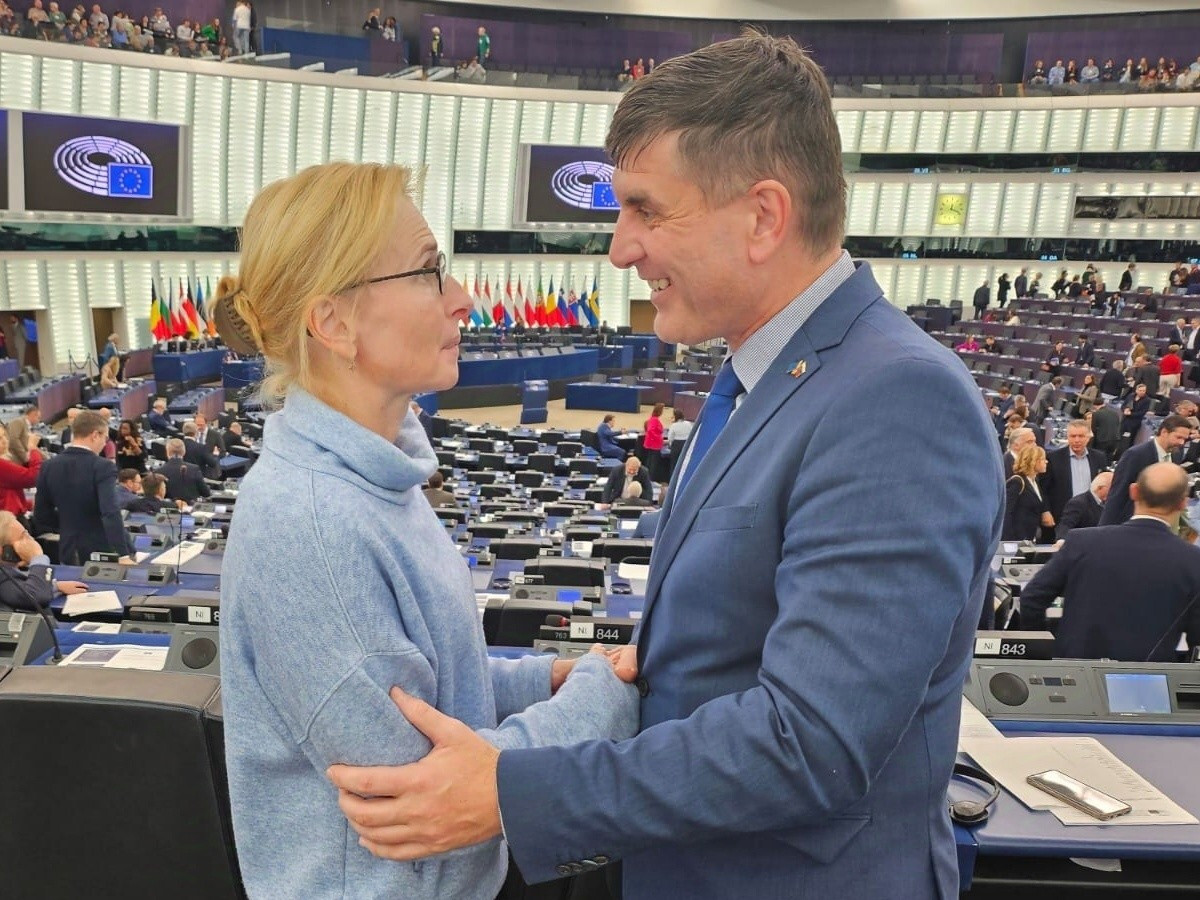 MEP Branislav Ondruš and Czech Communist leader Kateřina Konečná (Source: Branislav Ondruš’s Facebook)
Meanwhile, Slovak far-right Republika MEPs Milan Mazurek and Milan Uhrík spoke defending Slovakia’s government.
Uhrík acknowledged that recent Criminal Code changes were problematic but argued the EU should not intervene. Both criticised the liberal Progressive Slovakia party, accusing its leaders of hypocrisy and claiming that critics of Slovakia were attacking the country’s values and traditional family structures.
Most of Mazurek’s speech focused on attacking progressive politicians rather than addressing corruption issues.