
Ministers have been warned that they must find the courage to scrap the UK’s “wasteful and expensive” state pension triple lock.
The mechanism should be phased out “the sooner, the better”, according to the Resolution Foundation think tank, formerly run by the Government’s pensions minister Torsten Bell.
The policy, which costs three times more than intended according to the Office for Budget Responsibility (OBR), ensures the state pension rises each year in line with inflation, wage increases or 2.5 per cent – whichever is highest.
Shorts
Scroll to previous short

Scroll to next short
 Caption: LONDON, ENGLAND – JULY 10: Gus Atkinson of England celebrates with Ben Stokes after taking the wicket of Shamar Joseph of West Indies during Day One of the 1st Rothesay Test Match between England and West Indies at Lord’s Cricket Ground on July 10, 2024 in London, England. (Photo by Alex Davidson/Getty Images)
 Atkinson left the field injured early on day two (Photo: Getty)

 Harry Brook has become a lightning rod for criticism of the England team (Photo: Getty)

 Caption: NEW YORK, NEW YORK – JUNE 08: U.S. President Donald Trump listens to the national anthem before the start of game 3 of the NBA Finals between New York Knicks and San Antonio Spurs at Madison Square Garden on June 8, 2026 in New York City. Fans attending the game have expressed frustration at the heightened security measures put in place for the President???s attendance. (Photo by Samuel Corum/Getty Images) ***BESTPIX***
 Caption: U.S. President Donald Trump,his granddaughter Kai Trump, and New York Knicks owner James Dolan, attend Game 3 of the NBA Finals at Madison Square Garden in New York City, New York, U.S., June 8, 2026. REUTERS/Nathan Howard REFILE – CORRECTING FROM “NBA PLAYOFFS” TO “NBA FINALS”.
 Caption: President Donald Trump watches Game 3 of the NBA Finals basketball series between the New York Knicks and the San Antonio Spurs at Madison Square Garden in New York, Monday, June 8, 2026, with Knicks owner James Dolan and Kai Trump. (AP Photo/Mark Schiefelbein)


 Taynton village near Burford, Cotswolds, England – stock photo. (Photo: Getty)
 The number of Brits acquiring Irish citizenship continues to soar post-Brexit (Photo: Getty)
 (Photo: Michael Nguyen/NurPhoto via Getty).
 San José is Cabo de Gata’s largest town (Photo: Lux Blue/Getty)
 Caption: US President Donald Trump speaks to the press upon arrival at Morristown Municipal Airport in Morristown, New Jersey, on June 20, 2025. Trump is heading to his Bedminster golf resort for a MAGA Inc. fundraising dinner. (Photo by Mandel NGAN / AFP) (Photo by MANDEL NGAN/AFP via Getty Images)
 Caption: Undated handout file photo originally issued on 17/06/25 by the Metropolitan Police of Annabel Rook. Jurors at Snaresbrook Crown Court have been shown pictures of the home of Clifton George and Annabel Rook, in the aftermath of a gas explosion on June 17 last year. George, 45, killed his partner of ten years, Ms Rook, at their home in Stoke Newington before starting a fire designed to blow up a gas canister in the basement. Issue date: Thursday May 7, 2026. PA Photo. Photo credit should read: Metropolitan Police/PA Wire NOTE TO EDITORS: This handout photo may only be used for editorial reporting purposes for the contemporaneous illustration of events, things or the people in the image or facts mentioned in the caption. Reuse of the picture may require further permission from the copyright holder.

 Caption: Undated handout file photo originally issued on 03/06/26 by Metropolitan Police of Clifton George who is due to be sentenced on Tuesday at Snaresbrook Crown Court after being found guilty of the murder of Annabel Rook. George, 45, killed his partner Annabel, 46, by stabbing her 31 times during a row at their east London home after she had said they should end their 10-year relationship. In the aftermath of the killing, George started a fire in the basement in order to cause a gas canister explosion which ripped through the house. Issue date: Tuesday June 09, 2026. PA Photo. Photo credit should read: Metropolitan Police/PA Wire
 Caption: Undated handout photo issued by the Crown Prosecution Service (CPS) shown to jurors at Snaresbrook Crown Court of the aftermath of a gas explosion on June 17 last year, during the trial of Clifton George, 45, who killed his partner of ten years, Annabel Rook, at their home in Stoke Newington before starting a fire designed to blow up a gas canister in the basement. Issue date: Thursday May 7, 2026. PA Photo. Photo credit should read: Crown Prosecution Service/PA Wire NOTE TO EDITORS: This handout photo may only be used for editorial reporting purposes for the contemporaneous illustration of events, things or the people in the image or facts mentioned in the caption. Reuse of the picture may require further permission from the copyright holder.
 Caption: Undated family handout photo issued by Metropolitan Police of Annabel Rook. Clifton George has been found guilty of the murder of Annabel at Snaresbrook Crown Court on Wednesday. Issue date: Wednesday June 03, 2026. PA Photo. Photo credit should read: family Handout/PA Wire
  Caption: BELFAST, NORTHERN IRELAND – JUNE 09: Police attend the scene following a stabbing attack in North Belfast on June 09, 2026 in Belfast, Northern Ireland. A knifeman has been arrested after a man was taken to hospital with serious injuries following a stabbing in north Belfast leaving the local community fearful. The incident has been condemned across the political parties offering praise to locals who intervened to stop the attack. (Photo by Charles McQuillan/Getty Images)
 Caption: BELFAST, NORTHERN IRELAND – JUNE 09: Police attend the scene following a stabbing attack in North Belfast on June 09, 2026 in Belfast, Northern Ireland. A knifeman has been arrested after a man was taken to hospital with serious injuries following a stabbing in north Belfast leaving the local community fearful. The incident has been condemned across the political parties offering praise to locals who intervened to stop the attack. (Photo by Charles McQuillan/Getty Images)

 Caption: File photo dated 06-04-2024 of West Ham United chairman David Sullivan. David Sullivan has announced his resignation as joint-chair and director of West Ham with immediate effect in a statement. Issue date: Saturday June 6, 2026. PA Photo. Photo credit should read Mike Egerton/PA Wire.
 Caption: FILE – West Ham United chairman David Sullivan watches the English Premier League soccer match between West Ham United and Crystal Palace at the London Stadium in London, Saturday, Sept. 20, 2025. (AP Photo/Kin Cheung, File)

 David Sullivan has announced his resignation as joint chair and director of West Ham United FC (Photo: Steven Paston/PA)
 Photographer: Paul Biris
 Caption: Sloth bear between trees in Cartagena de Indias, Colombia


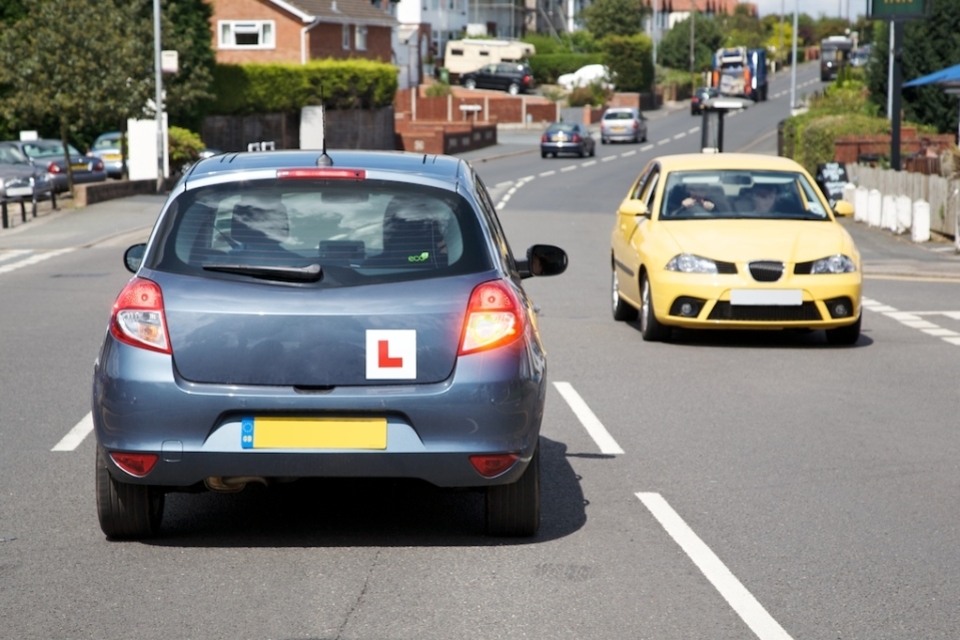 The government’s Think! road safety campaign was cited as an example. (Gov.uk)
 Changes begin on 12 May to reduce wait times and prevent bots and touts from exploiting the system (Photo: Steve Parsons/PA)

 Practising theoretical parts now will help when it comes to taking the practical test (Photo: Shutterstock)
Speaking to The i Paper, the think tank’s economist Alex Clegg said the policy “isn’t designed well” and may not be the best use of money during “quite a tight fiscal reality”.
The organisation, where Bell was CEO for nearly a decade, has issued a new report arguing that the policy is “far too expensive” and failing to reduce poverty.
It comes after The i Paper revealed an increasing cohort of Labour MPs are keen to shift away from the triple lock in the name of generational fairness and economic sustainability.
Asked whether there is sympathy within Government for reform, Clegg said the new Pensions Commission – launched by Bell last summer – is “ongoing” and that conversations will “definitely be happening”.
“The Government will definitely be looking at all kinds of reforms, whether that means that they’re close to moving on the triple lock is a different question,” Clegg said. “But these conversations will definitely be happening, and it’s something that the Government will be debating internally.”
A spokesperson for the Department for Work and Pensions said that the Government had committed to the triple lock for the rest of this Parliament, and that the commission is “examining how we can ensure secure retirements for tomorrow’s pensioners”.
Last week, Liam Byrne became the most prominent Labour MP to admit the triple lock needs to go, following a groundswell of private discussions among colleagues about how to phase it out while causing minimal electoral damage.
While there have long been murmurings from within Labour, and other parties, that the triple lock is unaffordable and unsustainable, many politicians believe scrapping it would be too politically toxic among older voters. All the major political parties, bar the Greens, are currently committed to it.
Tony Blair recently warned the policy is “unaffordable long term”, and Conservative former chancellor Jeremy Hunt said it is “immoral” due to being partly funded by debt on younger generations.
Pensions Minister Bell previously described it as a “silly” system before he became an MP.
The mechanism was originally created in 2010 because the state pension had become too low relative to wages and living standards. But higher than expected inflation and wages growth over the last few years has seen significant rises in the state pension – by 10.3 per cent in 2023 due to high inflation, 8.5 per cent in 2024 due to wages growth and 4.1 per cent in 2025 and 4.8 per cent this year also due to wages growth.
According to the Institute for Fiscal Studies, the state pension is costing £12bn a year more than it would have done if it had been linked to wages since 2011.
Many pensioners, however, claim that the state pension is their only source of income.
The Resolution Foundation’s new report, shared with The i Paper, argues that “time should be called on the expensive and wasteful triple lock on the state pension” as it favours retirees over typical workers.
The think tank’s analysis argues that the triple lock is the biggest driver of higher welfare spending in this Parliament and is set to add £13.8 billion to the bill by 2029-30 in real terms. The report also claims it has not reduced pensioner poverty, with rates rising by 2.3 per cent since it was introduced in 2011.
The Resolution Foundation has long proposed a new system called a “smoothed earnings link”, which tracks wage growth but protects the value of the state pension from temporary price shocks by pinning it to inflation in times of economic uncertainty. A similar system is used in Australia – but private pensions in the country are also more generous.
In the latest report, Clegg and CEO Ruth Curtice argue that state pension is already at around 30 per cent of median full-time earnings.
“Our view is that level has now been reached, and politicians should find the courage to replace the triple lock with a policy that is transparent, predictable, and fair across generations,” they state.
The report’s analysis suggests the state pension bill is now £12.6bn higher than it would have been under a smoothed earnings link since 2011, and switching to such a policy from next year would be a net saving of around £650m in 2029-30.
Some Labour MPs publicly, and privately, argue this money could be better spent supporting younger generations, such as the one million young people not in education, employment or training in the UK.