
Viasat recently secured a prime U.S. Space Force contract under the Protected Tactical SATCOM-Global program to build, launch, and operate a fleet of small, maneuverable GEO satellites for resilient, anti-jam military communications, alongside advancing new SATCOM integrations for NOAA’s C-130J “Hurricane Hunter” aircraft and proposing expanded ground antenna production within Georgia foreign-trade zones.
Together, these developments highlight Viasat’s deepening role across secure government connectivity and ground infrastructure, potentially reinforcing its position in defense-grade satellite networks and long-cycle government programs.
We’ll now examine how winning the Protected Tactical SATCOM-Global contract could influence Viasat’s investment narrative around secure government connectivity.
Capitalize on the AI infrastructure supercycle with our selection of the 48 best ‘picks and shovels’ of the AI gold rush converting record-breaking demand into massive cash flow.
Viasat Investment Narrative Recap
To own Viasat, you need to believe its mix of defense-grade satellite networks and hybrid connectivity can offset pressure from declining U.S. fixed broadband and heavy capital spending. The new Protected Tactical SATCOM-Global win appears supportive for the near term defense and government connectivity catalyst, but it does not remove the key risk that high CapEx and leverage could weigh on free cash flow and profitability.
The FTZ production request for Georgia facilities is closely tied to this defense and government connectivity story, since it focuses on ground antenna systems and RF components that support secure SATCOM networks. If approved, it could help Viasat streamline import duties and supply chain for antenna production, which matters for delivering on programs like PTS-G and other long-cycle government contracts.
But while contracts like PTS-G can look reassuring, investors should still be aware of the ongoing risk that high capital expenditures and leverage could…
Read the full narrative on Viasat (it’s free!)
Viasat’s narrative projects $5.1 billion revenue and $557.4 million earnings by 2029.
Uncover how Viasat’s forecasts yield a $51.14 fair value, a 27% downside to its current price.
Exploring Other Perspectives
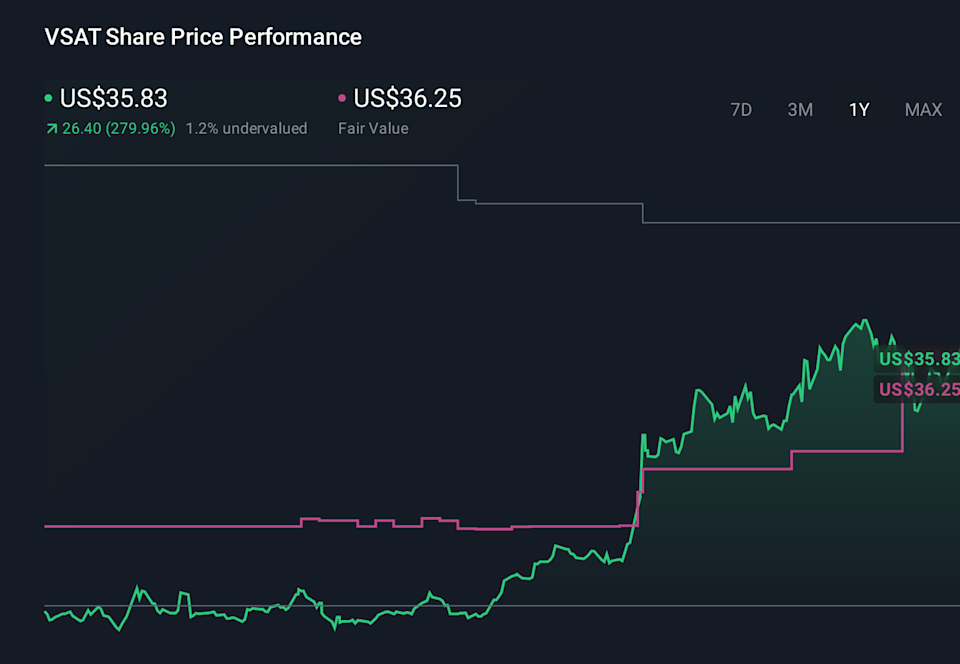
VSAT 1-Year Stock Price Chart
Some of the most optimistic analysts were already assuming revenue of about US$5.1 billion and earnings of roughly US$569 million by 2029, while also flagging intense LEO competition as a key threat, so this latest government contract and antenna expansion could prompt you to rethink how confident you feel compared with that far more bullish narrative and consider how your own view might sit between these very different expectations.