
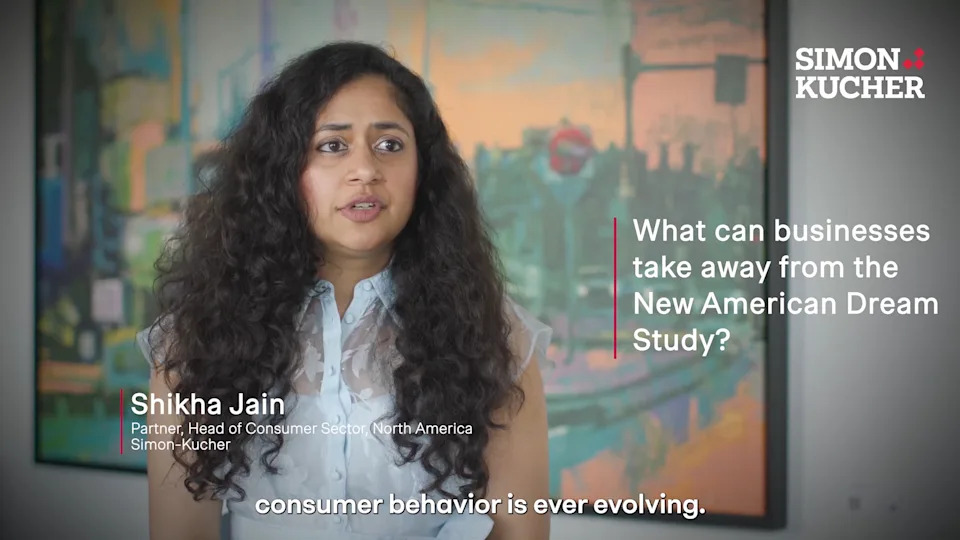
What can businesses take away from the New American Dream Study?

Simon-Kucher’s Report Says Inflation Has Changed 90 Percent of Americans’ Quality of Life Goals; Major Implications for Businesses
BOSTON, June 15, 2026–(BUSINESS WIRE)–Timed for America’s 250th anniversary, new research by global growth and pricing consultancy Simon-Kucher finds the American Dream has shifted to a deeply personal, individualized vision that prioritizes quality of life and meaningful fulfillment over traditional wealth and shared milestones. The traditional K-shaped economy with the backdrop of rising costs, has reached an inflection point, as “wealth” is being redefined. Material success and a uniform vision, as established by writer James Truslow Adam centuries ago, are being updated. Today, Americans are redefining the American Dream and trading long-term financial hallmarks like homeownership and retirement for personal values that favor flexibility, stability and enjoying life today.
“The American Dream is still alive, but traditional signs of success, like pensions and wealth are less relevant today because of macroeconomic pressures,” said Shikha Jain, Partner, Head of Consumer in North America at Simon-Kucher. “Today, Americans are defining success on their own terms, focusing on making life work and finding a sense of normalcy. That means spending on daily needs, seeking out personal and meaningful experiences, and taking on debt to get by.”
To create a rigorous snapshot, Simon-Kucher surveyed 5,000 Americans and quantified generational and demographic differences. The study directly reflects Simon-Kucher’s leadership in commercial strategy, placing it at the center of boardroom conversations on pricing, tariffs, margin pressures, inflation, and changing consumer behaviors.
A New American Dream Based on Reality
The shifts in the New American Dream are changing. Young Americans are defining success beyond home ownership and status. Gen Z values flexibility and personal fulfillment over traditional milestones. At the same time, credit card debt, high healthcare costs, student loan debt, and economic uncertainty stack up, making the classic path harder. Money remains a key contributor to the American Dream, but American values are now more complex. Americans want financial control and measurable balance today to live a fulfilling life.
Some Key Findings:
Postponing Tomorrow’s Goals for Short Term Needs: 90 percent said inflation has changed purchasing behavior.
35 percent Report No Clear Path to Achieving the American Dream: A skilled trade (14 percent) ranked higher than a four-year college degree (11 percent), a technology career (11 percent), or an entrepreneur (11 percent).
Traditional Milestones Are More Difficult to Achieve: 62 percent said owning a home, and 57 percent said retiring early is more challenging.
Generational Financial Differences: 51 percent of Gen Z say they have sacrificed long-term financial goals to improve quality of life today, compared with only 22 percent of Baby Boomers.
Flexibility is Part of the New Value Equation: 46 percent of Millennials and 41 percent of Gen Z prefer flexibility over income, while 10 percent and 13 percent, prioritize income; the rest say both are important.
Making It: Gen Z (25 percent) use multiple income streams to foster resilience and regulate finances.