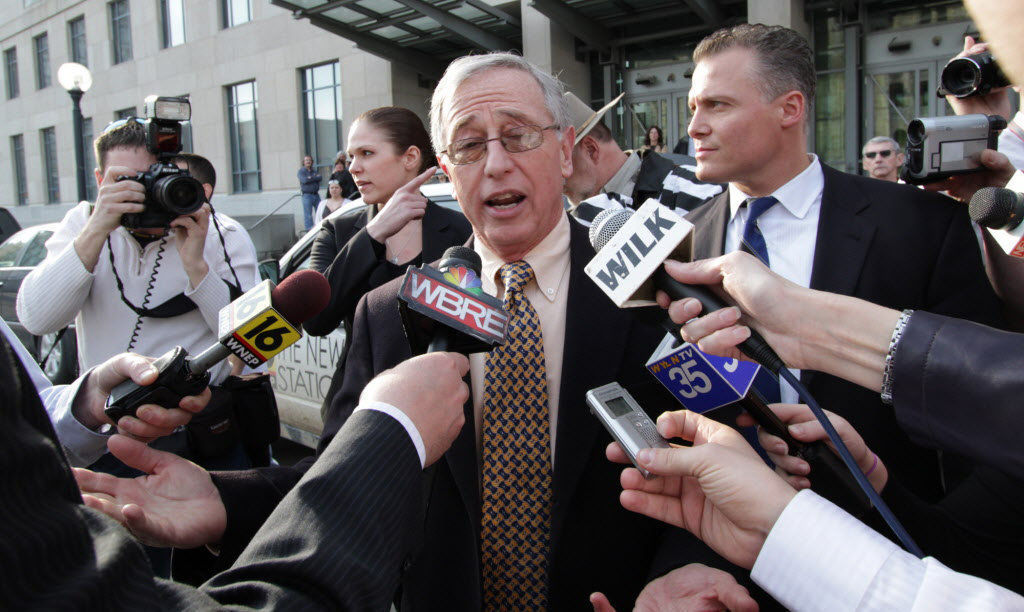
Was it “tough love” that motivated Judge Mark A. Ciavarella Jr. to shackle and jail thousands of juveniles, many on minor offenses and unrepresented by counsel? Or was it something darker?
Federal prosecutors said it was the latter. They charged Ciavarella with taking millions in kickbacks from the developers of a private juvenile detention center that housed many of those children after he and co-defendant Judge Michael A. Conahan closed a county-owned center.
The 2009 “Kids-for-Cash” scandal made Luzerne County synonymous with judicial corruption nationwide. Federal scrutiny on the county courthouse resulted in a series of other prosecutions that snared more than 30 government officials and contractors.
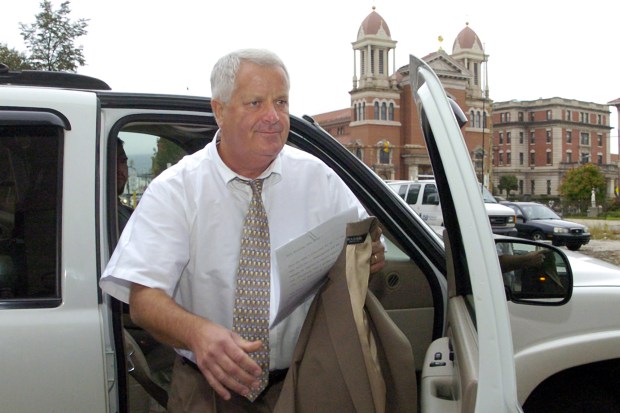 Former judge Michael Conahan arrives for a hearing at federal court in Scranton in the Kids-for-Cash case. (CITIZENS’ VOICE FILE)
National ripple
The scandal contributed to a national trend away from “zero tolerance” policies and mass incarceration of juveniles toward community-based rehabilitation. Between 2000 and 2022, nearly 58% of juvenile detention centers nationwide, about 1,800, were closed, research by the Prison Policy Initiative found. The average daily number of juveniles in detention declined by 73%, to less than 32,000.
The Pennsylvania Supreme Court vacated the convictions of 4,000 juveniles who appeared before Ciavarella. They and their families received millions in civil settlements with Kids-for-Cash defendants. Ciavarella, 76, is serving a 28-year sentence in a federal prison in North Carolina with an earliest possible release date, with good behavior, in 2034. Conahan served nearly a decade in prison before being placed in home confinement in Florida during the COVID pandemic. He was freed in 2024 under a blanket commutation by the Biden administration for nonviolent offenders sent home during COVID.
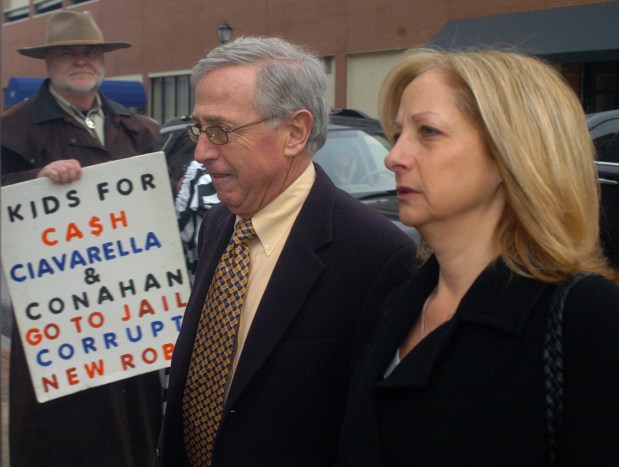 Mark A. Ciavarella Jr. and his then-wife Cindy pass a protestor while arriving for jury selection in the Kids-for Cash trial in February 2011. (CITIZENS’ VOICE FILE).
The living legacy
Pennsylvania now mandates that all juveniles have legal representation and severely limits the use of shackles in juvenile court. Public disgust with the Kids-for-Cash and related corruption cases fueled a home-rule movement in Luzerne County, which abandoned the traditional three-commissioner form of government in favor of a larger county council, an appointed manager and numerous ethics and financial reforms under a new charter approved by voters.
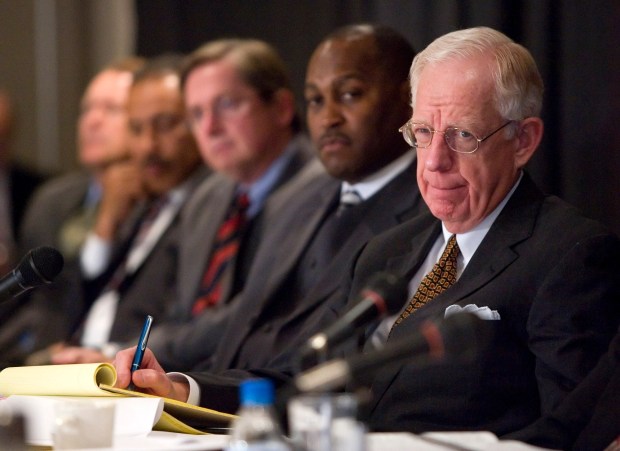 Senior McKean County Judge John M. Cleland, right, chaired the state Interbranch Commission on Juvenile Justice which recommended legal reforms after the Kids-for-Cash scandal. (CITIZENS’ VOICE FILE)
Sidelight
Some in law enforcement say the Kids-for-Cash reforms were an overcorrection. Pennsylvania has since closed half of its detention centers, with courts regularly denying detention requests from juvenile probation departments because of the lack of space, according to the state Juvenile Court Judges’ Commission. Lackawanna County, which closed its detention center in 2018, is working with four other counties to establish a regional center in Berks County.
About the series
No. 17: As the nation approaches America250, we are counting down ways NEPA has powered American history. Missed a day? Read the full countdown as it unfolds at citizensvoice.com.