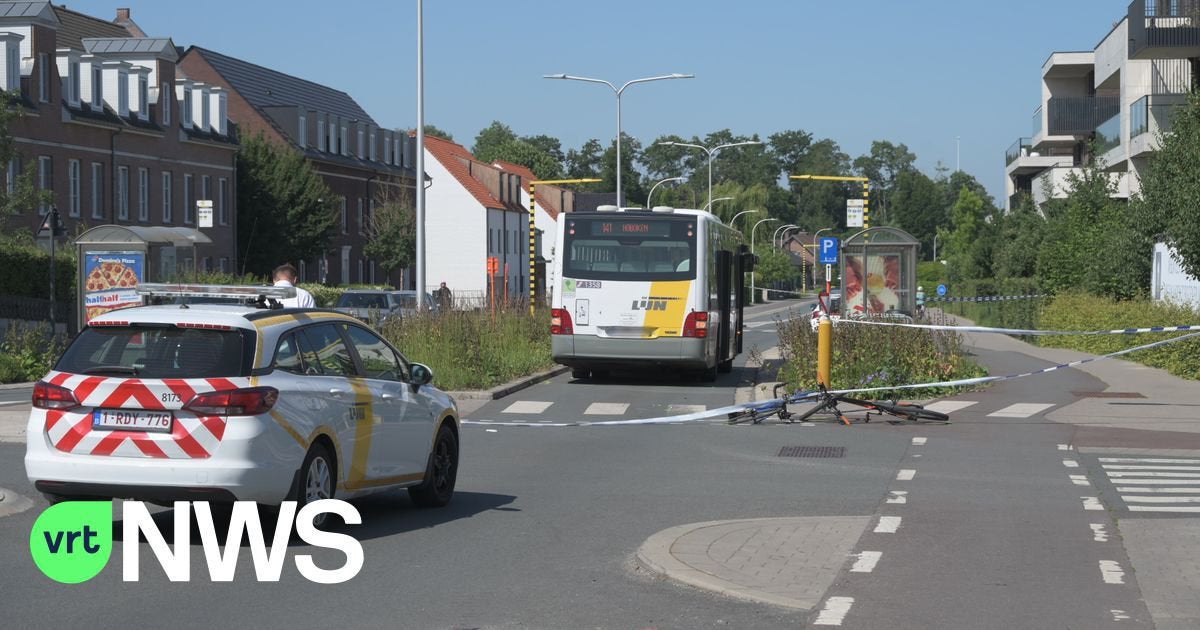
13-jarige fietser in kunstmatige coma na aanrijding door bus De Lijn in Edegem, buschauffeur in shock
https://www.vrt.be/vrtnws/nl/2022/06/22/ongeval-fietser-edegem/
Yet another cyclist, child, ran over. Following the news, it’s clear that many of these accidents happen on bicycle crossings, not just simple intersections without markings.
I’m not saying it’s the main cause, but in my opinion the rules for crossings should be revised. It’s crazy to me that rules for cyclist and pedestrian crossings aren’t the same. Their crossings are very often together, yet one has right of way, the other hasn’t (especially on gewestwegen).
As a cyclist, I have to check whether there is a pedestrian next to me to know if I can cross the road (in theory, always check if traffic is slowing down as well). We want our 12 y/o to cycle to school on their own but expect them to know all these rules. I say all vulnerable road users should have right of way when they use a marked crossing.
Btw this was the case on some gewestwegen until AWV changed it. For ‘consistency’ they made all crossings the same, with right of way for cars. Creating absurd conflicts where cars making a turn have right of way against cyclist going straight, depending on which type of road it is…
The argument against this is probably traffic flow. But if we really want a modal shift, and hopefully less accidents, we have to accept this. Temporary, in theory.
25 comments
Two comments here:
1. Yes, the rules are in urgent need of improvement. A car can more easily brake and accelerate than a kid on a bike. Also in view of greening transport and getting more people on (e-)bikes, this should make biking easier.
2. The pictures of the accident look rather clear, though. The bus was going straight and the bike lane had a clear sign and also clear markings on the ground that indicate the bus has the right of way. The best and easiest rules do not help if they are ignored. Half of all cyclists I see when biking myself run red lights for being 10 seconds faster…
> As a cyclist, I have to check whether there is a pedestrian next to me to know if I can cross the road
You can always dismount your bike and cross by foot. That way you are a pedestrian, and can enforce right of way (on the zebra crossing).
It’s not hard eh.
If there are sharkteeth, you need to stop as a cyclist.
If there are no sharkteeth, you need to stop as a cyclist if you don’t have direct eye contact with the vehicle, even though you have right of way.
It’s the fault of the cyclist, hoe jammer dan ook voor de ouders, want er waren haaientanden alsook dat driehoeksbord.
The right of way signs and roadmarkings are perfectly clear. A 12 year old should be easily able to recognise these. If not, they should not be on a public road unsupervised.
I blame the people that do stop for people that don’t have the right of way. You wouldn’t do it for a car, so why are you doing it for a bicycle?
Without commenting on this accident specifically, I think we should change the rules so that bicycle crossings are the same as pedestrian crossings, ie you have priority at such a crossing. I don’t quite understand the use of a bicycle crossing currently, you don’t have priority, so isn’t it the same as crossing the road in an unmarked place? In both cases you have to wait for traffic to clear before you can cross.
I get that there’s an argument that the crossings are there to mark a place where many cyclists do cross, so a driver should be more careful, but then why not just give them priority there? Especially because as a society we want to promote carbon free ways of transportation.
The infrastructure was made with the rules in their mind, they should change that first. If the dampoort gave bikes the right of way, no one that works in the north off ghent would get home
Als een fietser wou ik dat automobilisten systematisch NIET stopten voor me bij een dergelijke oversteekplaats met haaientanden voor de fietser. Nu doen er velen het wel ‘om hoffelijk te zijn’ maar het vervaagt enkel maar de verkeersregels.
Can’t say ‘I had the right of way’ when you are in the morgue. That’s what my father told me when I was learning to ride a motorbike. You are on 2 wheels and not surrounded with a cage of metal.
Bike crossings and pedestrian crossings are not the same since they do not travel at the same speed. I usually have the courtesy to allow a bike to cross if he came to a full stop or slowed down enough and checked upcoming traffic (sharkteeth you know). No need for me to actually get off the bike and become a pedestrian like the law suggests, but please come to a full stop or slow down and make eye contact. Driving a car requires attention to multiple things at the same time. Unexpected cyclists or pedestrians don’t make it easier.
Same goes for pedestrians. Most cars will stop when you are waiting at a crossing, this doesn’t mean you should just cross without looking.
It is also a horrible design when some parts of the road are two-way bike lanes. This happens a lot on Gewestwegen.
This way you are enforced for crossing the road multiple times, just for going straight.
In the 1980’s in the Netherlands they made cars default perpertrator when in a collision with a cyclist. Even if they had right of way. Took some getting used to, but man, are the Dutch wary of bikes!
Dutch crossings nowadays are designed for bikes, while in most Belgian cities bike lanes are added as a afterthought. Some crossings are very unsafe for cyclists, because they have to stand still on the cyclist lane, blocking other cyclists. Some corners are ridiculously sharp, forcing a slowdown, so that I am incentivized to illegally ride on the main road.
Finally, parking spots are placed across bike lanes. Switching them means: parked cars form a natural protection for cyclists, and cars do not need to cross a bike line to park.
@Belgian government, please learn from the Dutch!
I suppose the main concern is the speed at which you arrive. Cars and trucks have dead angles, and move a great distance in a short amount of time. Since rules need to apply to all cyclists, it’s complicateed to give them right of way if you can’t guarantee a driver can see them coming from a relatively long distance.
I like the Dutch model, they don’t give right of way to pedestrians or cyclists, which I understand can be frustrating, but it’s coherent.
Even if your child has right of way when walking, it’s still good practice to make him look twice each way to cross, and most do it like that. The right of way in the end is actually more of a legal matter to make sure the driver’s at fault if something happens, it’s not a guarantee at all that pedestrians are safe, on the contrary. In the end, what matters most is not who’s wrong or right, it’s to remain out of harm’s way if you can. Sadly, you can’t trust people, the only certainty you have is how you behave. Especially not people operating heavy vehicles, be them cars, busses or trucks. Plus mobility is so bad in Belgium, the amount of frustration and dangerous reactions are getting more and more frequent, sadly.
So kid didn’t have the right of the way and just went in ? I don’t see how it is confusing and the picture in vrt clearly shows shark teeths for the cyclist… Perhaps people should get educated about the public road code before riding on it.
It’s a tragedy and it can be avoided by giving classes of the road’s code at school instead of letting the kids just run like they want and being a danger in general and I’m saying that while having been one of those kids and I also realized once that I learned to drive that I was an absolutely reckless kid on my bicycle because i did not know the actual rules of the road and I am frankly surprised I never got into an accident with my bicycle.
Unfortunately, I see regularly people hopping on a wheeled vehicle and expecting of having the right of the way because they are the ‘weaker user’ of the road when it’s unfortunately not working like that at all.
Always yield until yielded to, regardless what the rules say, is the easiest way to not get hurt.
Als zwakke weggebruiker is je voorrang “nemen” door voor wagens te springen het domste wat je kan doen.
Plus dat fietsers vaak voorrangs regels negeren.
Generaal rule in traffic: always asume everbody else is terrible at driving and doesn’t see you.
it’s not just crossing rules, it’s the fact that roads seem to belong to car drivers and that cyclist are intruders.
I have the attitude to respect cyclist on the road when I drive my car, because that’s the way the driving instructor teaches me. when I pass a cyslist I make sure I have enough room. When their is a narrow road I go aside and do a full stop to let the cyclist stop. And the most important rule of all 30 m around a cycling kid is a zone 20 and you make sure you have lot’s of room when you pass. the thought of hitting a kid frightens me (I work in a OR, I often see what kind of damage a car can do.
Recently I started to do a lot more cycling and I was really surprised how many asshole drivers their are in the streets.
Cyclist and pedestrians should always have priority almost all of the time and cycling lanes should get priority when new roads are built and that cycling lanes are smooth asphalt.
Speculating about the accident:
Judging by [the position of the bikes](https://i.imgur.com/YAzllmE.jpeg) on the road there are 2 options:
1) the less likely option in my opinion is that they were at the end of their crossing when they got hit by the bus. I think this is unlikely so won’t spend too much attention on it.
2) The far more likely option I think is that the kids were doing a [left turn](https://i.imgur.com/zrhKOhs.png) and didn’t look over their shoulder to see if anything was approaching and failed to yield properly.
The sad part is that the intersection was recently redesigned clearly with a specific focus going to cyclist safety. [2017](https://i.imgur.com/dxNDvDM.jpeg) and [2021](https://imgur.com/a/Wrcat8O)
But as I highlighted in the 2021 redesigned version, there is nothing that forces cyclists to turn their bicycles to a 90° angle with upcoming traffic before crossing, which would enhance visibility like in [this intersection](https://i.imgur.com/ObB50tg.jpeg). If the intersection in Edegem were designed like the one in Antwerp, then crossing quickly without turning your bicycle would be a far less likely occurrence, which increases safety.
It’s disappointing that even when we clearly make an effort to improve things for cyclists, we still cut corners on the details which leads to dangerous (and maybe fatal? As I said, I’m speculating) situations.
If we’re going to invest the time and money, at least get it right the first time so we don’t have to go back and fix it yet again. The Dutch are right there and they are happy to share their knowledge.
Here’s the [google maps](https://www.google.com/maps/@51.1562346,4.4261696,3a,75y,70.03h,72.42t/data=!3m6!1e1!3m4!1slu_pzKv6Ygo2cZbkhfF-5A!2e0!7i16384!8i8192) link of the intersection if anyone wants to see for themselves
The majority of cyclists either don’t know the rules or refuse to apply them.
We’ve had this thread a few weeks ago as well: tragic for sure but traffic works because it implies that everyone participating in it follows a set of rules, which makes the behaviour of others in traffic predictable. If people break those rules, accidents happen.
It’s time the government, who is already investing in making Belgium more bike-friendly, also invests in an awareness campaign to impress upon cyclists that they also have to give right of way, that they have to stop at bike crossings with inverted triangles, that red lights also apply to them, that voorrang van rechts is fundamental and that they should also follow traffic signs in general.
Downvote me all you like. Anyone who has driven a car knows that cyclists often completely ignore traffic rules, sadly with often dramatic results.
Follow the rules, be cautious and most accidents simply never ever happen.
The right of way stuff I why I cross the road on zebrastroken with my bike in hand. I get off. Then they have to give me right of way. In some places that’s the only option to be able to cross without waiting for 5 minutes because traffic keeps coming. So I basically go from bestuurder to voetganger for those short times. It doesn’t work everywhere though. Because some crossing don’t have zebrapaden.
Last week, me and my colleagues went to lunch in the city centre.
Many of them rode a rental bike or an e-scooter for the first time in Brussels.
The outstanding remark is that they were often puzzled about where to go, how to behave safely, and so on.
The infrastructure should make it clear.
Urbanism and mobility is an afterthought in this country.
I think most people in this thread are kinda talking past each other.
If the rules don’t make sense intuitively, people on autopilot make mistakes and people get hurt. In such cases, statements like “the victim was at fault” is correct, if the victim correctly adhered to the traffic laws, he would still be with us. But that won’t prevent the next accident. Or the next one.
Personal responsibility and education definitely has its place in making traffic safer, but we can do better than that. People will make mistakes, let’s take that into account when planning our infrastructure and make things inherently safer.
So I have two questions that have been bothering me for some time.
In the city that I live there are a lot of smaller streets with lack of priority signaling and bike demarcation. I read sometime ago that the basic rule is that vehicles coming from the right have the right of way BUT bike doesn’t have priority. This was mostly translations so I am not sure if I got it right. So let me show you an example here about my questions:
https://imgur.com/a/Ery2SMo
The green arrows represent the allowed direction of the traffic for cars. The orange and red are a cars.
Yellow and blue are bikes and they can go in any direction.
Situation 1:
The blue bike is going up and the red car wants to join the street. From what I got, first the bike needs to fully stop at every single crossing to check if the cars are coming from the right because since there is no demarcation for priority signaling (board, shark teeth), the cars could just merge without stopping since they know they have the right of way*. And the bike needs to stop and wait for the red car coming from the right. Are those statements correct?
*Even if the street the bike is riding is the one where all the other ones merge into.
Situation 2:
The yellow bike is coming down in a narrow street and wants turn left in another narrow street. There is an orange car coming and someone needs to stop first to give space for the other to make a good turn without bumping in each other’s path. From what I understood the bike needs to stop because even though it’s coming from the right, the bike never has the priority. Did I get it right?
I don’t drive btw so I never took the class here, just did some reading.
Edit: trying to write in a clearer way.
*Creating absurd conflicts where cars making a turn have right of way against cyclist going straight, depending on which type of road it is…*
So if i’m on a bike going straight and a car coming onto the road on my right side, has right a way? I did not know this. I though that ‘de zwakke weggebruiker’ always had priority.
This thread just once again proves that almost nobody is interested in solving the problem. Only interested in putting blame on the party that they’re not in… Classic belgium
Totally agree with this! In Brussels they added bicycle crossings to the Montgomery roundabout, and out of 10 cars, 9 will wait for the cyclist to cross even though they don’t have to. And 1 will yell at the cyclist for not knowing what a give way sign means.
So I dismount and use the pedestrian crossing, which is quicker and safer. The whole thing was just a waste if money imo.
Cyclists should always stop and look.