
 A copy of Pope Leo XIV’s first encyclical, “Magnifica Humanitas: On Safeguarding the Human Person in the Time of Artificial Intelligence,” is seen during a presentation on the document at the Vatican May 25, 2026. (CNS photo/Lola Gomez)
Although I have a lifetime membership in Gen Z, an honour bestowed upon me in the summer of 2005, I do have a confession to make.
I have never had a social media account.
At least not in a permanent capacity. I did have a Twitter account for four weeks to contact potential interviewees for my first feature and a Facebook account for two weeks to gain a governmental scholarship.
I’ve maintained correspondence with these contacts who have thankfully transitioned into friends, but I’ve done so without immersing myself in the algorithmic world of Meta, Snapchat and TikTok, brand names which sound more like rip-off products you would find on fast fashion websites.
For me, text messages are enough to maintain contact with friends, family, colleagues, and virtually any human being I need to interact with digitally.
As the ABC’s Hamish McDonald pointed out in his documentary The Matter of Facts, he has maintained a successful career in journalism without swimming in the seas of social media.
But I know that soon I will have to register a profile and traverse the torrid terrains of social media accounts for my career.
And I can’t help feeling uneasy about it. The explosion of AI has generated an exponential rise in chatter about whether it will work in humanity’s favour.
 The ChatGPT app is seen on a phone placed atop a keyboard in this photo taken in Rome March 8, 2024. (CNS photo/Lola Gomez)
The latest perspective is Pope Leo’s first encyclical, Magnifica Humanitas. He doesn’t deny AI’s potential for making a positive impact on our everyday lives.
In fact, he says that AI can make things easier and simpler without necessarily degrading the worth of the human person.
But by placing the dignity of the human person at the centre of any engagement with AI, Pope Leo also makes it clear that overreliance can expose us to risks by creating a technological “Tower of Babel”.
The book of Genesis relates how the people of Shinar in Babylon, united by the same language, attempted to build a tower to signify their unity. Yahweh scorned their hubris, scattered them and “confused the language of the whole Earth.”
The lesson is that attempting to surpass human limitations leads to dehumanisation.
Pope Leo warns that we could be recapitulating the story of the Tower of Babel. AI is already diminishing our ability to be self-sufficient and self-taught. Gone are the days when we students would browse libraries for sources and dig out obscure texts.
In my first weeks of university, it wasn’t uncommon to organise times with fellow students to catch up to discuss the readings for a course, especially in philosophy, theology, and politics, disciplines which require rigorous critical thinking.
Now, however, many around me look to their phones for this artificial “comfort company”, plugging their course readings into ChatGPT to create summaries or asking Google Gemini for relevant sources for their essays.
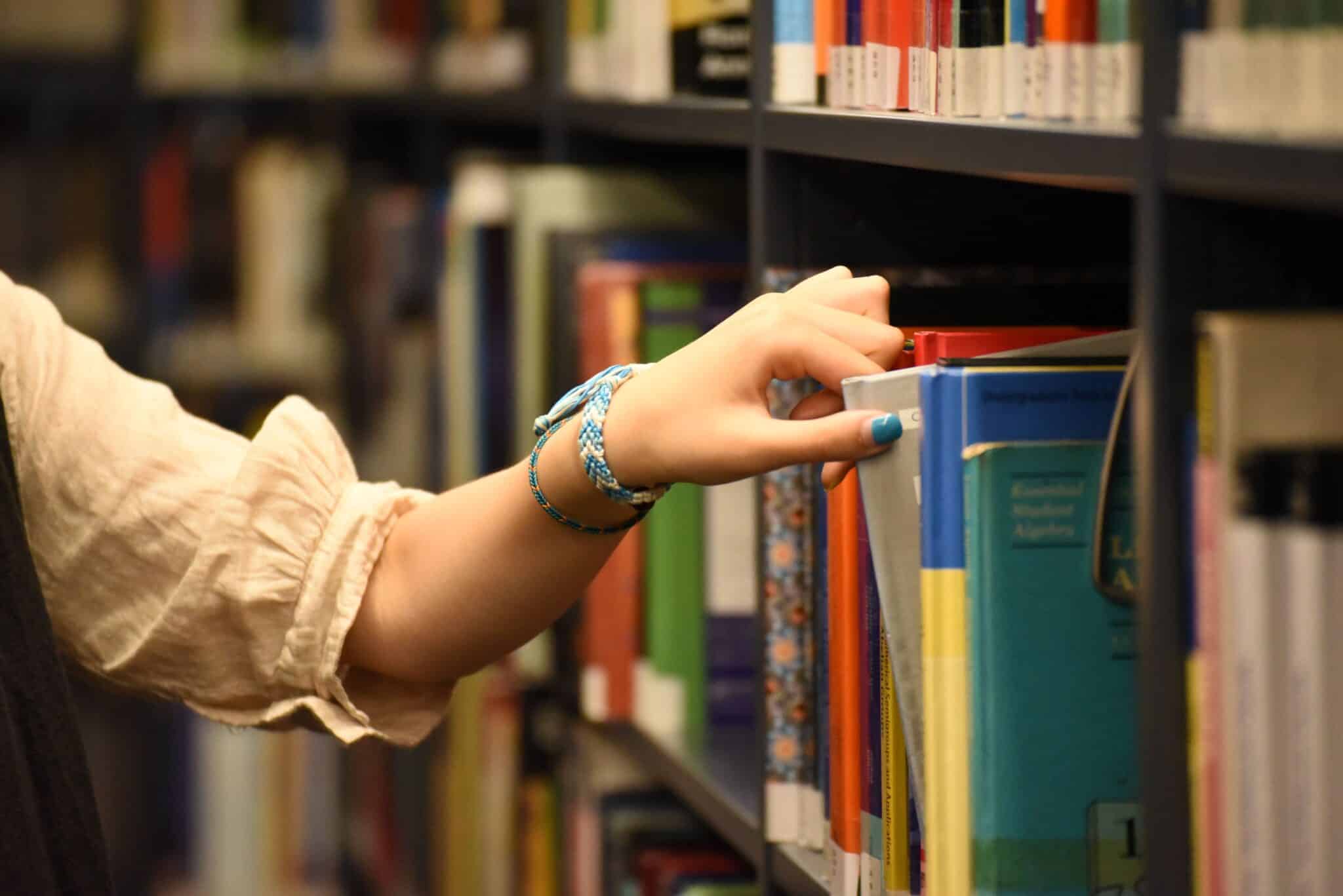 Gone are the days when we students would browse libraries for sources and dig out obscure texts. Photo: Pexels.com.
As Pope Leo says in Magnifica Humanitas, the widespread use of AI technologies has entrenched a misconception in the youth of today which equates artificial intelligence and human intelligence and interaction.
I have a relative who works in AI for a large software company. I was recently discussing the encyclical with him, trying to work my head around why so many people, particularly Gen Z and our youth, place so much reliance in a thing, as opposed to the beauty of a handwritten text.
He agreed with Pope Leo. AI isn’t designed to be morally neutral, nor is it designed to provide complete answers to nearly everything in our lives.
If AI became a conscious moral arbiter, it wouldn’t be AI, but something many working in the AI industry call “AGI” or artificial general intelligence.
It would also have the capacity to prioritise one dataset, one opinion, one theory, or one school of thought.
This would be nightmarish.
It’s also only a nightmare. As my relative attested, anyone working on developing ethical models of AI doesn’t wish to supplant the beauty of human intelligence but simply provide a method for those engaging with it to think outside the box.
Pope Leo says that those who develop AI have an ethical and spiritual responsibility to embed values in their models which ensure that they reflect and uphold a humane vision of the world.
 Copies of “Magnifica Humanitas” are seen at the Vatican’s Synod Hall May 25, 2026, the first encyclical of Pope Leo XIV’s papacy, which focuses on the rise of artificial intelligence. (OSV News photo/Simone Risoluti, Vatican Media)
A significant portion of that vision is reserved for innovative and inspiring ideas from Gen Z.
Gen Z’s over-reliance on AI is a generationally systemic issue. It is something we, and only we, can fix.
My contemporaries would call this a “hot take” – but Magnifica Humanitas could become a major encyclical, every bit as important as Pope Leo XIII’s Rerum Novarum was for the later 19th and early 20th century.
I would urge them to consider whom they would rather confide in, whom they would rather socialise with, whom they would rather laugh and cry with – humans like you and me, with the emotional intelligence to share in such important moments, or an AI chatbot?
If it was between me and the machine, I’d pick me.