TEXAS — A first-of-its-kind experiment means fruit will soon be sent out of Earth’s orbit. It’s being done by researchers at Texas A&M University.
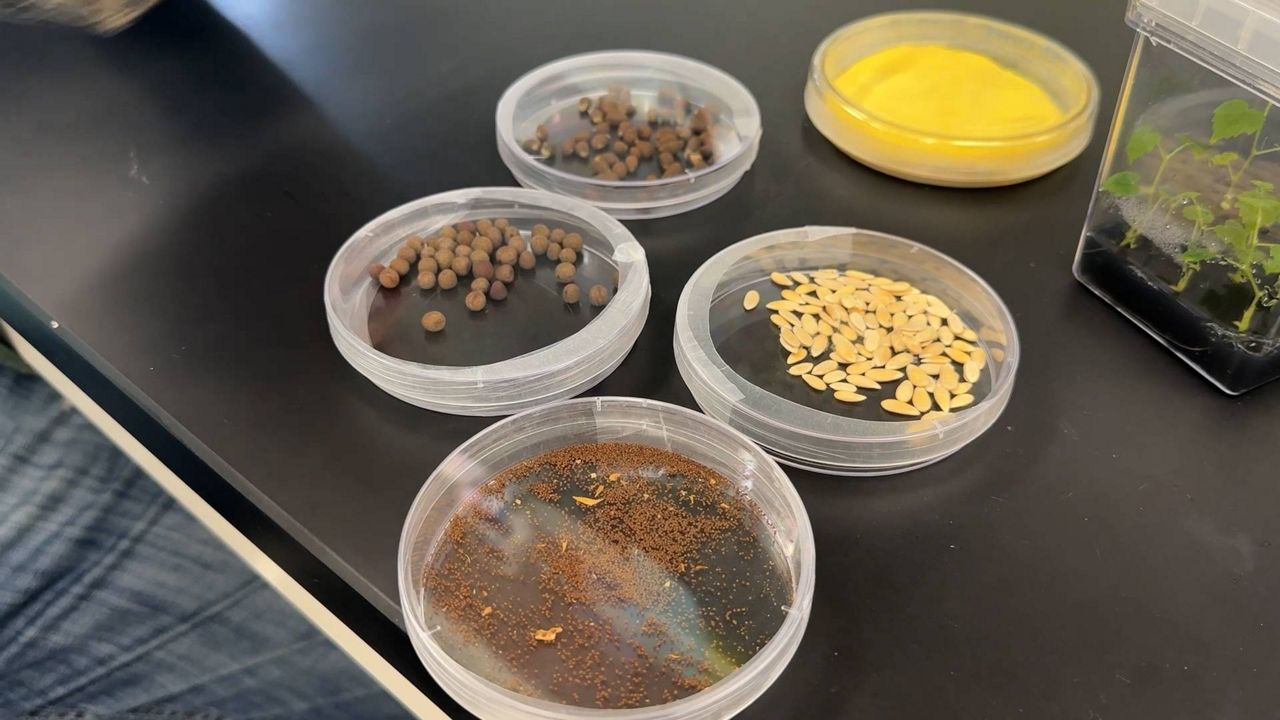
For the first time, they’re sending hundreds of grape seeds to the International Space Station. According to a news release from the university, students designed a carrier that will take grape seeds into orbit, where extended exposure to space radiation could induce genetic mutations.
“We’re going to be introducing mutations into those grapes that we don’t know if we have the ability to produce them on Earth,” said Jacob Muras, a PhD student at Texas A&M.
The department head of horticultural sciences at Texas A&M University, Amit Dhingra, said the grape seeds will head up to the space station in about a year. Then, six months later, they will get the seeds back and start planting them.
“In Texas right now, there’s a disease called Pierce’s disease…it’s a bacterial disease that can decimate a lot of wine grapes. So we can generate these mutations that can help the plants fight or become naturally tolerant. You know what that does? You eliminate the use of, you know, or limit the use of chemicals to control some of these aspects, so it can have multiple effects for the grower in the sense their cost of production goes down,” said Dhingra.
In four to five years, the research team expects the vines to produce fruit, ultimately resulting in what may be the first wine made from grapes that traveled to space.