Daft Punk’s Grammy sweep and dance music impact is still worth revisiting more than a decade later because their wins came at a time when electronic music was becoming impossible to ignore, but was still not always given the same weight as pop, rap, rock, or alternative albums at major award shows. At the 56th Annual Grammy Awards, Daft Punk won all five awards they were nominated for, with Random Access Memories winning Album of the Year and Get Lucky winning Record of the Year. The timing made the moment even more important, as the early 2010s were filled with festival main stages, crossover dance singles, and a growing global audience for electronic music, while Thomas Bangalter and Guy Manuel de Homem Christo came through with an album that used disco, funk, live musicians, and electronic production without sounding disconnected from dance music history. More than just a clean sweep, the night showed how far electronic music artists could go when the work was judged as a full album, with songwriting, production, collaborators, and cultural reach all playing a part, especially as Pharrell Williams, Nile Rodgers, and Stevie Wonder joined them for Get Lucky on the Grammy stage.
Daft Punk’s Grammy Awards Night And The Wins That Made History
At the 56th Annual Grammy Awards, Daft Punk won all five awards they were nominated for, giving Random Access Memories one of the strongest Grammy results ever for an electronic music album. The album won Best Dance/Electronica Album before taking Album of the Year, where Thomas Bangalter and Guy Manuel de Homem Christo were nominated against Kendrick Lamar’s good kid, m.A.A.d city, Taylor Swift’s Red, Macklemore & Ryan Lewis’ The Heist, and Sara Bareilles’ The Blessed Unrest. That category placed Random Access Memories next to some of the most talked about rap, pop, hip hop, and singer songwriter albums of the year, which made the win go far beyond the dance field. The album also carried a different kind of presence within the early 2010s electronic music landscape, using disco, funk, live musicians, and precise studio production in a way that still felt unmistakably connected to Daft Punk.
With Get Lucky, Daft Punk added two of the night’s biggest song categories, winning Record of the Year and Best Pop Duo/Group Performance alongside Pharrell Williams and Nile Rodgers. Random Access Memories also won Best Engineered Album, Non Classical, giving the sweep more depth because the Grammy Awards recognized the album’s recording, mixing, and production work alongside its commercial reach. Across those five categories, Daft Punk were recognized for the full album, its biggest single, its place in dance music, its crossover into pop, and the technical detail behind the record itself. The ceremony also kept the duo’s public image intact, as Daft Punk remained silent throughout the night while collaborators accepted the awards on their behalf. Later in the ceremony, Thomas Bangalter and Guy Manuel de Homem Christo joined Pharrell Williams, Nile Rodgers, and Stevie Wonder for Get Lucky, bringing the album’s disco influence, live guitar work, pop vocal hook, and electronic production directly onto the Grammy stage after Random Access Memories had already swept every category it entered.
Daft Punk’s Impact On Electronic Music Beyond The Grammy Awards
Long before the Grammy Awards, Daft Punk had already changed how far an electronic music act could go without moving away from dance music. Homework placed Thomas Bangalter and Guy Manuel de Homem Christo inside the French house movement, with Da Funk and Around The World giving them a club base that still felt unusual enough to stand apart. Then Discovery took that language further through One More Time, Digital Love, Harder, Better, Faster, Stronger, and Something About Us, bringing together dance music structure, hooks, humour, emotion, vocoder vocals, and the animated film Interstella 5555. Years later, that reach could still be heard outside the electronic music scene, from Kanye West using Harder, Better, Faster, Stronger for Stronger to The Weeknd working with Daft Punk on Starboy and I Feel It Coming.
Their live shows became another major part of that influence, especially after Coachella in 2006 and the Alive 2007 tour. The pyramid became one of the most recognizable stage designs in the electronic music scene, but the show worked because of how Daft Punk used their own catalogue. Instead of playing songs in a simple greatest hits order, they reworked material from Homework, Discovery, and Human After All so different eras of their music moved into one another. Television Rules The Nation connected with Around The World, One More Time crossed with Aerodynamic, and familiar records came back with new edits, tension, and timing. For artists who came after them, including Skrillex, Deadmau5, and Porter Robinson, the live version of an electronic music project could be more than a setlist.
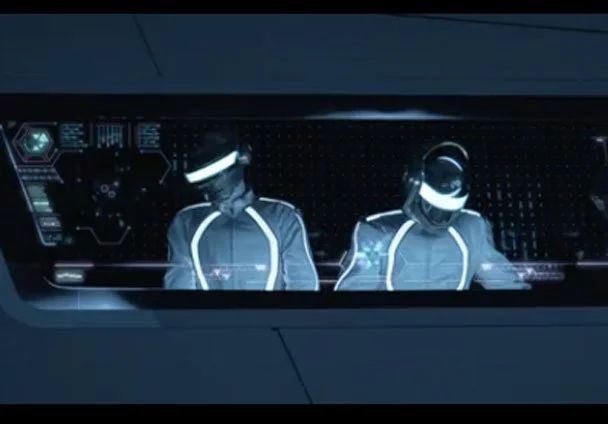
The move into film with TRON: Legacy gave Daft Punk another way to show how electronic music could work outside albums, clubs, and festival stages. For the Disney film, they wrote a full score that mixed electronic production with orchestral recording, with tracks like Derezzed and The Grid matching the film’s sci fi visuals while still sounding connected to Daft Punk. It was not just a soundtrack placement or a few songs attached to a movie. The score gave Thomas Bangalter and Guy Manuel de Homem Christo space to work with tension, atmosphere, rhythm, and cinematic scale without turning the project into something disconnected from their own style. That matters in the wider electronic music scene because it showed how electronic artists could move into film scoring with the same care usually expected from composers.
The helmets, videos, artwork, rare interviews, and selective public appearances all helped Daft Punk keep attention on the project without turning Thomas Bangalter and Guy Manuel de Homem Christo into typical celebrity figures. That approach also moved into moments outside music, including the Lotus F1 Team collaboration at the 2013 Monaco Grand Prix, where the team’s car carried Daft Punk imagery during the Random Access Memories era and the duo appeared with Lotus in their helmets. You can see the same influence in how later electronic music artists treated visuals, stage design, album eras, and collaborations as part of the release itself, especially with Porter Robinson, who has spoken about Daft Punk as a major electronic influence. Daft Punk’s impact beyond the Grammy Awards comes from that wider standard they left behind: electronic music artists could make club records, full albums, film scores, live shows, videos, pop collaborations, and cultural crossovers without having to separate one side from the other.

In 2025, Daft Punk’s music and visuals entered Fortnite through the Daft Punk Experience, adding another present day example of how the duo’s work continues to move beyond traditional music formats. The interactive event gave players different ways to engage with the catalogue, from Dream Chamber Studios and Robot Rock Arena to Daft Club and a LEGO style video activity inspired by Around The World. What made it work was that Fortnite did not only use the songs as background music. The experience also brought in the robot image, visual references, and live show history that have always been central to Daft Punk as a project, introducing that legacy to a younger gaming audience without separating it from the identity Thomas Bangalter and Guy Manuel de Homem Christo created.
Daft Punk’s Impact And Influence Can Still Be Seen And Felt In 2026
More than two decades after One More Time first came out, Daft Punk are still entering moments that have nothing to do with a reunion or a new album campaign. In 2026, the song became France’s official goal song at the FIFA World Cup, giving one of the duo’s most recognizable records a new public life inside football stadiums. During France’s 3 to 1 win over Senegal at MetLife Stadium on June 16, One More Time played after each French goal, including two from Kylian Mbappé. It says something about the song’s place in public memory that it can move from clubs and festival sets into a national football moment without feeling forced. For an act that has not released a new studio album since Random Access Memories, Daft Punk still have music that works in real time, in front of crowds, and in settings far outside the electronic music scene.