
MUNICH, June 24, 2026 /PRNewswire/ — Sungrow, the globally leading PV inverter and energy storage system provider, released its S+ Energy Storage Multi-Scenario White Paper at Intersolar Europe 2026. The white paper introduces a new framework to address the industry’s most pressing challenges: delivering energy storage solutions that truly meet the diverse and evolving demands of real-world applications.
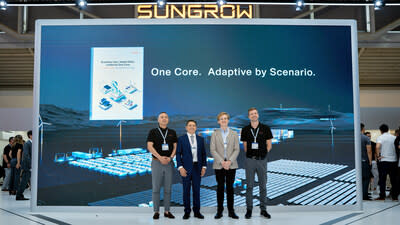
Sungrow Releases S+ Energy Storage Multi-Scenario White Paper
Energy Storage Moves Beyond One-Size-Fits-All
As energy storage is deployed across more applications, scenario differences are becoming more fundamental. Use cases such as renewable energy bases, AI data centers, PV-storage-charging stations, zero-carbon industrial parks, and off-grid microgrids each require distinctly different system capabilities and value priorities.
Even within generation-side storage, the logic can vary significantly. Renewable energy integration often requires longer-duration shifting, while grid-forming applications demand fast response and enhanced stability support. Emerging applications such as green hydrogen production further depend on tight coordination among power generation, storage, and electrolyzers.
These differences are no longer only about capacity, power rating, or duration. They reflect different operating conditions, grid constraints, and value objectives. The White Paper states that the era of using one standardized product to serve all scenarios is coming to an end.
The industry has widely discussed “scenario + energy storage,” yet many solutions still follow a product-led approach — applying standardized systems to diverse projects, or relying on on-site hardware assembly and temporary tuning. Such models may enable deployment, but often struggle to match real project requirements or deliver long-term value.
“S+”: Scenario, Synergy, Sustain
Sungrow’s answer is embodied in the name S+, standing for Scenario, Synergy, and Sustain: scenario-defined solutions, native system synergy, and sustained value delivery. The White Paper calls for a shift from “applying products to scenarios” to “defining solutions by scenarios.” True scenario-based design does not imply building every system from scratch; rather, it relies on a robust and reusable technological foundation to quickly configure the best solutions for different scenarios.
This approach reflects three core shifts:
Scenario defines the solution
At the core of S+ is a simple principle: scenario defines solution. Instead of treating storage as a physical add-on, S+ starts by deeply understanding the value logic, operating constraints, and lifecycle objectives of each scenario, then defines the role of energy storage accordingly.
