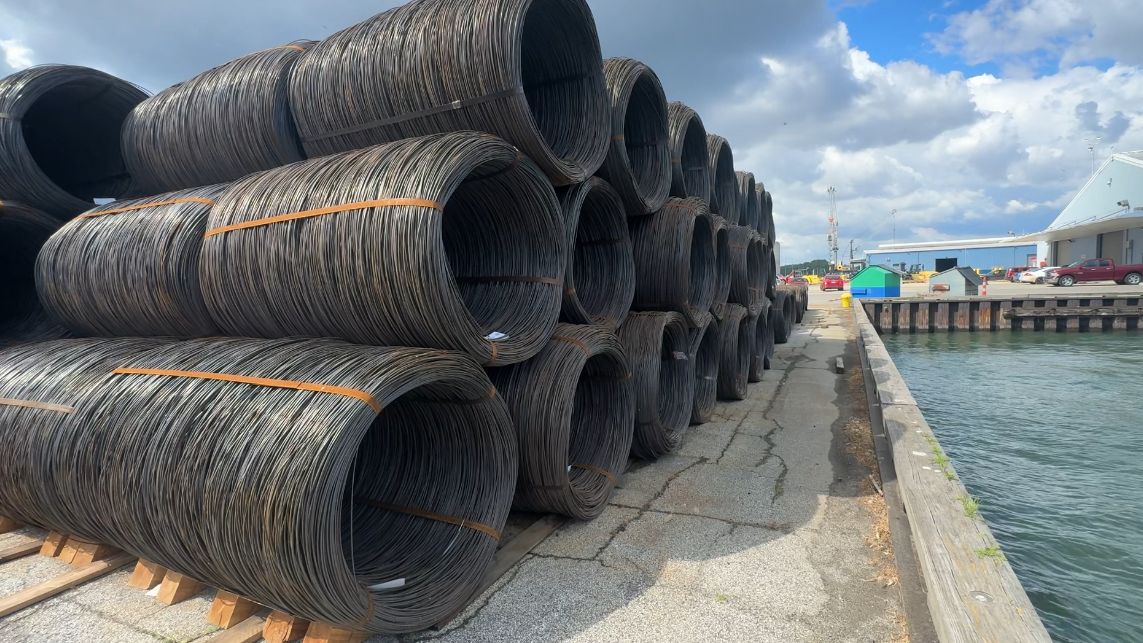
CLEVELAND, Ohio — At the Port of Cleveland, steel is a money maker.
“Our biggest import is definitely steel. We work collaboratively with Cleveland-cliffs and other steel mills in the area. So really a big family here in Northeast Ohio as we continue to move our region forward in that capacity,” said Kierra Cotton, marketing and communications manager for the Port of Cleveland.
One year since President Trump’s increased 50% percent increased tariffs on steel and aluminum last June, ports like Cleveland are still seeing the impact of the tariff unfold.
“Cargo tonnage was down approximately 30% in 2025 compared to the previous year, and this year we’re seeing about 50% year to date being down as well. So we’re really hoping that things turn around because it is gravely impacting our business,” Cotton said.
While the tariffs are impacting the port negatively, that isn’t the case for all businesses.
Steel manufacturers like Cleveland Cliffs say the change has led to more steel being made in the U.S., which has in turn helped business over the past year.
“It’s time to move to domestic suppliers with all the benefits that come with sourcing from a domestic producer of steel,” said Lourenco Goncalves, CEO of Cleveland Cliffs.
But what does the drop in imports mean for the average consumer? Manufacturers say not much.
“One car has one ton of steel. If one ton of steel goes from, let’s call $700 for top, that’s below our cost to produce to a $1,000 per ton, “ said Goncalves. “It’s a $300 impact on the price of a car. So I, I’m 100% sure that you don’t know any buyer that goes to a car dealer and, says, you know what? I can’t buy this car because the car now costs $50,300. I was prepared to pay 50,000. That would be ridiculous.”
But ports say they have more of a statewide impact than people may think.
“Our goods that come through the Port of Cleveland go as far as Columbus,” Cotton said. “There’s projects all over the state of Ohio that receive our products that come through the Port of Cleveland.”