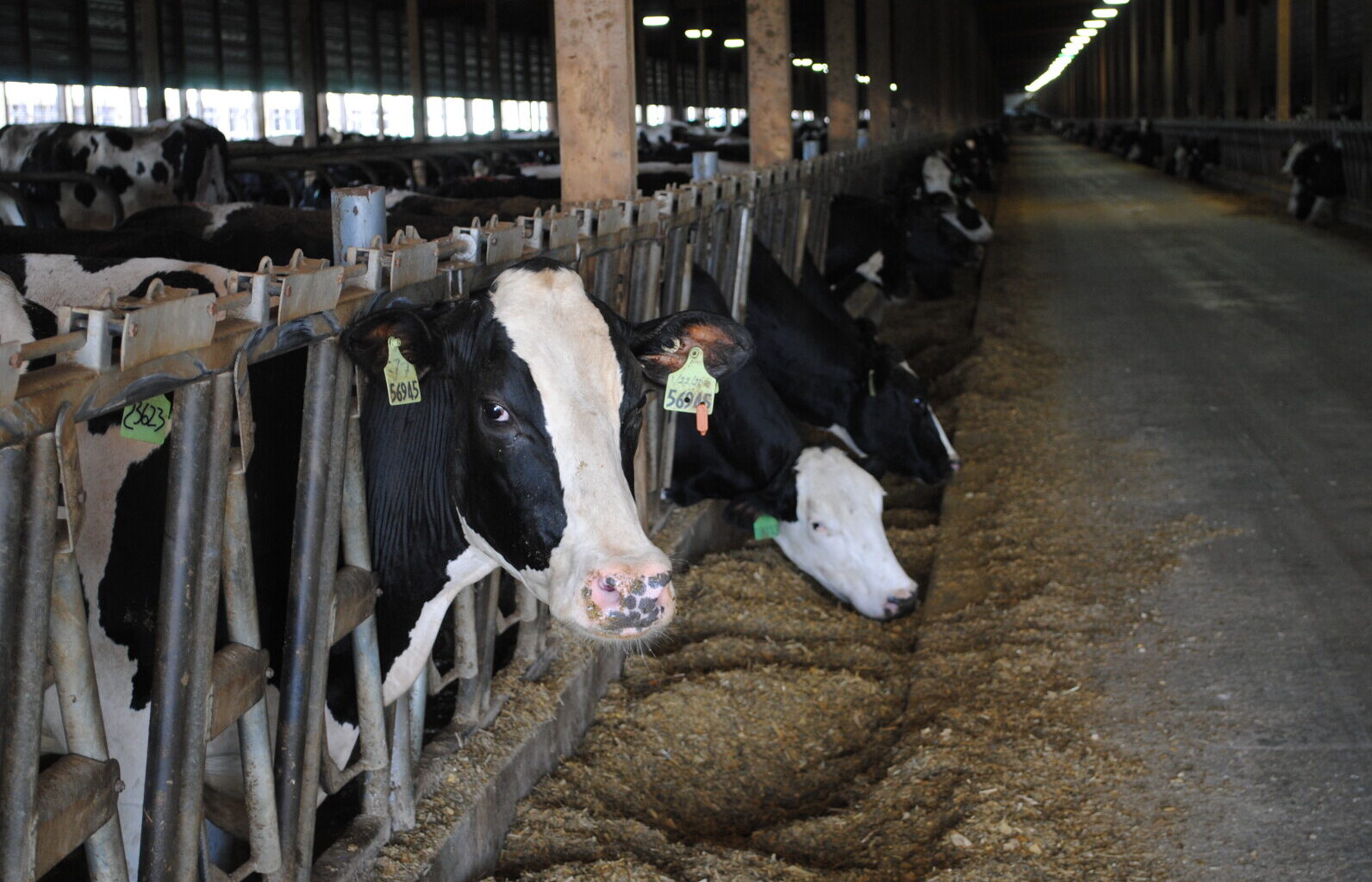
— The Minnesota Pollution Control Agency will not require an environmental impact statement for a large expansion planned by
for its West River Dairy near Morris.
The
determined that the environmental assessment worksheet is adequate to address the potential environmental effects of expanding from 7,855 to 18,855 cows. It also found that “the greatest concerns expressed from the facilities expansion will be mitigated through the water appropriation and feedlot permits the company is required to comply with,” according to a June 22 news release announcing the agency decision.
In a statement posted on the Riverview website, the Morris-based company said it remains “committed to being a responsible steward of the land and a good neighbor for years to come.”
The statement expressed appreciation for the time and effort of MPCA staff and those who attended meetings and asked questions to learn about the project and participate in the review process.

Contributed / Riverview LLP
“Throughout that process, Riverview has worked openly with regulators and stakeholders, and we remain committed to that approach moving forward,“ the statement reads.
Riverview is family- and employee-owned,
and opened its first dairy farm in 1995. It is now “a diversified agribusiness with dairy farms and feedlots in the Upper Midwest and Southwest.”
The company has a section of its website devoted to the
The project description there says a proposed 11,000-cow dairy farm would be added adjacent to the existing West River Dairy, which has operated for more than 20 years. The expansion is planned on currently cultivated agricultural land.
Riverview, in its statement reacting to the MPCA decision, said the “expansion represents a long-term investment in the Morris area that will support local jobs, local businesses, and Minnesota’s agricultural economy.”
The company said it has for decades been “committed to investing in the rural communities where we live and work, providing a culture of opportunity for our coworkers and neighbors, and responsibly stewarding our environment and resources.”
The expansion has been opposed by the nonprofit
which had submitted a 1,140-signature petition calling for an environmental impact statement, an in-depth review of a project.
The MPCA describes an environmental assessment worksheet as a document designed to lay out a project’s basic facts and assess its potential for significant environmental effects, which determines if an environmental impact statement is required.
“We are disappointed that state regulators are allowing a project of this unprecedented size to move forward without the full environmental review that rural residents, family farmers, and community members have been calling for,” Sean Carroll, policy director for Land Stewardship Project, said in a news release.
Environmental issues include the 250 million gallons of liquid manure the expanded dairy would generate annually, as well as its projected use of 319 million gallons of water per year, according to the Land Stewardship Project, a nonprofit organization that promotes sustainable agriculture and stewardship of farmland.
Minnesota Farmers Union leaders in a news release also expressed disappointment in the MPCA decision. During the last legislative session, Minnesota Farmers Union had supported legislation to require an environmental impact statement be prepared before animal feedlots with a capacity of 10,000 animal units or more are constructed.
“When we established our current regulatory framework for feedlots in the late 1990s, no one contemplated a nearly 19,000-cow dairy operation. That is more than 60 times the average size dairy herd in our state,” said Minnesota Farmers Union President Gary Wertish in the news release.
During an April public meeting about the dairy expansion, one commenter suggested there be a moratorium on such projects pending legislative debate on the feedlot proposal, according to
MPCA staff explained that they could not act based on pending legislation. There would have been the potential for the bill to have an effect if passed because the agency did not intend to make a decision before the end of the session, Agweek reported, but the legislation (HF3940/SF4275) did not move beyond committee.
Opponents of the dairy expansion are now bringing their call for an environmental impact statement to the Stevens County Board of Commissioners. The board has authority to order an environmental impact statement, according to the Land Stewardship Project.
There were more than 1,400 public comments filed with the MPCA in the permitting process. The comments cited concerns about water quality, manure management, groundwater appropriations and greenhouse gas emissions, according to the state agency.
“The MPCA determined that the project, as it is proposed, does not have the potential for significant environmental effects that are reasonably expected to occur from the project,” the news release announcing the decision stated.
With completion of the environmental assessment worksheet review process, the MPCA said in the news release that it would move forward with issuing West River Dairy’s feedlot permit on June 23.
“This draft permit, which also included an opportunity for public comment, includes proposed requirements for construction of animal holding areas, liquid manure storage areas, permanent stockpiles and feed storage areas at the facility, manure management requirements, and other facility and operational requirements,” the news release states.
The agency also noted that additional public comments it received had focused on economic costs and social issues — topics that are not within the scope of an environmental assessment worksheet.
In light of the extensive feedback gathered through MPCA’s public comment period, however, the Minnesota Department of Agriculture will be exploring the economic and social impacts of large-scale dairies in Minnesota with the help of the public and interested parties, according to the MPCA news release. The Ag Department’s engagement efforts will be announced in the next month.
Minnesota Farmers Union Vice President Anne Schwagerl in her comments Tuesday referenced the changing dairy industry.
“Consolidation is reshaping our dairy sector, and the trend has implications for land access, local economies and the next generation of farmers,” she said in the news release.