Your doctor might be telling you to eat more fish. If so, prepare for sticker shock.
The Trump administration’s dietary guidelines, released at the beginning of this year, emphasize getting more “high-quality, nutrient-dense protein,” with a new food pyramid featuring images of salmon and shrimp. That might be easier said than done when meat, poultry, and fish prices overall are up 6.2% from last May, and fresh and frozen seafood costs are up 7.4% and 7.5%, respectively, government data shows.
While high beef prices can be explained by a low cattle supply, the picture is more complicated when it comes to seafood.
“The market is tight with a lot of stuff,” said Rich Pettigrew, owner of Seaport Fish, a retailer and wholesaler in Rye, N.H. “With 80% of the seafood being imported, we have to deal with tariffs on some items.”
Take haddock, for example, which “everyone wants,” Pettigrew said. The fish is burdened by both duties and supply issues.
Iceland, a key supplier, has “already caught 99% of their current haddock quota, and their other one doesn’t begin until Sept. 1,” Pettigrew said. “They’re having a 20% reduction … so there’s another 20% that’s not going to be coming from Iceland.” Canada has also cut haddock fishing quotas, he said.
Meanwhile, cod — the hallmark of fish and chips — is also facing a shortage, while the European Union is weighing a ban on the fish from Russia, a major supplier, which could further pressure prices. Add on El Niño-spurred weather events that could slam into seafood supply chains more broadly.
Outside of supply dynamics, “the main drivers of price inflation and higher cost of the value chain over the last year have been tariffs and higher fuel costs,” said Gary Morrison, head of growth and strategy at Undercurrent, a price reporting agency for the seafood industry.
Local media reports show that some eateries are reeling from rising costs. A restaurant on Canada’s Prince Edward Island pulled sea scallops from its menu amid higher prices, according to the CBC. A handful of Wisconsin restaurants stopped their Friday fish fries, the Janesville Gazette reported. And UK outlets have fretted about the future of fish-and-chip shops. (“Pollock and chips? British chippies face closure unless we eat cheaper fish, says award-winning owner,” reads one March headline from The Independent.)

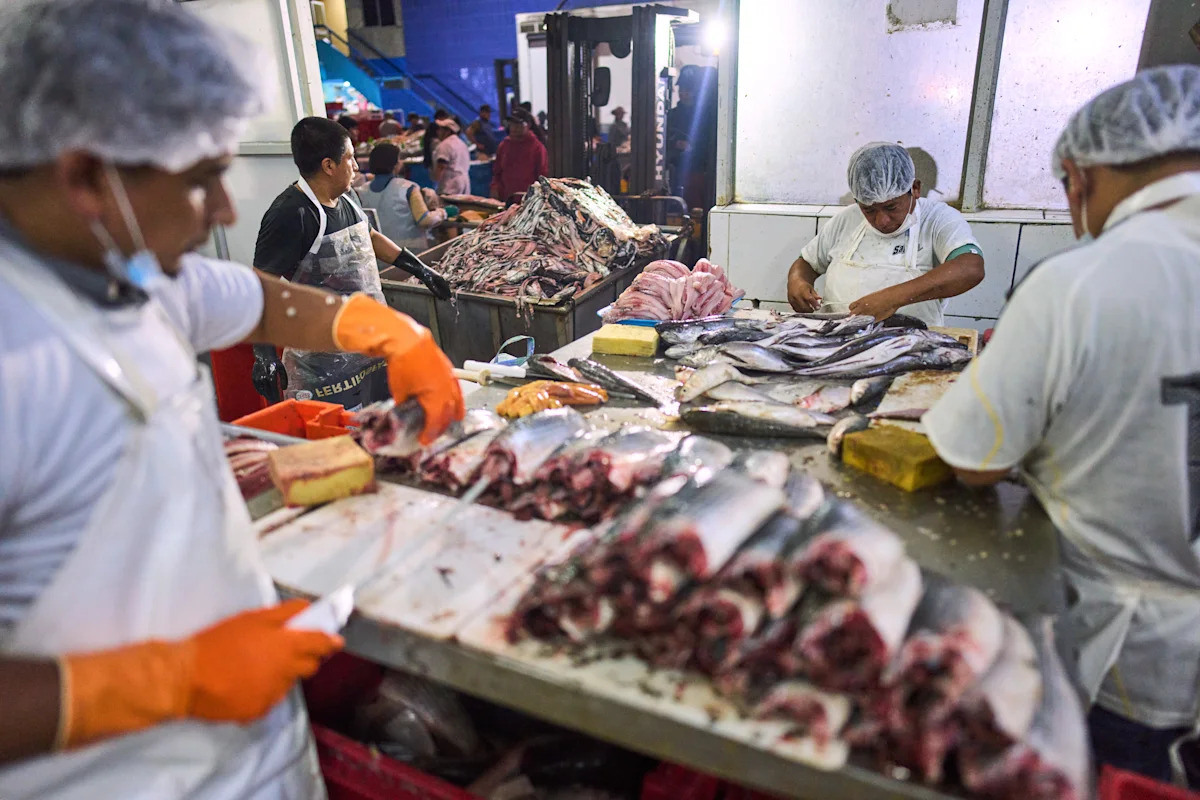
Workers remove bones from fish for sale at a wholesale seafood market in the Villa Maria del Triunfo district of Lima, Peru, on June 6, 2026. (AP Photo/Rodrigo Abd) · AP Photo/Rodrigo Abd
If you were wondering if there was also a K-shaped dynamic to the seafood economy, there is. When it comes to the premium stuff, like king crab, prices are near record levels, with seemingly little impact on consumers’ habits. Lobster costs are also rising.