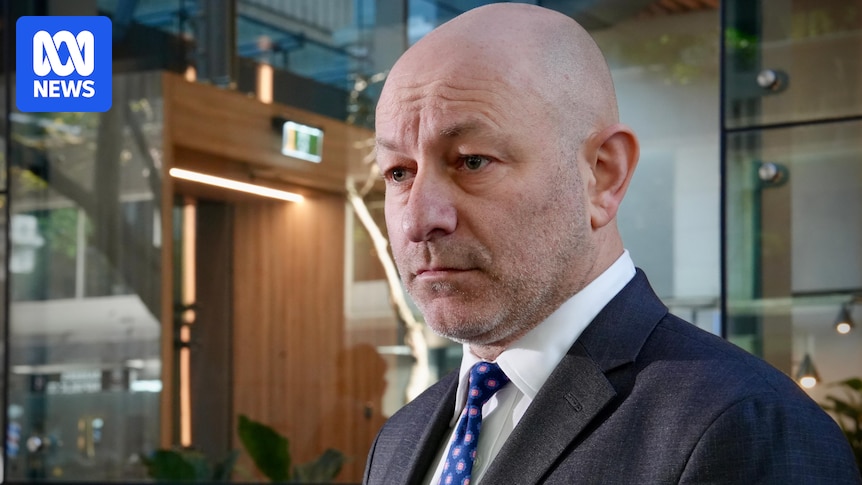
Deepfake and altered images depicting a Bondi Beach terror attack survivor holding an Academy Award while covered in blood spread “like wildfire” online just hours after the shooting, a royal commission has heard.
The Royal Commission on Antisemitism and Social Cohesion has entered its third hearing block, which will focus on the spread of hate speech online and in traditional media sources.
Warning: This story contains graphic images of a person with bloody physical injuries.
The inquiry was called earlier this year after 15 people died during the terror attack in Sydney’s east on December 14, 2025.
Witnesses to be called on Monday have all experienced antisemitic hate speech, including Bondi Beach terror attack survivor Arsen Ostrovsky.
Mr Ostrovsky told the royal commission an image of his injuries shared on X about two hours after the shooting prompted offensive comments and manipulated images.
“It was surreal to be in the state that I was in hospital and seeing this material at the same time.”

Arsen Ostrovsky said online comments labelled him a “trauma tourist” after he was injured in the terror attack. (ABC News)
He said social media comments labelled him a “trauma tourist” and an actor in a “false flag attack”, while some claimed the blood depicted in his photo was instead ketchup or paint.
The commission was shown one AI-generated image which depicted Mr Ostrovsky sitting on the ground laughing while someone painted his face red.
“This was happening as I was literally being prepped to go into surgery,” he said.
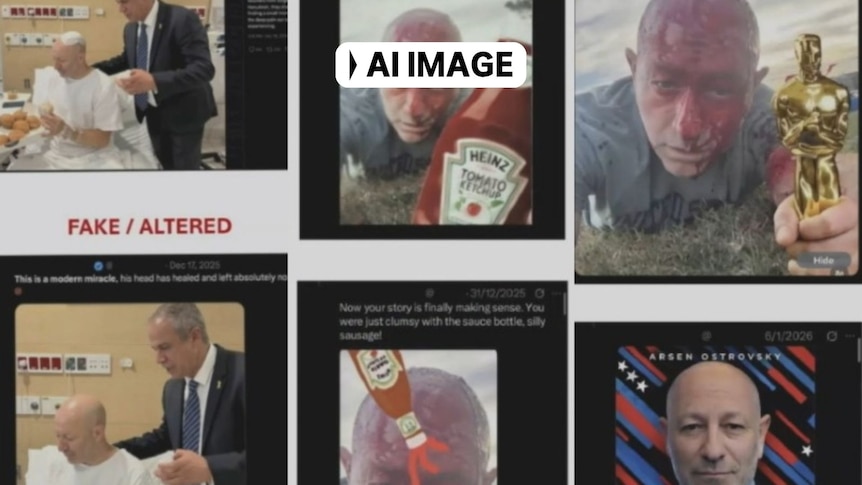
AI-generated images in social media posts directed at Arsen Ostrovsky that were shown to the royal commission. (Supplied: The Royal Commission on Antisemitism and Social Cohesion)
Difficulty removing online antisemitic content
Mr Ostrovsky said some of the content was still online, including a YouTube video in which he was accused of being a “crisis actor” and “intelligence asset”.
The video, seen by the ABC, was live as of Monday and had about 150 views.

Altered images of Mr Ostrovsky spread online following the terror attack. (ABC News: Abbey Haberecht)
An anonymous Jewish mother told the commission she had also encountered challenges when attempting to have antisemitic material removed from social media.
The 47-year-old from Sydney said her then-Year 7 daughter had experienced antisemitism in person at school in June 2024 before the hate moved online when a TikTok account posted a video including a photo of the girl and the words “g@s inhl3r”.
She said the symbols were used to spell the offensive phrase “gas inhaler” in a way that went undetected by automatic blocking.
The woman said her daughter was “devastated” by the video, which NSW Police determined was posted by an account created by one of the girl’s close friends.
A TikTok account had posted a video including a photo of the girl and the words “g@s inhl3r”. (ABC News: Abbey Haberecht)
The woman said another student was linked to the creation of the video, but admitted no involvement.
The mother said she also reported the video to TikTok and the eSafety Commissioner, with the latter saying there was little the authority could do given the video had already been removed by that time.
The commissioner also provided instructions on how to report underage users to TikTok, advice on managing cyber bullying, and e-safety resources for schools.
While the mother said she understood the eSafety Commissioner’s position, she said she remained concerned the video could be republished.
‘Hostile’ US social platform’s boss lashes royal commission
It comes as a US-based social media platform Gab Social was accused of being “hostile” in its engagement with Australia’s antisemitism royal commission, with an organisation’s founder accusing the federal government of having “declared war on free speech”.

Gab Social CEO Andrew Torba says he has been asked to provide information to the royal commission. (YouTube: Andrew Torba)
A number of social media platforms have been given leave to appear at the inquiry, including Meta, Google, LinkedIn and TikTok.
Addressing the royal commission on Monday, counsel assisting Richard Lancaster SC said some platforms had been more responsive than others to requests for information.
He said Gab Social had been “openly hostile” in its communications with the commission.
Mr Lancaster said a spokesperson for the platform said it was an “American company, run by Americans” that would “publish what it likes, when it likes”.
“I do not answer to Australian bureaucrats and Gab does not answer to state-sponsored censors,” Gab founder and CEO Andrew Torba said in a statement on X in May about being called to produce documents for the royal commission.
“The Australian government has officially declared war on free speech, and they have threatened me with 12 months in prison for exposing their blueprints.”
Mr Lancaster said X Corp and Telegram had not responded to requests for information from the inquiry.
Public broadcasters expected to appear
Media organisations, including the ABC and SBS, are also due to appear over the next two weeks.
The public broadcasters’ submissions to the inquiry have not been made public.
Hearings have been held in Sydney since May with much of the previous block closed to the public due to national security and legal concerns.
Antisemitism on social media in focus
Some witnesses have previously reported an increase in online harassment after they appeared at the inquiry, with a number of allegations reported to the Australian Federal Police (AFP).
A man in Woodburn in northern NSW was charged after allegedly sending three offensive emails to one royal commission witness.
The inquiry is set to move to Melbourne next month to examine the impact of antisemitism at Australian universities.
More than 20,000 submissions have been made to the inquiry, which must deliver its final report by the first anniversary of the terror attack.