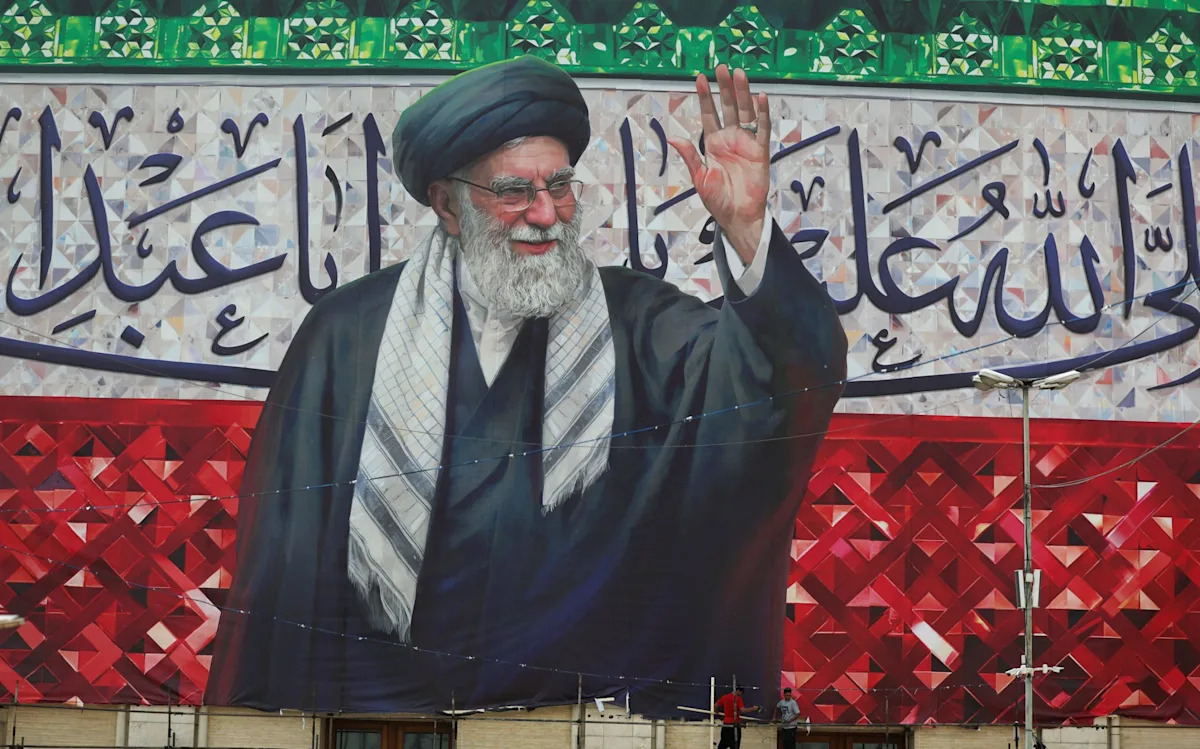
Around 20 million Iranians are expected to pack the streets of Tehran for the funeral of Ali Khamenei, the country’s former supreme leader, this weekend.
The 86-year-old ayatollah was killed alongside a dozen family members in Israeli air strikes on his home on the opening day of the war on Feb 28.
The vast state-organised funeral can only be held now a peace deal with the US is in place, and it will begin on Saturday at the Iranian capital’s Mosalla prayer grounds.
Authorities have urged the public to turn out en masse, and police have predicted a turnout in Tehran of up to 17 million, while the city’s mayor said he was expecting up to 20 million.
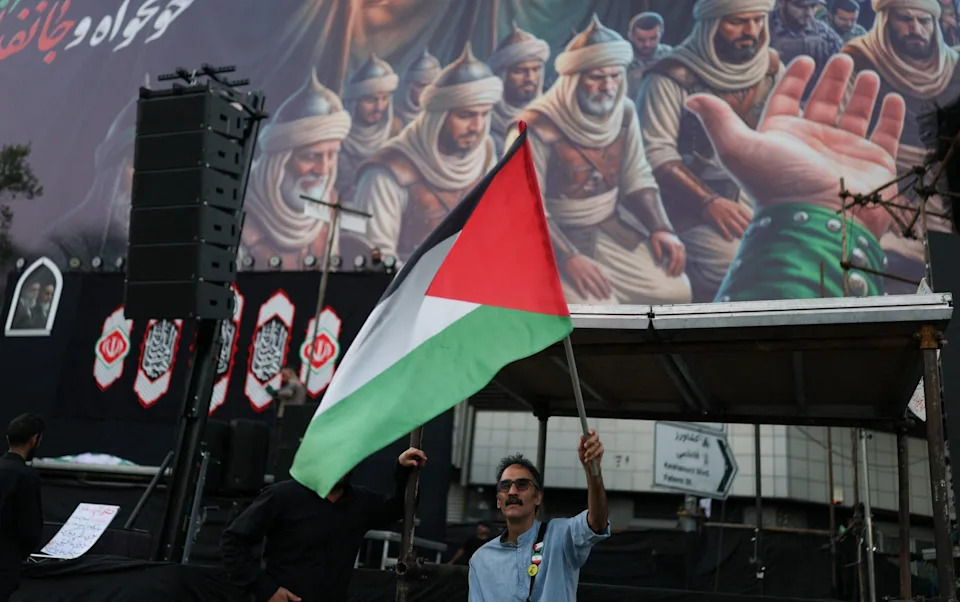
A man waves a Palestinian flag in Tehran during the preparations for the funeral of Ali Khamenei, which was delayed until a peace deal with the US was in place – Mohammed Salem/Reuters
Nationwide, officials estimate between 18 and 35 million will attend events across Tehran, Qom, Mashhad, and the Iraqi shrine cities of Najaf and Karbala.
Officials have declared next Thursday a national day of mourning.
The ceremonies begin on Saturday at the Mosalla prayer grounds, where the public will be able to walk by the body and view it over two days.
A funeral prayer is to be held on the morning of the second day.
Ceremonies then move to Qom, Iraq and finally to Mashhad, where Khamenei is to be buried at the shrine of Imam Reza.

Posters commemorating Ali Khamenei, a spiritual figurehead for many Shia Muslims, are also up on billboards in Baghdad – Ahmad al-Rubaye/AFP via Getty Images
More than 900 foreign journalists have registered to attend, and guests from about 100 countries are expected.
For Mojtaba Khamenei – the reclusive cleric chosen to succeed his father as supreme leader – the funeral is a critical test.
He has not appeared in public since taking power, and the spectacle offers a chance to consolidate his authority and, potentially, to show his face for the first time.
His father led the Islamic Republic for 36 years.
Whether the new supreme leader leads the funeral prayer will be closely watched as a signal of how far he is willing to step into the open.
The funeral is being held amid feuding in the Islamic Republic over the new peace deal with Washington.
On Wednesday, Mohammad Bagher Ghalibaf, the chief negotiator, told hardliners: “You who help neither in diplomacy nor in war, stop causing trouble.”
Factions vie for ‘control of the street’
One MP’s warning of a possible “coup” has further unsettled the political scene, deepening a sense of a fractured system.
Kamran Ghazanfari alleged that officials were quietly paying eulogists and preachers to abandon nightly street gatherings, and that letters had gone to the Basij militia ordering it to stop supporting them – an effort, he said, to let the mobilisation “fade and then be shut down”.
He framed it as “a semi-political coup against the leader of the system”, accusing the camp of Masoud Pezeshkian, the president, of inflating the role of the supreme national security council.
The claims are unverified and show the hardliners’ world view, but they reveal the real fault line beneath the funeral: control of the street.
The grief is also personal for the new supreme leader.
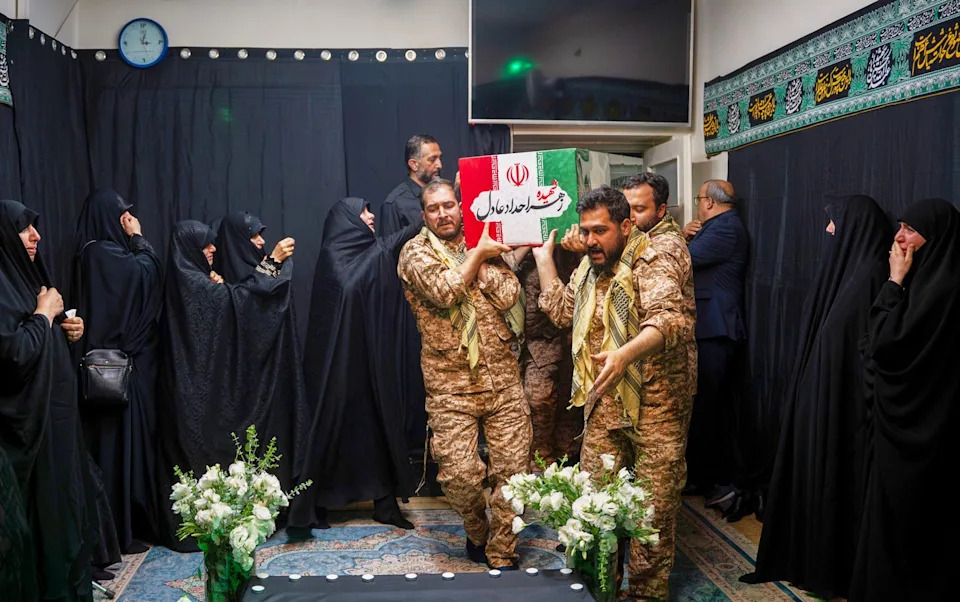
Mourners carry the coffin of Zahra Haddad-Adel, the wife of Mojtaba Khamenei, who was among the other victims of the air strike that killed her father-in-law. Below, mourners touch the coffin – Fars News Agency via AP

Mourners touch the coffin of Zahra Haddad-Adel
On Wednesday night, the funeral of his wife, Zahra Haddad-Adel, a teacher killed alongside her father-in-law in the strike on the Khamenei home – was held.
Khamenei did not attend, but his wife’s father was seen weeping over her coffin.
Iranian state television has aired continuous footage of the older Khamenei and his speeches in preparation for the funeral, casting the event as a moment of national unity even as Iran’s elite splinters over the country’s direction.