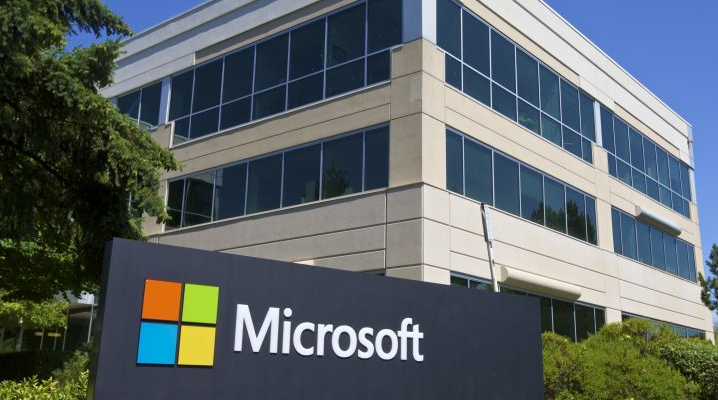
Microsoft Corp. is reported to be transitioning away from using OpenAI Group PBC’s and Anthropic PBC’s most advanced artificial intelligence models in favor of its own. Increasingly, it’s leaning on the new Microsoft AI or MAI model family, despite publicly asserting that those models aren’t as sophisticated as other leading frontier AI systems.
That’s according to a report by Bloomberg today, which cited a person familiar with the company’s AI strategy as saying that it has become increasingly concerned about the cost of using top-tier models from OpenAI and Anthropic. Apparently, “tens of thousands of prompts” in platforms such as Excel and Outlook, which were previously routed through third-party models, are now being handled by Microsoft’s MAI models in an effort to save costs, the person said.
That’s still only a fraction of the company’s overall AI usage, with Microsoft Copilot, processing many millions of prompts each week.
The report comes about a month after Microsoft unveiled seven new models within the MAI family, including its first reasoning model, MAI-Thinking 1. At the time, Microsoft said MAI-Thinking 1 was designed to provide high performance and efficiency with low token costs, referring to the unit of consumption for AI computing. It describes MAI-Thinking 1 as a mid-sized model with 35 billion active-parameters and a 256K context window. In blind tests, it was able to match the coding capabilities of Anthropic’s Claude Opus 4.6.
Alongside MAI-Thinking 1, the company also launched an array of MAI models designed for image generation, transcription, voice recognition and coding tasks.
Cheaper and more efficient AI models are getting more attention these days as the excessive costs of higher-end AI systems begin to weigh on the most enthusiastic adopters of the technology. Following a brief “tokenmaxxing” trend earlier this year, many companies have become increasingly concerned about the amounts of money they’re spending on AI. In recent weeks, the likes of Amazon.com Inc., Accenture Plc, Meta Platforms Inc. and Uber Technologies Inc. have all reportedly been making moves to reduce their AI bills.
Some American firms have switched to more affordable Chinese models, despite having concerns over the potential security risks. Earlier this year, China’s DeepSeek Ltd. made headlines when it released the budget-friendly V4-Pro model. It charges just $0.435 per million input tokens and $0.87 per million output tokens to access that model, compared to Anthropic’s price of $10 per million input tokens and $50 per million output tokens for the heavily-restricted Fable 5 model.
“Anthropic is extremely expensive and I think many people are urgently looking for alternatives,” Microsoft AI Chief Executive Mustafa Suleyman told Bloomberg in an interview last month. “We pay a lot of money to Anthropic, so our goal is to reduce and ultimately eliminate that cost.”
OpenAI charges a lot less than Anthropic, with GPT-5.5 costing $5 per million input tokens and $30 per million output tokens. Thanks to its partnership with that company, Microsoft can access OpenAI’s models at a significantly discounted price, but those costs still add up. Moreover, Microsoft will be aware that its deal with OpenAI will ultimately expire in 2032.
Photo: Microsoft
Support our mission to keep content open and free by engaging with theCUBE community. Join theCUBE’s Alumni Trust Network, where technology leaders connect, share intelligence and create opportunities.
15M+ viewers of theCUBE videos, powering conversations across AI, cloud, cybersecurity and more
11.4k+ theCUBE alumni — Connect with more than 11,400 tech and business leaders shaping the future through a unique trusted-based network.
About SiliconANGLE Media
Founded by tech visionaries John Furrier and Dave Vellante, SiliconANGLE Media has built a dynamic ecosystem of industry-leading digital media brands that reach 15+ million elite tech professionals. Our new proprietary theCUBE AI Video Cloud is breaking ground in audience interaction, leveraging theCUBEai.com neural network to help technology companies make data-driven decisions and stay at the forefront of industry conversations.