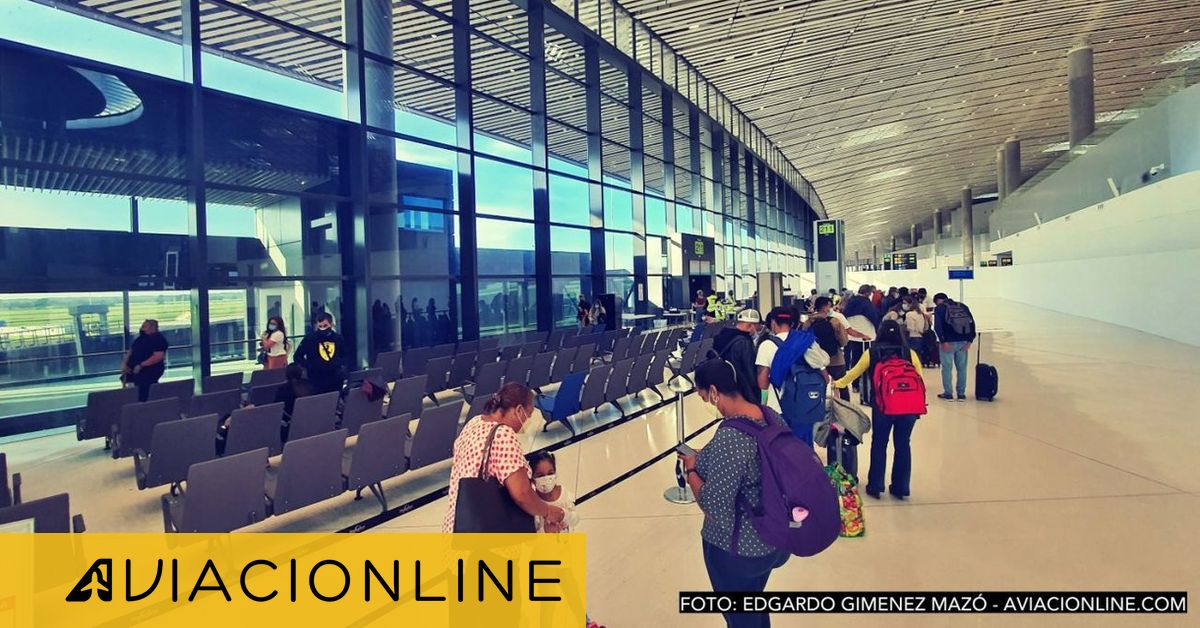
More than 132,000 passengers chose to extend their stay in Panama during the first half of 2026, representing a 38% increase compared to the same period last year. These figures reflect the performance of the Panamá Stopover strategy, a joint initiative designed to leverage connecting traffic at Tocumen International Airport to boost the local economy.
According to a statement from Copa Airlines, May recorded the highest volume of arrivals under this program since its launch in 2019, reaching nearly 24,000 visitors in a single month. The airline, which operates the so-called Hub of the Americas using a unified fleet of Boeing 737-800 and Boeing 737 MAX 8 and MAX 9 aircraft, allows travelers to make a stopover at no additional cost to their airfare. The main source markets for these tourists were Argentina, the United States, and Ecuador.
Pedro Heilbron, CEO of Copa Airlines, noted that Panama has the advantage of offering the best air connectivity in the region, bringing the country closer to dozens of international markets. He added that the value of this proposal lies in leveraging that network so that more people stay in the country as part of their itinerary rather than merely as a transit point, seeking to turn the airport’s leadership into new opportunities for the sector.
Tocumen International Airport (PTY) operates as Latin America’s main connecting hub, handling a constant flow of passengers connecting North America with South America and the Caribbean. Efficient connection times and the high frequency of Copa Airlines’ flight schedule sustain this steady stream of stopovers. To maximize the impact across Panama’s provinces, efforts are focused on diverting traffic toward ecotourism and beach destinations such as Bocas del Toro, Chiriquí, and the Pacific Riviera, expanding the economic benefit beyond the capital.
Panamá consolidates as a stopover destination: Stopover program surpasses 640,000 visitors since its creation
From the perspective of source markets, traffic from Argentina is heavily fueled by daily frequencies operated from airports such as Buenos Aires (Ezeiza and Aeroparque), Córdoba, Rosario, and Mendoza. This direct connectivity makes it easier for South American travelers to extend their stays before continuing on to the Caribbean or the United States, benefiting a network of more than 80 local partner businesses.
The relaxation of commercial terms also played a key role in accelerating the numbers. The airline extended the maximum permitted stay without financial penalties from 7 to 15 days. Additionally, the opening of the Sal-a Panamá exhibition space at Tocumen recorded over 80,000 visits in its first weeks, serving as a cultural and gastronomic showcase for transit passengers.
Gloria De León, administrator of the Panama Tourism Authority, stated that the strategy has become one of the most effective tools for transforming air connectivity into direct economic impact. Every visitor who chooses to stop over drives activity in hotels, restaurants, tour operators, and local businesses, she said, underscoring that the first-half growth confirms the country’s evolution as a destination of choice.
Institutional projections for year-end aim to exceed the target of 250,000 total visitors under this program, supported by the commercial performance recorded in the first half and ongoing international promotional campaigns.