
The regime’s propaganda vs Iran’s internal division
The mystery of Mojtaba Khamenei: Who rules in Tehran?
The Revolutionary Guard: The real power in the new Iran
The chapter of Ayatollah Ali Khamenei’s 37-year reign has definitively closed. The body of Iran’s Supreme Leader was buried in Mashhad, the most sacred religious epicentre in the north-east of the country.
However, the burial has taken place under a deep shadow of uncertainty: his son and designated successor, Mojtaba Khamenei, remains unseen in public after being seriously wounded in the Israeli-US attack in February, in which his father was killed.
The burial ends a week of mass funeral processions and public rallies. The ceremonies have coincided with the resumption of hostilities with the United States after weeks of a fragile ceasefire in the region.
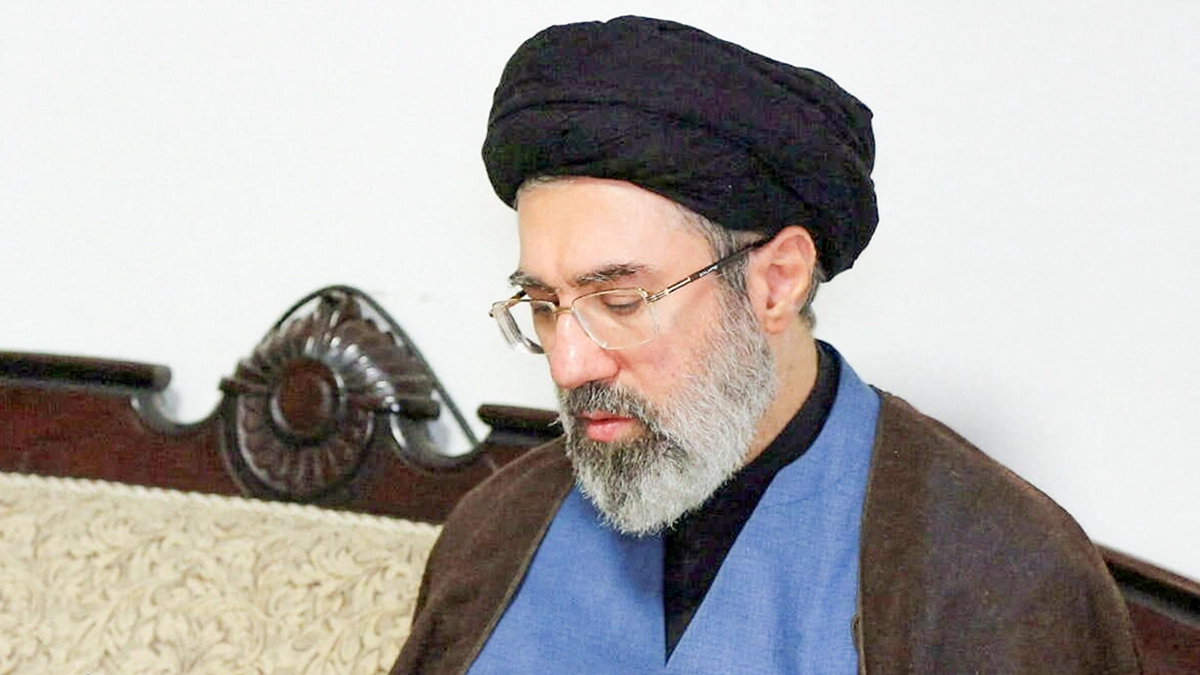
Mojtaba Khamenei, second son of Iran’s supreme leader, Ayatollah Ali Khamenei, visits the Hezbollah office in Tehran, Iran, on 1 October 2024 – Office of the Iranian supreme leader/WANA (West Asia News Agency)/Via Reuters
The regime’s propaganda vs Iran’s internal division
During the transfers of Khamenei’s body between various cities in Iran and Iraq (including key Shia enclaves such as Qom, Najaf and Kerbala), the clerical leadership of the Islamic Republic urged a mass mobilisation. The objective was clear: to use popular mourning to project an image of strength, ideological drive and cohesion for the regime.
In Mashhad, crowds waved revolutionary flags and banners demanding retaliation against Washington, chanting explicit slogans of vengeance directed at US President Donald Trump.
However, behind the displays of official fervour lies a deeply fractured country:
Economic crisis and repression: Khamenei’s legacy concludes months after massive national protests against the clerical regime, which is suffocated by international sanctions. The state response resulted in severe repression and thousands of dead protesters, a situation closely monitored by organisations such as Amnesty International.
War balance: Although international analysts point out that Iran has emerged strategically strengthened from the latest military campaign by retaining control of the vital Strait of Hormuz, structural damages have severely worsened the internal economic crisis.

People attend a funeral procession for the late Supreme Leader of Iran, Ayatollah Ali Khamenei, who died on 28 February in Israeli and US air strikes, in Tehran, Iran, on 6 July 2026 – PHOTO/ Office of the Iranian Supreme Leader VIA REUTERS
The mystery of Mojtaba Khamenei: Who rules in Tehran?
The whereabouts of the new Supreme Leader, officially declared in office by a council of clerics a week after the 28 February attack, remains the country’s greatest enigma. Mojtaba Khamenei has not been seen since the start of the war. Although written communiqués are issued in his name, there is no recent physical proof (photos, videos or audio recordings) of his current condition.
The successor’s health status: High-level sources in Tehran confirm that Mojtaba survived the bombardment that killed his father, but suffered facial disfigurement and severe wounds to his limbs. Intelligence services claim he continues to recover in secret and that his appearances are restricted to prevent potential new attacks from US or Israeli intelligence.

Ahmad Vahidi – Majid Asgaripour/WANA (West Asia News Agency) via REUTERS
The Revolutionary Guard: The real power in the new Iran
Ali Khamenei took power in 1989, consolidating over nearly four decades a political, economic and military structure that progressively marginalised Iran’s parliament and elected president. This concentration of power was executed in direct alliance with the Islamic Revolutionary Guard Corps (IRGC).
Today, Mojtaba Khamenei’s designation has the absolute backing of the Revolutionary Guard, an establishment that experts at the Council on Foreign Relations already point out as the dominant and decisive force in the political, military and strategic mindset of the new post-war Iran.