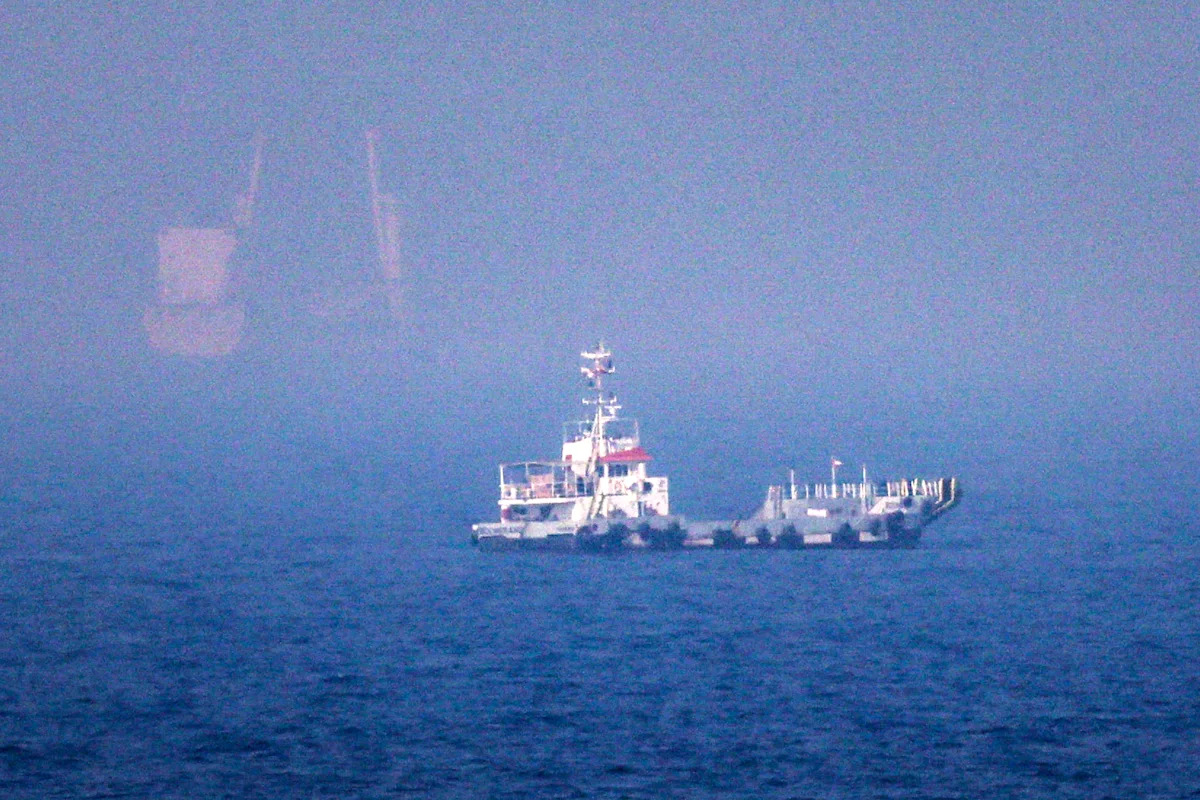
Oil prices rose on Tuesday after President Trump announced that proposed 20% fees on cargo transiting the Strait of Hormuz would be replaced by investment deals the US will sign with Gulf nations.
Futures on international benchmark Brent (BZ=F) crude gained roughly 2.6% to trade above $85 per barrel, while those on US WTI crude (CL=F) rose 2% to trade near $80.
Oil prices briefly dropped to smaller gains after Trump’s investment deal announcement, but quickly recovered to the heightened levels seen earlier in the morning.
“Based on highly productive conversations with Middle East leadership, I have decided to replace the 20% United States Reimbursement Fee with Trade and Investment Deals that the various Gulf States will be making into the United States,” President Trump wrote on Truth Social. “Those Investments will be MASSIVE but, at the same time, extraordinarily good for them, and their future.”
Trump’s initial announcement of a 20% fee on all cargoes passing through the Strait of Hormuz, pitched as financial compensation for the US efforts to keep the critical waterway open to through-traffic, had thrown markets into disarray. On a “very large crude carrier,” or VLCC — the largest size of oil tanker — the fee could equal $30 million or more per vessel, assuming the ship is carrying a full load of oil.
In his Tuesday post to Truth Social, Trump said the deals would bring in major investments, financing “Factories, Plants, and Equipment” that will “pour into the United States at Historic levels, which will create additional millions of High Paying AMERICAN Jobs!”
The second US naval blockade of the Strait of Hormuz will still be implemented, Trump said, as Washington looks to exert financial pressure on the regime in Tehran, which derives most of its revenue from oil exports. The blockade is expected to begin at 4 p.m. ET on Tuesday, per US Central Command,
Violence in the Strait of Hormuz and wider Gulf region continued through Monday night and into Tuesday morning as US Central Command announced another round of strikes targeting infrastructure throughout the region, intended to “further degrade Iran’s ability to attack commercial shipping.”
Iran on Tuesday struck two UAE oil tankers with cruise missiles, once more threatening the security of shipping through the waterway, and launched a round of strikes at US military bases in Gulf nations Jordan and Bahrain, where the US Navy’s Fifth Fleet is headquartered.
The continued military action, alongside Washington’s announcement on Monday of a new blockade of any ships transiting to or from Iran’s ports or coastal areas, signals that the deal between the two countries signed in June is all but dead. The two sides have continued to disagree over how the agreement handled control of the Strait of Hormuz as conflict escalated over the past week.
