
Archaeologists have discovered wooden beams believed to have been burned during the destruction of the First Temple in 586 BCE, the Israel Antiquities Authority said Monday, ahead of the Tisha B’Av fast this week. It is extremely rare to find preserved wood from the Iron Age in the Land of Israel.
The beams, made of sycamore wood, were unearthed during a recent dig at the Jerusalem Walls National Park in the City of David, in the Givati parking lot, as part of excavations conducted by the IAA and Tel Aviv University, the antiquities authority said. Researchers posited that they served as the roof of an inner courtyard in a building from the First Temple period.
During the destruction of the Temple, which is annually commemorated on Tisha B’Av, the beams likely collapsed onto the floor and were covered by the plaster cladding of the building’s walls, melted by the fire, excavation co-director Efrat Bocher said. She added that this plaster seal is what ultimately enabled their exceptional preservation.
“We are just before Tisha B’Av,” Bocher said. “This discovery makes you feel that you are witnessing the very moment of destruction, the moment when it all happened. It’s deeply moving.”
Tisha B’Av, which this year begins at sundown on Wednesday and ends at nightfall on Thursday, is observed through a fast and special prayers and readings.
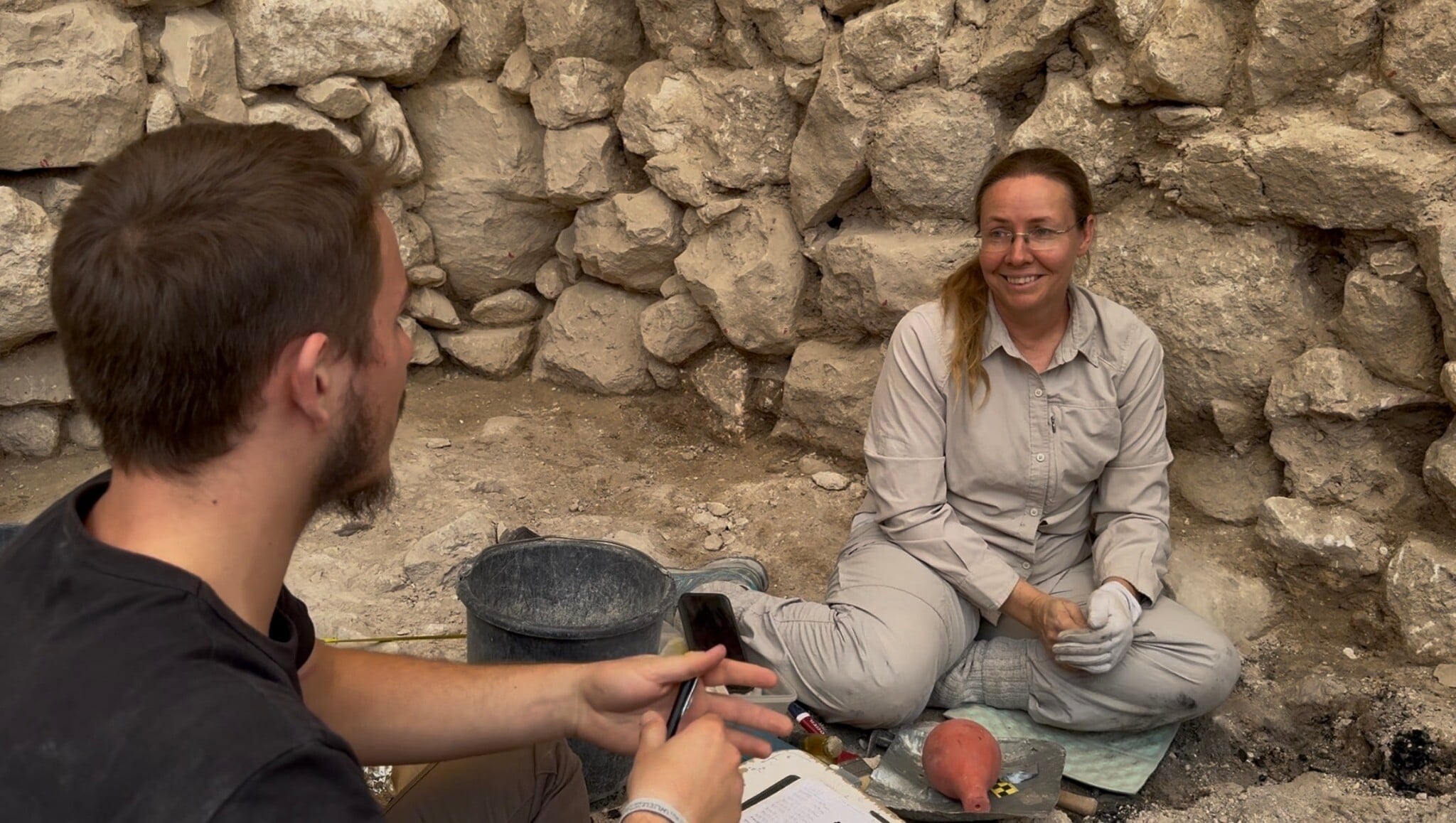
Johanna Regev of the Israel Antiquities Authority (Reut Vilf/City of David)
Other well-preserved wood from a coniferous tree was found in the First Temple destruction layer and exhibits numerous growth rings, making it easier to date with accuracy, noted IAA’s Johanna Regev, who is studying the find and is an expert in radiocarbon dating.
“It is very rare in Israel to find wood with such a large number of growth rings,” Regev said. “Here, in the City of David, we found thick beams with many rings, offering significant research potential.”
The combination of radiocarbon dating of the wood, along with the preserved tree rings, makes the dating much more accurate, she said.
“Until now, we could date finds within a range of hundreds of years,” Regev said. “Now we can attain much greater precision, narrowing the dating range down to as little as 10 years.”
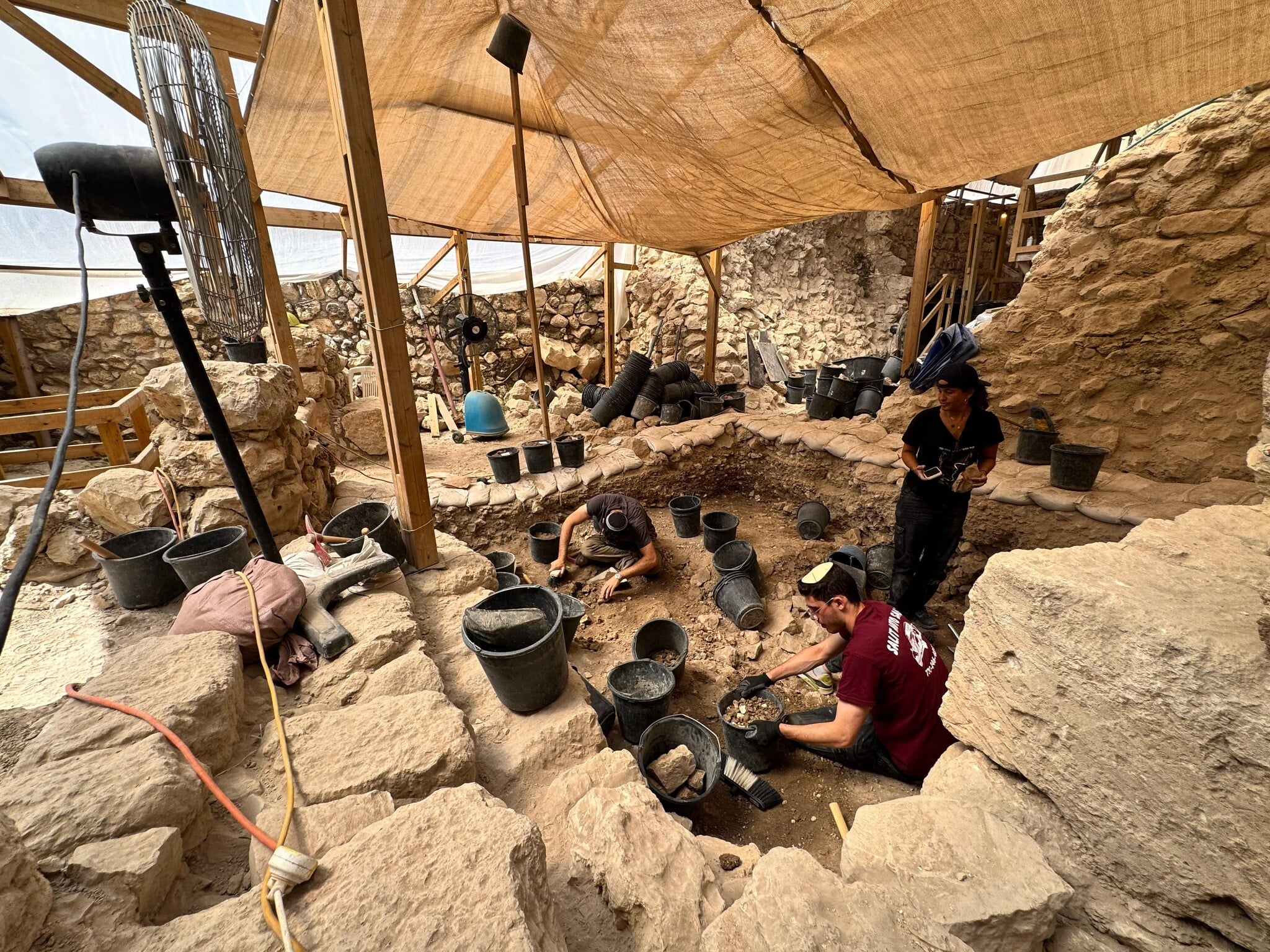
Israel Antiquities Authority excavations in the City of David (Reut Vilf/City of David)
Israelites who returned to Jerusalem decades after the Temple’s destruction probably made a deliberate decision to leave the charred remains intact to preserve the memory of the event, said Yiftah Shalev, who directs the excavation on behalf of the IAA alongside Prof. Yuval Gadot of Tel Aviv University.
“Preserving memory is a human need, seeking to preserve what once existed,” Shalev said. “Here we see it in its clearest form — a deliberate choice to leave ruins in place as a testament to the destruction and build the new layer over them.”
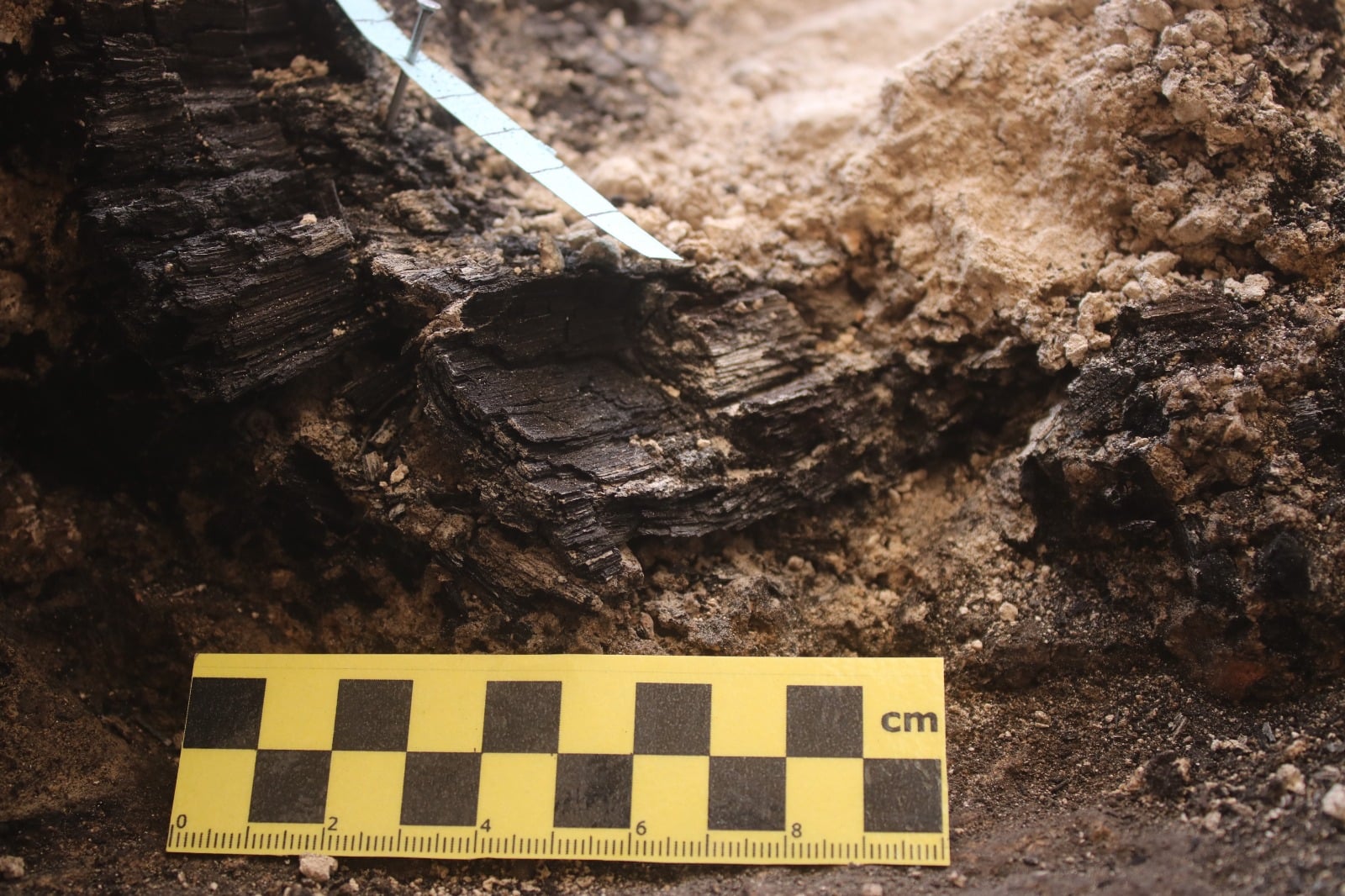
The growth rings of the wooden beams discovered in the City of David, believed to have been burnt in 586 BCE (Efrat Bocher)
The annual Tisha B’Av fast is generally considered the saddest day of the Jewish calendar. It commemorates the destruction of the First and Second Temples in Jerusalem, said to have occurred on the same day, centuries apart, and the exile of the Jewish people from the Land of Israel.
The First Temple, built by the biblical King Solomon, was destroyed by the Babylonians in 586 BCE, and the Second Temple by the Romans in 70 CE. The day also marks a number of other historic calamities that have befallen the Jews.

