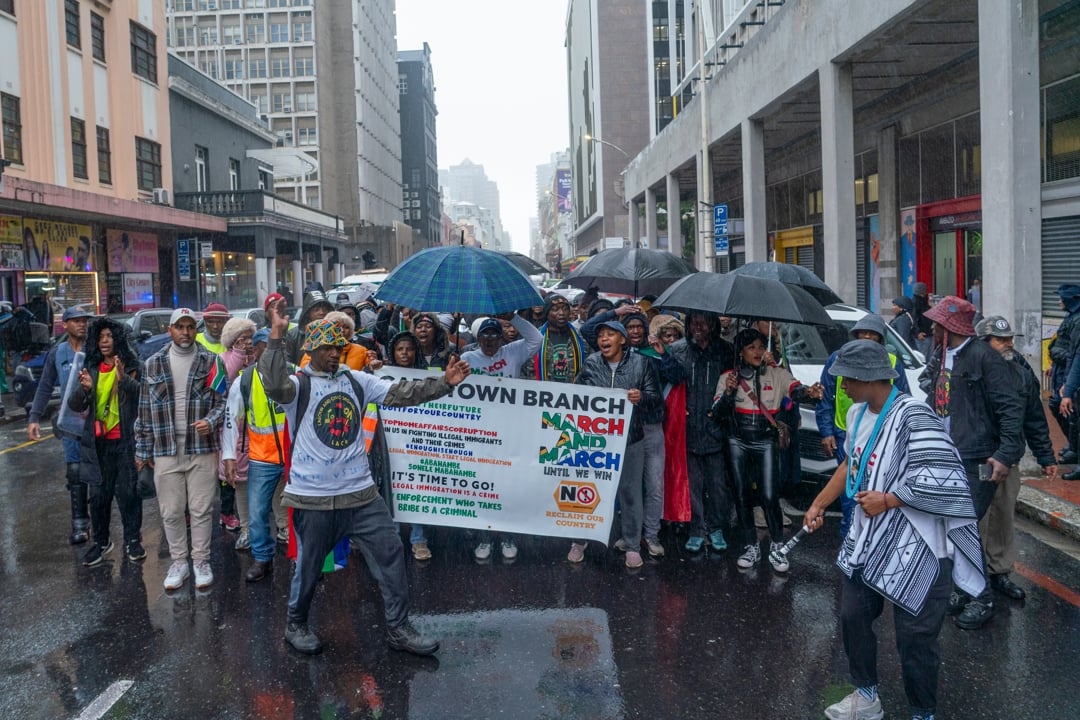
Anti-immigration protesters marched through rain-soaked Cape Town streets under heavy police guard on Thursday.
Dozens of anti-immigration protesters marched through Cape Town’s city centre on Thursday.The protesters called for a freeze on processing all foreign visas and permits.Despite sparse turnout, organisers vowed to continue weekly protests.
Dozens of anti-immigration protesters wound their way through the Cape Town CBD on Thursday in the pouring rain under heavy police guard.
While the turnout was sparse, organisers were defiant, with the Labour and Civic Organisation (LACO) spokesperson Alvaro Singh stating: “As you can see, the numbers are not so huge, but the numbers are not the issue because it is the message that is carrying forth.”
The group, made up of March and March Cape Town members joined by people from the LACO and Operation Dudula, gathered outside St George’s Cathedral before making their way up Long Street – the hub of Cape Town’s nightlife.
The choice of starting point came amid a statement from St George’s Cathedral on Wednesday, which said it had “not authorised, endorsed, organised, or granted permission for this event”.
March and March Cape Town branch leader Charlie Roux explained the focus on the nightlife hub, claiming without providing evidence that “the clubs, the restaurants… it’s only foreign, mostly foreign nationals working on them”.
Dozens of South African Police Service vehicles, including a Nyala and a water cannon truck, were present at the scene.
READ | March and March Durban cleanup descends into chaos
As the group made its way through the streets, they pointed at people they perceived to be foreign and told them to go home. One local, Mpho Mapai, who works at a shop on Long Street, described being targeted by protesters who pointed at him and asked: “When are you going home?”
Mapai, who has lived in Cape Town for 33 years, said someone asked to check his ID in the lead-up to the national protests on 30 June.
Despite being targeted over his complexion. Mapai supported the anti-immigrant protests.

Protesters shouting at Mpho Mapai, a local who has lived in Cape Town for 33 years and works in Long Street.
“The march is good. It’s going to have good results, and I know some people get offended, but it’s not supposed to be [offensive]. It’s about South Africans making sure that they get what they deserve,” said Mapai.
Singh defended protesters targeting bystanders, claiming the marchers were “retaliating” to provocation.
After looping back onto Loop Street, where there was a brief standoff with police over marching lines, protesters made their way to the Department of Home Affairs on Barrack Street, where they handed over a memorandum of demands.
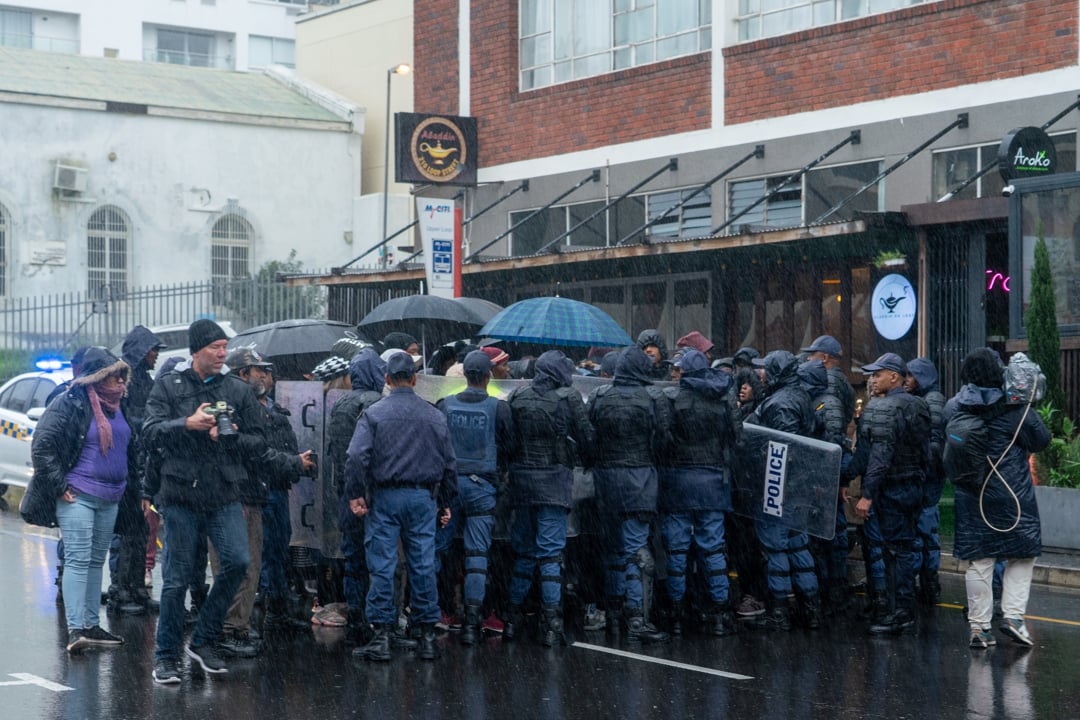
Police briefly halted the march in Loop Street, Cape Town.
The memorandum calls for an “immediate freeze on processing all foreign visas, work permits, and residency papers” to prioritise four million undocumented South African citizens.
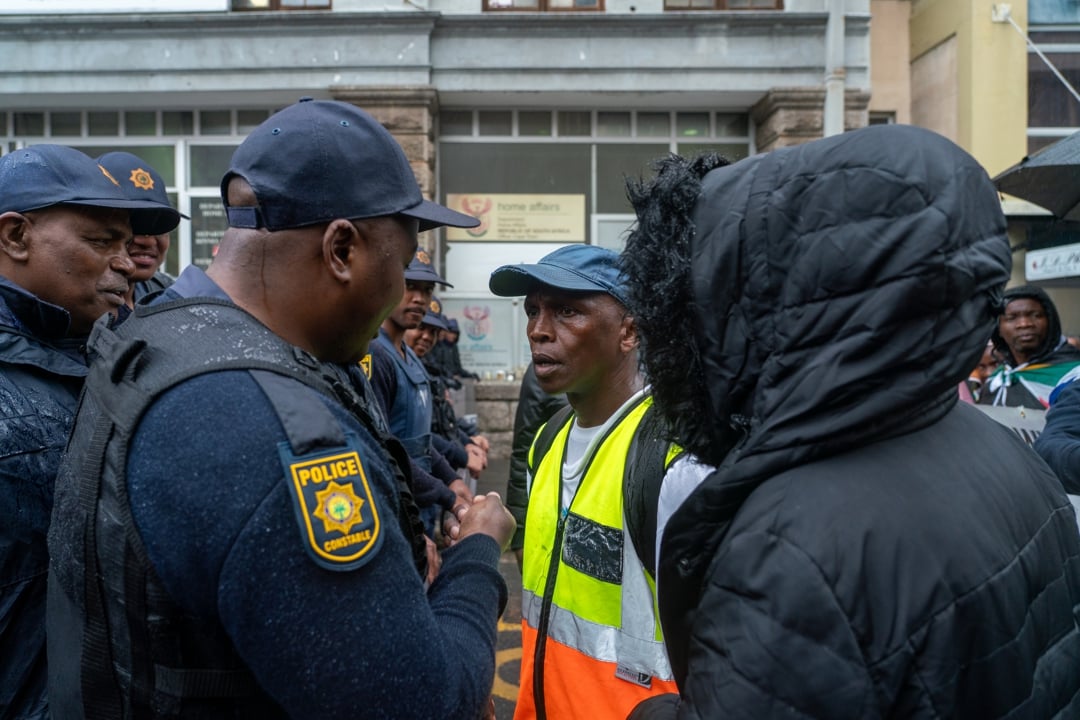
Protesters outside the Department of Home Affairs in Barrack Street, Cape Town.
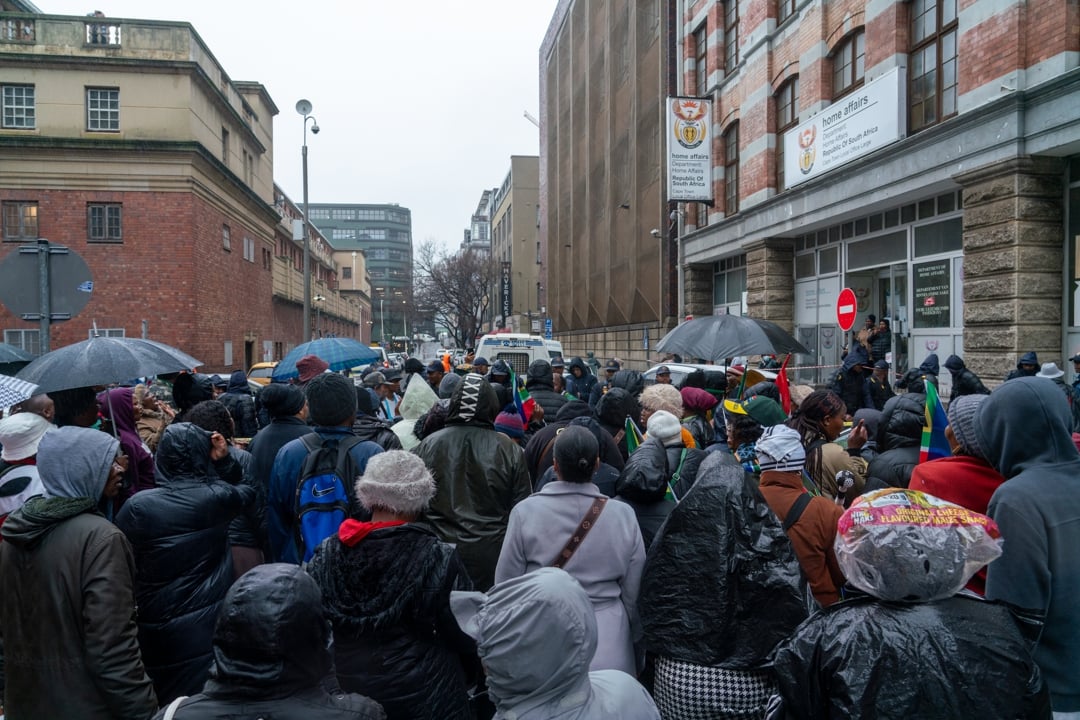
Protesters outside the Department of Home Affairs in Barrack Street, Cape Town.
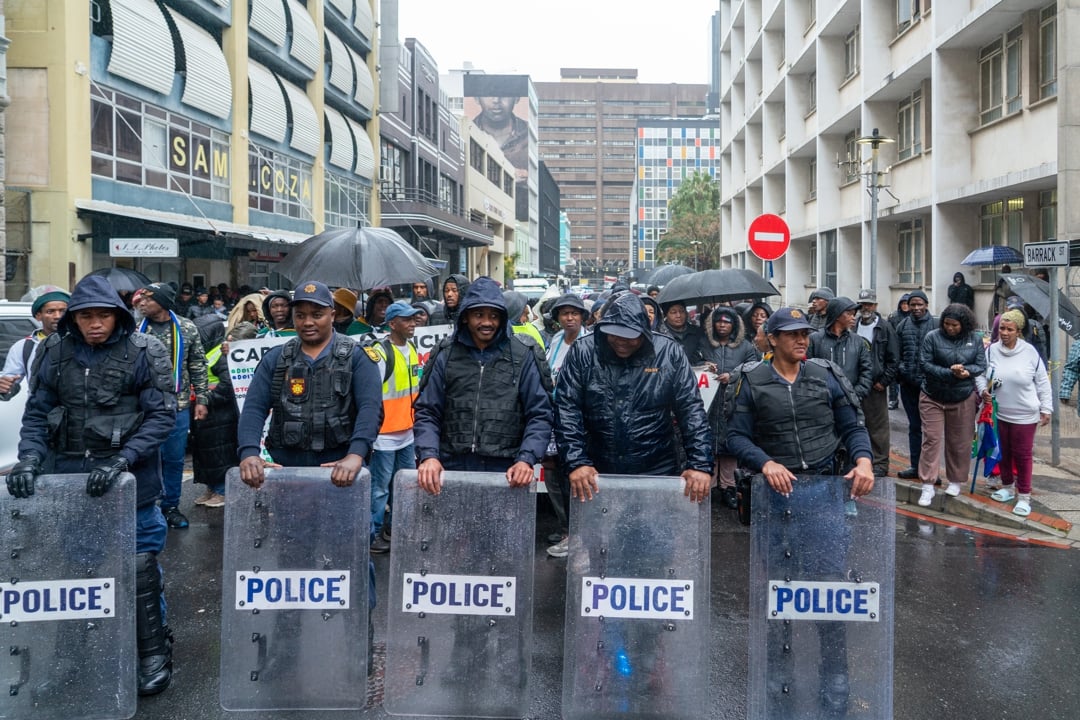
Protesters outside the Department of Home Affairs in Barrack Street, Cape Town, on Thursday, under heavy police guard.
The group also wants an audit of all permits (business, trading, work and asylum documents) issued in recent years.
The memorandum reads:
All permits obtained through bribery or fake documents must be cancelled immediately, and corrupt officials must go to jail.
The protesters asked for a response within 14 days.
An official, who declined to speak to the media because he is not permitted to, signed and accepted the memorandum.
The final stop of the march was the gates of Parliament, where protesters said they wanted a response to a memorandum they had handed in two weeks ago, which they claim had not been addressed.
READ | March and March protests losing steam in Daveyton
Singh expressed frustration with the lack of response, saying: “We want this government to be accountable. These parliamentarians cannot sit here… and not regard the citizens of this country.”
It was not yet clear who they had arranged to meet with to accept the memorandum and respond.
The crowd dispersed at around 14:00.
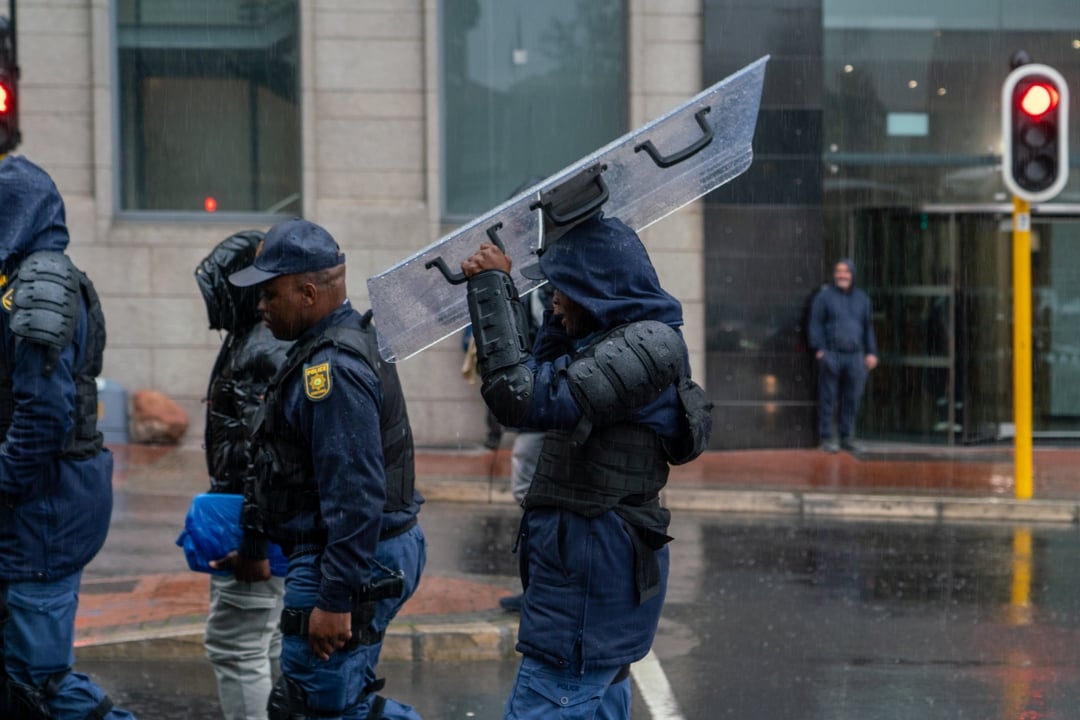
A police officer uses his riot shield to block the rain during an anti-immigration protest in Cape Town CBD on Thursday.
Thousands of migrants – documented and undocumented – have left South Africa in the lead up to and since the 30 June protests.
Despite this, the movement shows no sign of easing pressure on the government, with March and March and its leader, Jacinta Ngobese-Zuma, announcing weekly protests for the next six months.
When asked how she felt about the number of displaced migrants leaving South Africa, Roux said: “I’m glad. I wish they could leave more in numbers, in bigger numbers. Go home. Go fix your country. Go fix your own problems in your own home. We’ve got our own problems in South Africa. We’ve got our own issues that we need to work on.”