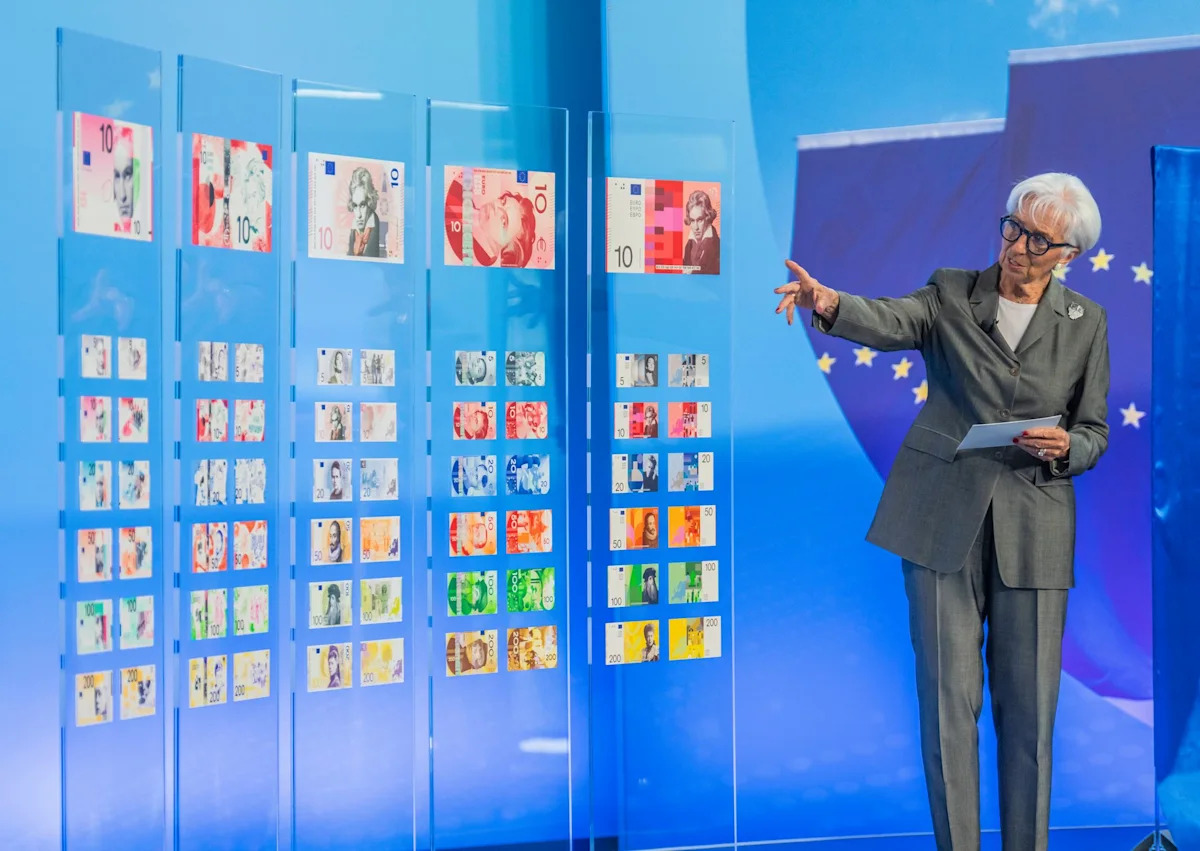
The European Central Bank (ECB) has presented 10 design proposals for a planned new series of euro banknotes and is now asking citizens across Europe to have their say, with an online survey open until September 21.
The ECB’s governing council is expected to select a proposal in late 2026, though it will then be some time before people hold the new banknotes in their hands.
Euro banknotes are more than a means of payment, ECB President Christine Lagarde said on Thursday at the presentation of the proposals, which were designed by graphic designers. She said it was important to the central bank to hear the voice of the people, to whom the banknotes belong.
The euro is the shared currency of around 358 million people in 21 European Union countries.
Bundesbank President Joachim Nagel urged people to take part and use the opportunity to share their opinion and help shape the future of the euro. The more people who vote, the better the euro banknotes will reflect the diversity and values of Europe in future, he said.
Famous figures or rivers and birds
The ECB had already narrowed the field to two themes for the new banknote motifs early last year. Five design proposals have now been submitted for each:
European Culture: The front of the banknotes features famous Europeans such as Ludwig van Beethoven, Marie Curie and Leonardo da Vinci. The reverse sides show depictions of street artists or a choral festival, among other things.
Rivers and Birds: This theme focuses on the resilience and diversity of Europe’s natural ecosystems. Species including the kingfisher and white stork are among those featured. The reverse sides of the banknotes depict European institutions, such as the European Parliament, the European Commission and the ECB.
New security features in development
The ECB launched a process to redesign the banknotes at the end of 2021. Central banks regularly develop new banknote series to stay ahead of criminals. With improved and innovative security features, we want to always be one step ahead of the counterfeiters, Nagel said.
The euro’s monetary guardians also want to reduce the environmental impact of production, with the aim of making the banknotes last longer. A further consideration is that the banknotes should be more easily recognizable for people with visual impairments.
The first euro banknotes were issued on January 1, 2002. The second generation of banknotes, featuring new security features, was completed in May 2019. The motifs on the current euro banknotes are – unlike those on earlier national currencies – relatively austere: architectural structures that do not exist in reality.