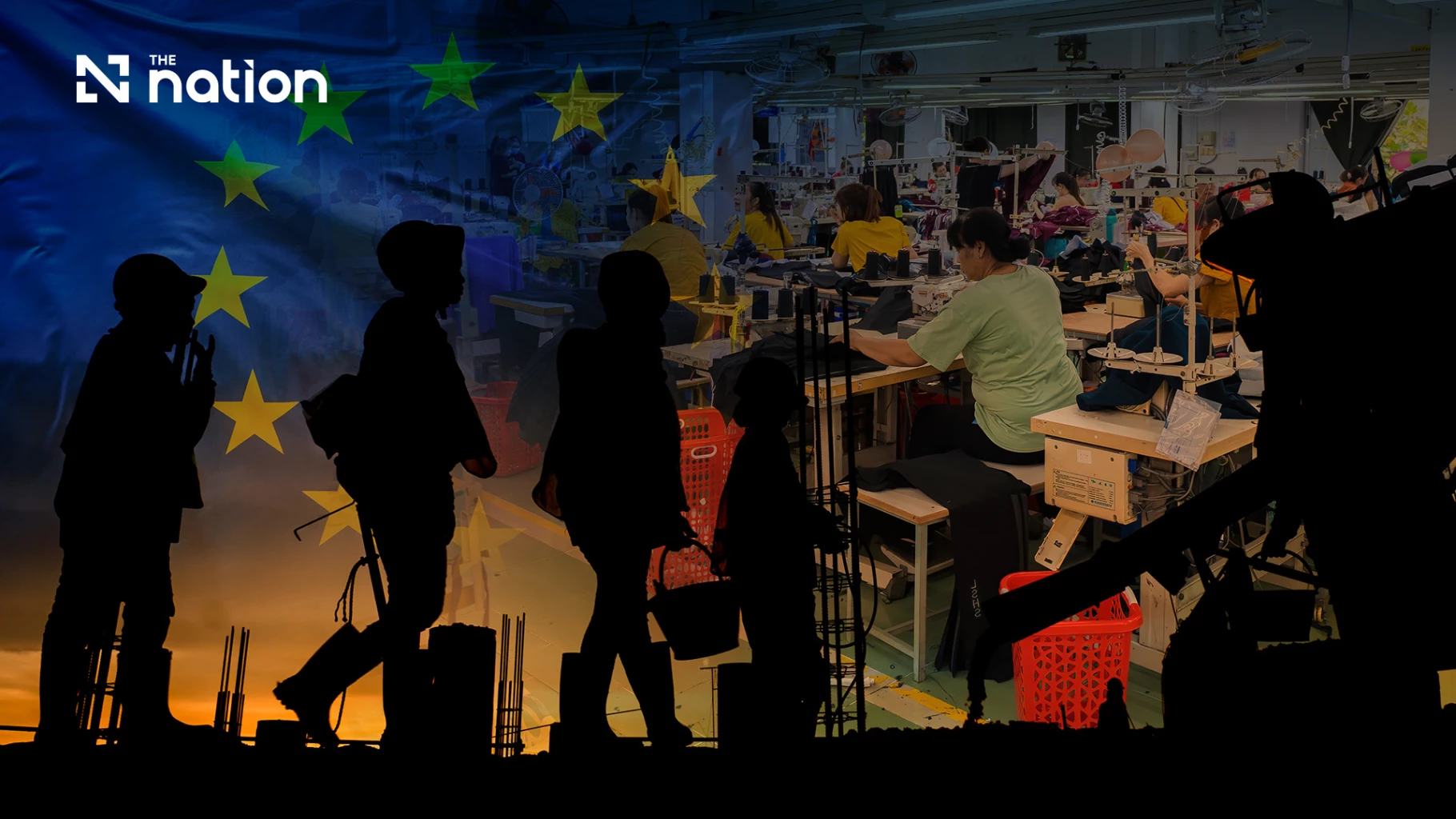
They also support the achievement of United Nations Sustainable Development Goal target 8.7, which seeks over the long term to end forced labour, human trafficking and child labour.
The European Commission will monitor, evaluate and update the guidelines while continuing to seek feedback, so they remain aligned with recommendations from stakeholders throughout supply chains and with changing economic and social conditions.
The FLR is due to take full effect on Tuesday (December 14, 2027).
Arada added that the EU was Thailand’s fourth-largest trading partner in 2025, with total trade worth THB1.7 trillion.
Thai exports to the EU were valued at about THB1 trillion and imports from the EU at about THB700 billion, leaving Thailand with a trade surplus of about THB300 billion.
This underscored the EU’s importance as a major trading partner and indicated that enforcement of the forced labour rules could have a significant impact on Thailand’s export sector, particularly the electrical appliances and electronics sector, which accounts for the largest share of Thai exports to the EU.
Thai businesses exporting goods to the EU therefore need to be ready to provide information to EU importers. They may need to develop traceability systems to confirm that no forced labour is used in production processes throughout their supply chains.
The Department of Foreign Trade urged Thai businesses to monitor developments closely.
Further details are available at https://ec.europa.eu/info/law/better-regulation/have-your-say/initiatives/16292-Forced-labour-guidelines-on-the-implementation-of-the-EU-rules_en.
Enquiries can be made to the Agreement Merchandise Administration and Trade Measures Division on 02 547 4735 or via the 1385 hotline.