2026-07-28T17:19:33+00:00
font
Enable Reading Mode
A-
A
A+
Shafaq News- Damascus
Syria’s General Authority for Land and Sea Border Crossings
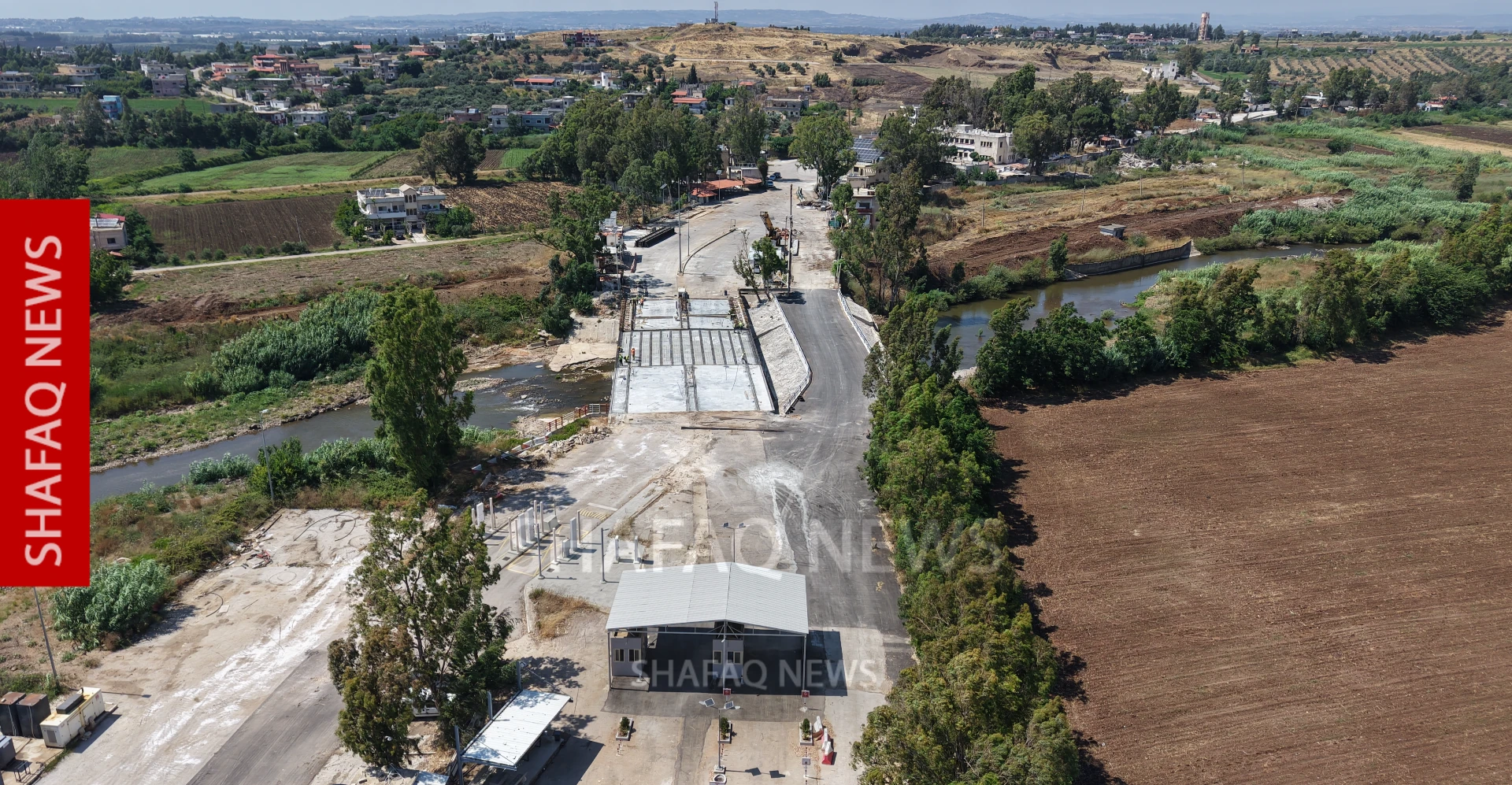
and Ports is planning to reopen the Al-Dabousiyah border crossing with Lebanon
in September after completing rehabilitation and modernization work, aiming to
boost trade and improve the movement of travelers and goods between the two
countries.
Mazen Alloush, the authority’s director of public relations,
told Shafaq News that reopening the crossing is a strategic step because of its
key location on the Syrian-Lebanese border, predicting that resuming operations
would improve the flow of cargo and passengers, strengthen overland
connectivity between Syria and Lebanon, and support the authority’s broader
plan to modernize border crossings and enhance their operational readiness.
“Rehabilitation work is progressing rapidly and the crossing
is expected to reopen and resume operations in September once the remaining
technical and construction work is completed.”
He added that reconstruction of the border bridge linking
the Syrian and Lebanese sides has reached its final stages alongside the
refurbishment of the crossing’s facilities, preparing the site to resume
operations under updated operational standards.
The project includes upgrading passenger halls,
rehabilitating service facilities, improving internal roads and yards, and
completing the reconstruction of the border bridge.
“Syrian authorities are equipping the crossing to meet
modern operational requirements and will announce the operating procedures
before reopening, in line with those applied at Syria’s other border crossings.”
The Al-Dabousiyah–Al-Aboudieh crossing is the second-busiest
land border crossing between Syria and Lebanon after the Jdeidet Yabous–Masnaa
crossing. Located between Al-Dabousiyah in Syria’s Homs province and
Al-Aboudieh in Lebanon’s Akkar governorate, it opened in 2007 to facilitate trade
and passenger traffic between the two countries. The crossing serves as a key
route for transporting agricultural products, food supplies and fuel, while
also providing an important transit point for residents of border communities.
According to Alloush, reopening Al-Dabousiyah will help
distribute passenger and freight traffic across Syria’s border crossings with
Lebanon, easing pressure on the Jdeidet Yabous crossing while improving traffic
flow and the quality of services provided to travelers. The move is also
expected to support bilateral trade.
He vowed that the authority remains committed to balancing
customs and security controls with the smooth movement of travelers and goods
by upgrading border infrastructure and improving operational readiness. He also
explained that Al-Dabousiyah rehabilitation project forms part of the authority’s
wider plan to modernize Syria’s border crossings, strengthen trade and transit,
improve overland connectivity with neighboring countries, and enhance services
at border entry points.
Earlier, the General Authority for Borders and Customs in
Syria stated that more than 522,000 travelers crossed through Syria’sJousieh
border crossingwith Lebanon during the first half of 2026, including
about 127,000 Syrian returnees under thevoluntary returnprogram.
Escalating hostilities in the region continue to impact
cross-border movements from Lebanon into Syria. Between March 2 and April 12,
277,000 individuals crossed into Syria through three official border crossings,
according to Syrian authorities. This includes 234,000 Syrians, 67,300 of whom
indicated an intention to return permanently, and 43,000 Lebanese nationals,
most with family links in Syria. The Masnaa–Jdeidet Yabous border crossing
accounted for around 60% of the total crossings from Lebanon, followed by Al
Qaa–Joussieh (31%). Crossings through Arida remain limited to pedestrian
traffic only due to a damaged bridge.