Editor’s note: Emre Diner is a Turkish journalist and foreign policy analyst specialising in the Middle East, energy geopolitics, and international security. This article reflects the author’s personal views and does not necessarily represent those of News.Az.
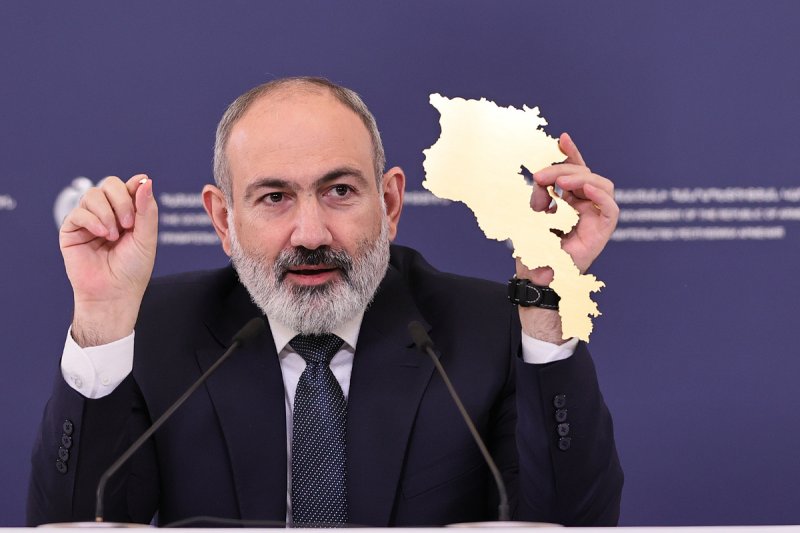
The resignation of Armenia’s government following the first sitting of the newly elected parliament may have appeared dramatic, but it was never a sign of political instability. Instead, it represented a constitutional formality that reaffirmed Nikol Pashinyan’s grip on power and opened a new chapter in Armenia’s political trajectory.
Under Article 158 of Armenia’s Constitution, the government is required to resign once a newly elected National Assembly convenes. With the Civil Contract Party retaining its parliamentary majority following the 7 June elections, President Vahagn Khachaturyan promptly reappointed Pashinyan as prime minister, ensuring continuity rather than disruption.
The constitutional procedure, therefore, should not be interpreted as the end of a political cycle. It marks the beginning of what could become Pashinyan’s most consequential term — one in which domestic reform, regional diplomacy, and geopolitical realignment are likely to define his legacy.
The latest parliamentary election was more than a contest between political parties; it effectively served as a referendum on Armenia’s future geopolitical orientation.
Pashinyan campaigned on a platform centred on regional normalisation, advocating peace with Azerbaijan, improved relations with Türkiye, and deeper engagement with Western partners. His opponents largely represented Armenia’s traditional political establishment, maintaining closer ties with Russia and promoting a more confrontational regional posture.
The election outcome suggests that a significant proportion of Armenian voters prioritised economic stability, regional connectivity, and peace over renewed confrontation. Yet electoral success alone does not guarantee political results.

Source: EUReflect
Negotiating peace is considerably more difficult than campaigning for it.
The most formidable obstacle facing Pashinyan remains the peace process with Azerbaijan.
Although negotiations have advanced considerably, several fundamental issues remain unresolved. Border delimitation, constitutional amendments, and the future legal framework for regional transport routes continue to divide the two sides.
Among these, constitutional reform has emerged as perhaps the most politically sensitive issue.
Baku maintains that references contained in the preamble to Armenia’s Constitution amount to indirect territorial claims against Azerbaijan, insisting that constitutional amendments are essential to secure a durable peace settlement.
For Azerbaijan, this issue extends beyond legal phrasing; it is viewed as a prerequisite for eliminating future territorial disputes and preventing renewed conflict.
Pashinyan has acknowledged the need for constitutional reform and has floated both the drafting of an entirely new constitution and amending the existing text. However, neither option is politically straightforward.
His party lacks the supermajority required in parliament for constitutional amendments, potentially forcing him either to negotiate with opposition forces or to submit the issue to a nationwide referendum.
Such a referendum would likely become one of the defining political battles of modern Armenia, determining not only the country’s constitutional order but also the future of Armenian-Azerbaijani normalisation.
Another major point of disagreement remains the transport connection between mainland Azerbaijan and its Nakhchivan exclave.
Azerbaijan continues to advocate an uninterrupted and secure transit mechanism, whereas Armenia insists that any transport route must remain fully under Armenian sovereignty, customs jurisdiction, and security control.
Yerevan links the issue to its “Crossroads of Peace” initiative, arguing that regional connectivity should operate under Armenian legislation rather than through any special legal regime.
As long as both governments maintain these differing interpretations, the transport question is likely to remain one of the final and most intractable components of any comprehensive peace agreement.
Successful negotiations with Azerbaijan could significantly reshape Armenia’s relationship with Türkiye.
The first stage of normalisation is expected to involve opening the border to third-country nationals and diplomatic passport holders before expanding to commercial crossings.
However, broader normalisation remains closely tied to progress between Baku and Yerevan.
For Armenia, reopening the Turkish border would represent far more than a diplomatic breakthrough: it could diversify trade routes, reduce transportation costs, and gradually decrease dependence on Russian economic infrastructure.
From Pashinyan’s perspective, normalisation is therefore driven by both security considerations and long-term economic interests.
Pashinyan’s new mandate also raises important geopolitical questions regarding Armenia’s relationship with Russia.
In recent years, Yerevan has frozen its participation in the Collective Security Treaty Organisation (CSTO), expanded cooperation with the European Union, and strengthened political ties with the United States.
These moves have generated growing concern in Moscow.
Nevertheless, Russia is unlikely to respond through direct military pressure. Instead, Moscow retains numerous levers of influence, including energy supplies, trade restrictions, media campaigns, and close relations with pro-Russian political figures inside Armenia.
The Armenian economy remains heavily dependent on Russian markets and energy resources, handing the Kremlin substantial leverage should bilateral relations deteriorate further.
Pashinyan is not attempting a sudden geopolitical break with Moscow. Rather, he seeks to diversify Armenia’s security and economic partnerships after decades of reliance on a single strategic patron.
The pace of that diversification, however, may dictate the intensity of Russia’s response.
External pressures represent only one part of Pashinyan’s political challenge; resistance also brews from within Armenia itself.
The Armenian Apostolic Church, political groups associated with Karabakh, former governing elites, and pro-Russian opposition movements retain the ability to mobilise public protests against any concessions made during the peace process.
Any constitutional referendum, formal recognition of Karabakh as Azerbaijani territory, or perceived compromise over the Zangezur transport route could trigger significant political unrest.
Despite these risks, Armenia’s opposition remains fragmented, whilst Pashinyan continues to command a parliamentary majority. Consequently, an immediate collapse of the government appears unlikely.
The greater risk lies in prolonged domestic confrontation, which could stall the implementation of any peace agreement.
Armenia now stands at a junction between two fundamentally different strategic paths.

Source: Azertag
Under the more optimistic scenario, Pashinyan successfully concludes a peace agreement with Azerbaijan, constitutional issues are resolved, the border with Türkiye gradually reopens, and Armenia becomes more deeply integrated into regional transport and trade corridors.
Such an outcome could economically transform the South Caucasus while paring back Russia’s traditional influence across the region.
The alternative scenario is considerably less encouraging.
Failure to resolve constitutional disputes and disagreements over regional transport routes could prolong tensions with Azerbaijan, stall normalisation with Türkiye, and expose Armenia to heightened Russian economic pressure alongside renewed domestic political instability.
The resignation of Armenia’s government was never a political retreat. It was a constitutional reset that confirmed continuity over change, equipping Pashinyan with a renewed mandate to pursue his vision of regional normalisation.
Whether that mandate ultimately reshapes Armenia’s future will depend not on his ability to stay in office, but on whether he can overcome entrenched domestic resistance, finalise peace negotiations with Azerbaijan, normalise relations with Türkiye, and manage an increasingly delicate balance between Western engagement and Russian influence.
If Armenia seeks lasting economic opportunity and greater strategic flexibility in the South Caucasus, the decisive challenge will be translating political mandates into legally and politically sustainable agreements. In that context, one of the most consequential unresolved issues remains Yerevan’s constitutional position and its formal recognition of Azerbaijan’s sovereignty over Karabakh — a step Baku continues to view as indispensable for achieving a comprehensive and durable peace.
(If you possess specialized knowledge and wish to contribute, please reach out to us at [email protected]).