
New York issued the nation’s first statewide moratorium on data center construction. This is the loudest note in a growing chorus of voices demanding accountability from government and industry.
Two wildly different voices have reached for the same ancient image. Pope Leo XIV, in his first encyclical, and an East Coast rapper with West Coast roots named ZekeUltra are both using the Tower of Babel as a warning against the tower we are building — yet they share an optimism that a better world is still possible.
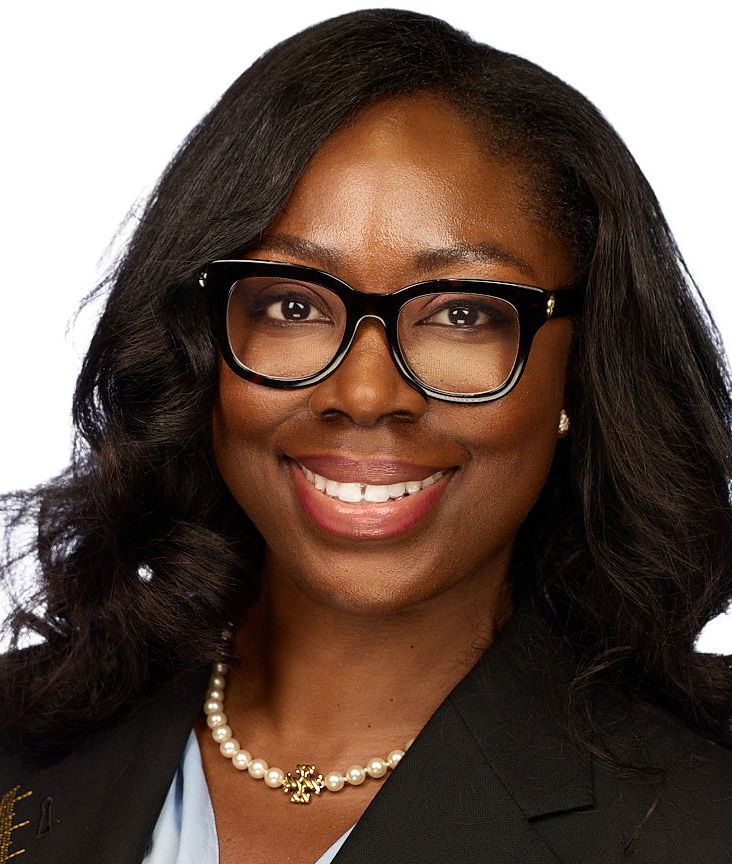
Julie Wenah
In Magnifica Humanitas, released in May 2026, Pope Leo XIV frames the age of artificial intelligence through the language of construction. Humanity, he writes, stands before a choice: “Either to construct a new Tower of Babel or to build the city in which God and humanity dwell together.” He calls our temptation “Babel Syndrome” and defines it as “the pretense that a single language, even a digital one, can translate everything, including the mystery of the person, into data and performance.”
The biblical Tower of Babel is often remembered as a story about arrogance, but it also is a story about technology and world-building. The book of Genesis notes a technological breakthrough, replacing the use of stone for brick. The brick became the new tool fostering the ambition to construct a civilization capable of reaching heaven.
The sin was not the brick itself; rather, the sin was the use of the brick. And the use of that brick led to the belief technical mastery could substitute for dependence on God and community.
A year before the Vatican issued its encyclical, ZekeUltra released an album called Babel Tower. On the last song of the album, “New World,” he raps, “I deaded feelings too intense for me to feel ’em.” It is Babel Syndrome in a single line. It illustrates what happens to the interior parts of life when a culture focused on exterior tower building optimizes those other parts away. ZekeUltra’s answer arrives as a refrain, repeated three times, like a liturgy to the heavens: “Hugging my Momma’s how I thank you. Look to the sky that’s what I pray to.”
“Through his lyrics, the new world is not technological; it is relational.”
Through his lyrics, the new world is not technological; it is relational. In a digital world and an economy seeking to commodify every human relationship and turn connections into data points, this repetition is a radical political act. It is an insistence the sacred and analog bonds of human life cannot and should not be translated into performance.
The external tower is under literal construction, and the neighbors have begun to object. Gallup finds seven in 10 Americans oppose an AI data center in their backyard. Local opposition groups have grown from 76 to more than 400 in under a year, blocking or delaying more than $64 billion in projects across 40 states. In communities that often cannot agree on anything, residents of opposing political parties are agreeing on this.
The backlash is not anti-technology; it is communities demanding accountability, transparency and safe environments for communities to thrive in. And the demand extends far beyond America. In Cape Town, community groups have filed a formal objection to Equinix’s plans for two data centers, highlighting the project provides little to no details on the environmental impact.
The interior tower is rising faster in the name of optimization. Pew Research finds Americans say AI will worsen our ability to form meaningful relationships. Harvard Business Review reports the No. 1 use of generative AI this year is therapy and companionship. And Common Sense Media says 72% of American teenagers have used an AI companion.
When we hold this up against ZekeUltra’s refrain, the predictive diagnosis sharpens to a new world learning to outsource the hug.
Last month, we discussed this predictive diagnosis with ZekeUltra. At an album listening session for Babel Tower hosted by the Digital Civil Rights Coalition, an organization advancing a digital world built on inclusive economic opportunity for all, ZekeUltra discussed the album’s vision of society and humanity through the lens of music, technology and community. Guided by interior architecture designer Alannah Duarte, each attendee added a demand for the new world onto an art installation of the Babel Tower itself. The overarching question in the room was, “What are we building, and can we still be human inside it?”
A world is being built right now; brick by brick, data center by data center. Silicon Valley answers the builder’s question with scale. Pope Leo answers with a city where God and humanity dwell together. ZekeUltra answers with the oldest inversion there is: Babel builds upward to seize the sky; he stays “praying on the ground” and simply looks up.
The tower climbs with hubris while mankind kneels with humility. What remains to be decided is whether the people still hugging their mothers, still kneeling instead of climbing, still writing their demands for a new world, will be the ones who draw the blueprints.
Julie M. Wenah is founder and chairwoman of the Digital Civil Rights Coalition and a Public Voices Fellow on Technology in the public interest with The OpEd Project.