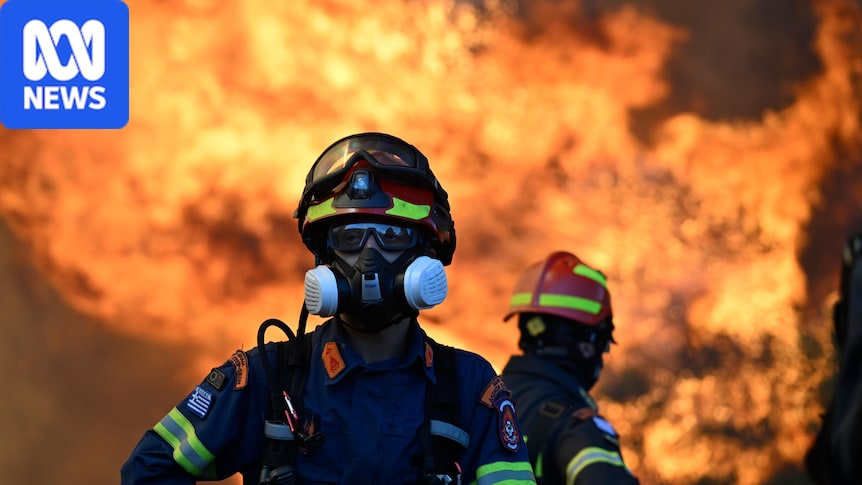
The temperature in Austria reached a record high on Wednesday, while Hungarians were asked to curb their power use as the latest heatwave and drought took their toll on central and southern Europe.
Europe, the world’s fastest-warming continent, has been ravaged by record-breaking heat and destructive wildfires this summer, with France and Spain particularly hard hit in recent weeks.
The focus of the heatwave has now shifted further east, with Albanian emergency services battling a wildfire in the southern region of Mallakaster.
Italy also placed its major cities under a red heat alert as temperatures climbed to around 40 degrees Celsius in some areas.
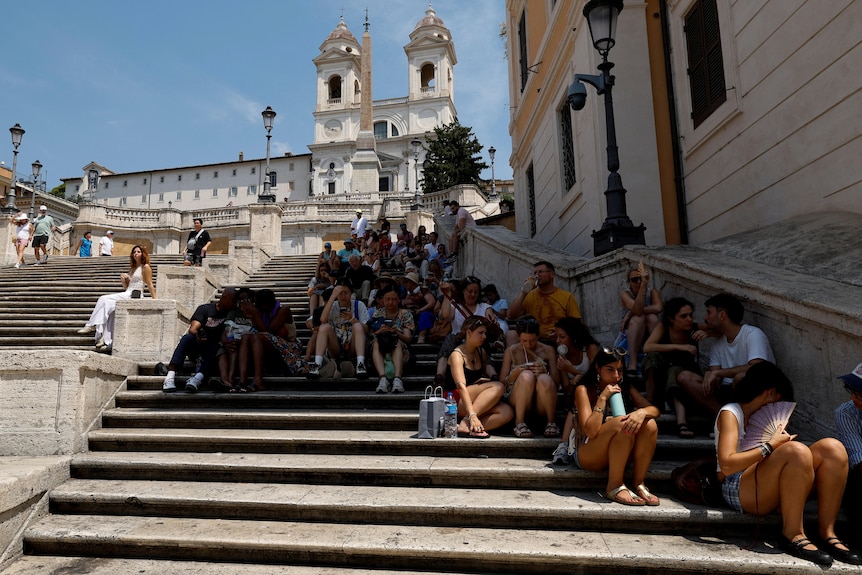
Tourists in Rome huddle together in the shade amid sweltering conditions in the Italian capital. (Reuters: Remo Casilli)
The heat prompted the Vatican to move Pope Leo’s first weekly general audience after the July break indoors, rather than hold it in St Peter’s Square.
Visitors to Rome welcomed the decision as they sought relief from the sweltering conditions.
“I suppose it’s better to hold it indoors because of the heat,” said Diego Amaya, a tourist from Mexico.
Austria hits record high temp again
The temperature hit a record 41.2C in the Austrian town of Bad Deutsch-Altenburg near the border with Slovakia, national weather service GeoSphere Austria said. The previous record of 41C was set on Tuesday in nearby Vienna.
Across the border in Hungary, companies and households cut power consumption this week after a government appeal to ease pressure on the grid amid the severe drought. The capital, Budapest, is set to face the peak of the heatwave over the next two days, with temperatures already rising close to 40C on Wednesday.
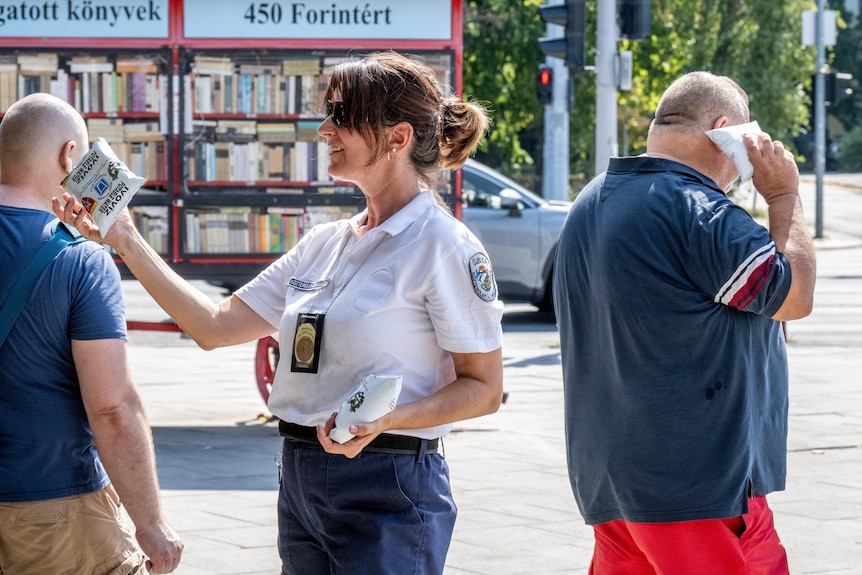
A government official distributes bagged water to pedestrians in Budapest on Sunday. (MTI via AP Photo: Zsolt Szigetvary)
Dwindling water levels on the Danube have forced Hungary to largely shut down its sole nuclear plant, which uses the river’s waters for cooling, creating an energy crisis that has stretched power supply capacity to its limits.
The Danube river is so low that Nazi warships are emerging
Slovenia’s only nuclear power plant, Krsko, which supplies neighbouring Croatia as well, said on Wednesday it would begin reducing reactor output overnight due to exceptionally high temperatures and low flows on the Sava River, which flows into the Danube.
The plant will initially cut generation to 80 per cent of capacity.
Further west, water levels on the Rhine River in Germany have hit new lows, with some cargo services stopping and other sailings continuing, but with greatly reduced loads.
The Rhine is a route for commodities, including grains, ores and petrol.
Wildfires burn in Albania, Greece
In Albania’s southern Mallakaster region, wildfires forced the evacuation of about 15 families along with their livestock and pets, while ground and aerial crews fought to stop the flames reaching homes near a village.
Efforts continued to tame another wildfire, likely caused by lightning, in rocky, mountainous terrain south of the Albanian city of Gjirokaster.
In neighbouring Greece, a wildfire, possibly caused by vibrating electricity conductors and fanned by gale-force winds, has burned thousands of hectares of farmland near a popular holiday destination north-west of Athens.
The blaze appeared largely contained on Wednesday, but hundreds of firefighters remained in the area to prevent flare-ups as six helicopters doused scattered smoking spots.
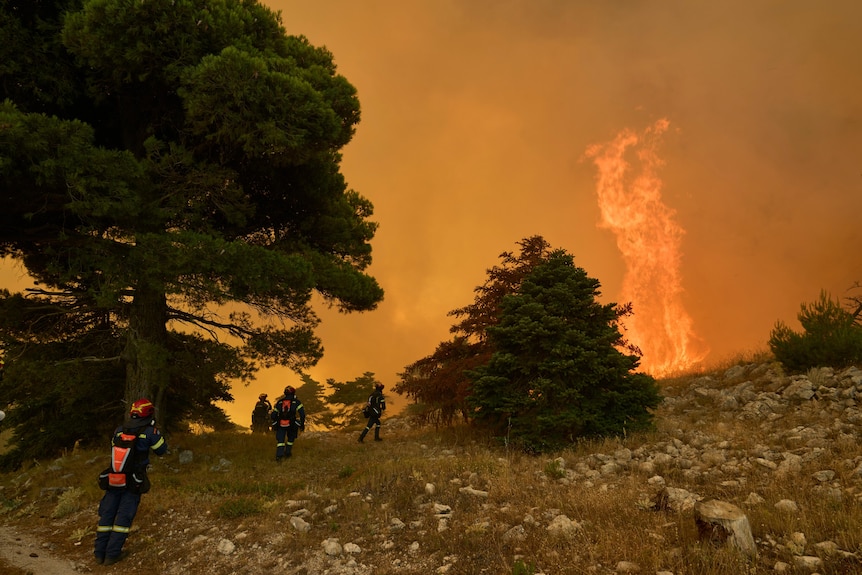
Greek firefighters approach towering flames on Mount Kithairon, north-west of Athens. (AP Photo: Petros Giannakouris)
In Moldova, where temperatures are likely to hit 38C on Thursday with no rain expected, President Maia Sandu urged residents to cut electricity use during evening peak hours and to conserve water.
“It is one thing to water your vegetable garden, quite another your lawn,” Ms Sandu said on a podcast.
Prime Minister Vasile Tofan told Moldovan television that neighbouring Ukraine was unable to provide power at agreed rates and Romania was also unable to supply it, even at three times the price at peak hours.
Samantha Burgess, deputy director of the EU-based Copernicus Climate Change Service, told the ABC’s Radio National Hour that while the summer had already seen “exceptional” heat conditions, the worst month was still to come.
“August is always the peak of the fire season across Europe, when we’ve had three or four months of drying and we’re seeing exceptional low soil-moisture conditions,” Dr Burgess said.
She said this year’s fires were partly the result of “incredibly wet springs” in Spain and Portugal, creating a “tinderbox scenario” with lots of vegetation for fuel as the weather conditions dried out.
The record-breaking conditions are also having a worrying impact on agriculture.
Britain’s cereal harvest is on track to be the worst since comparable records began in 1984, according to an analysis published on Wednesday.
Reuters/ABC