
Listening to music is no longer a solitary act confined to a pair of earbuds. Increasingly, fans are stepping into shared spaces to experience their favorite songs alongside fellow listeners — and sometimes even the artists themselves.
About 30 BTS fans gathered at Tilt, a small listening room tucked into a narrow alley in the Donggyo-dong neighborhood of western Seoul, for a BTS listening session on July 20. Inside the roughly 82.6-square-meter (889-square-foot) space, 12 speakers were installed from floor to ceiling.
“Please refrain from making noise,” Tilt owner Kim Chang-hee said, asking attendees to remain silent for a more precise listening experience. “Feel free to dance in your head.”
As “Body to Body,” the opening track on BTS’s newest full-length album, “Arirang,” began to play, deep bass pulsed through the room. Audience members covered their mouths to stifle gasps, exchanged glances and nodded in appreciation.
The event, and many more group experiences like it, signals a shift in the wide range of ways people experience music. Often primarily a solitary activity, listening is evolving into a shared cultural experience centered on participation and connection.
Fans now gather at the same place and time to listen to their favorite artists together. Others put headphones on to immerse themselves in the finer details of live concert recordings.
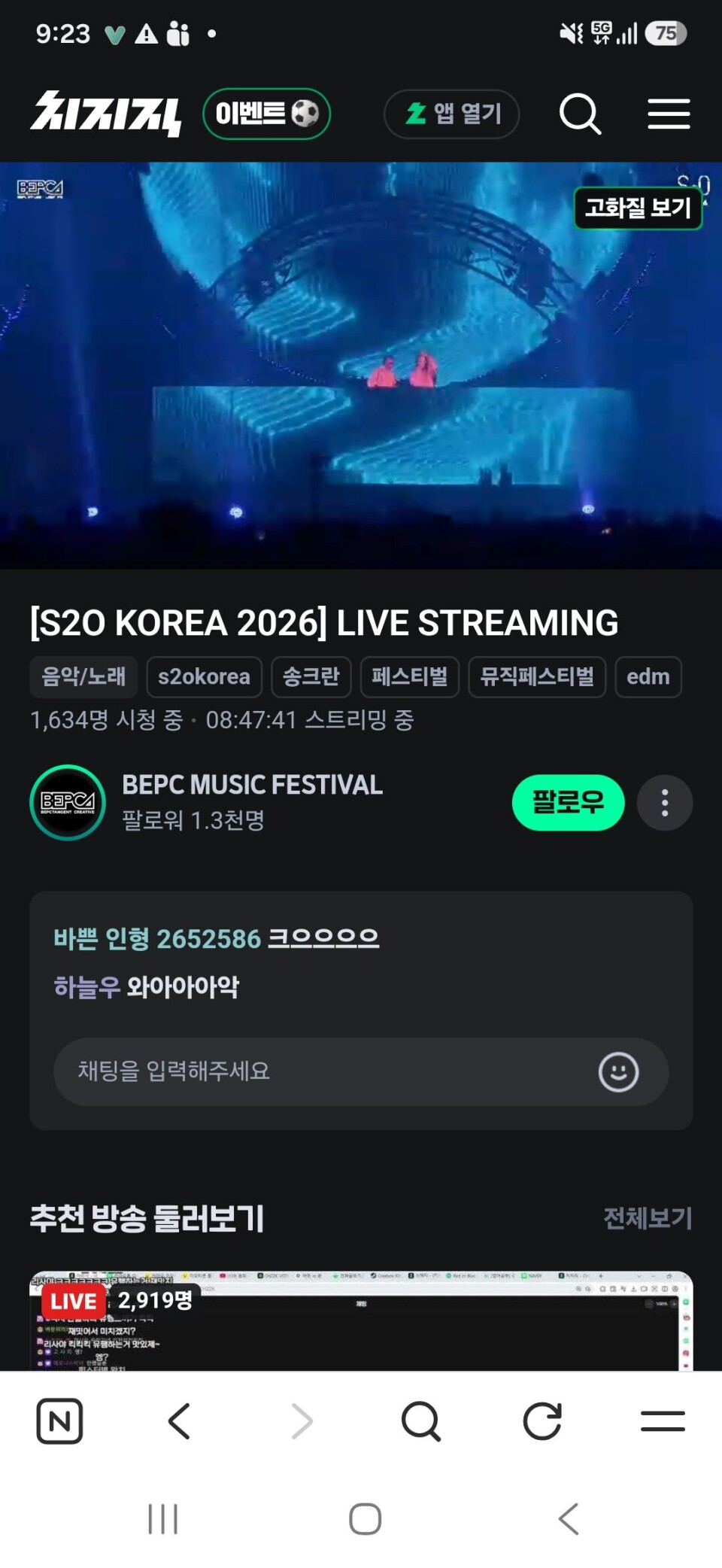
Livestreamed S20 Korea, a DJ festival, in July
SCREEN CAPTURE
Listening sessions have already become an established type of fan event, and dedicated listening venues equipped with high-end audio systems are emerging to meet demand. While cafes and bars equipped with high-end speakers or vinyl collections have long been around, in those settings music was still largely treated as background ambience.
By contrast, venues known as “listening rooms” place music at the center of the experience.
“Every day, between 100 and 200 people come to Tilt to experience music the way its creators intended, regardless of whether it’s classical, jazz or K-pop,” Kim said.
The rise of communal listening has extended to the digital world as well.
Since March last year, the global fan platform Weverse has offered a “Listening Party” feature that allows users to share playlists in real time through integrations with music streaming platforms Melon, Apple Music and Spotify.
The feature generated an average of 8.75 million music streams each month as of the second quarter of this year.
“No artist has been streamed more than BTS, which has accumulated 30.54 million streams as of July,” a Weverse official said. “Following the group’s comeback at the end of March, fans held roughly 160 listening parties over the next month.”
Even music festivals are increasingly being enjoyed online.
The DJ festival S20 Korea, known as Songkran, was livestreamed on Naver’s streaming platform Chzzk on July 11 and 12. It recorded 7.94 million cumulative views. The World DJ Festival, streamed on June 13 and 14, drew 4.37 million views.
Viewers recreated the energy of an in-person festival together through live chat.
“I’m exhausted from dancing along,” one comment read. “If I’m this tired at home, I can’t imagine how exhausting it must’ve been at the venue,” another said.
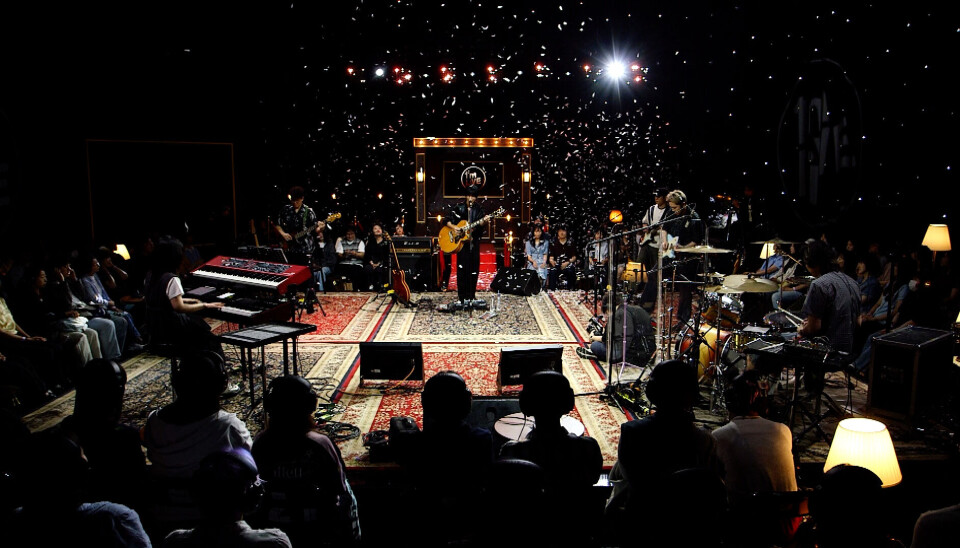
Arirang TV’s “I’m Live” (2017–)
ARIRANG TV
Live performances are also evolving to narrow the distance between artists and audiences.
“I’m Live” (2017–), a weekly music program that airs every Wednesday on Arirang TV, brings musicians and audiences within about one meter (3.3 feet) of each other. Despite their proximity, the performances can only be heard through headsets connected directly to the performers’ microphones.
“Word spread that audiences could focus entirely on the music without the distraction of ambient noise, and applications to attend have steadily increased,” an Arirang TV source said. “This year, the program drew as many as 146 applicants for every available seat.”
V8, the duo unit formed by Seventeen members Vernon and The 8, held a listening party on July 29 at 10 p.m. at Grain Haus in Itaewon, central Seoul. It brought artists and fans into unusually close proximity.
After performing three new songs, Vernon stepped down onto the dance floor, where about 200 fans were dancing.
“We designed the event in the hope that it would not only reinforce the artists’ musical identity but also turn listening into a shared experience,” an representative from the duo’s agency, Pledis Entertainment said.

Boy band Seventeen’s Vernon and The 8 are seen at a listening party in an undated photo.
SCREEN CAPTURE
Critics and industry insiders say today’s listeners are looking for more than songs — they want shared experiences and the stories behind the music.
“These trends reflect a desire to form communities around shared musical tastes,” music critic Lee Dae-hwa said. “As streaming has normalized personalized listening, the value of experiencing music together has only grown.”
Shim Won-hee, who runs the listening venue Seongsuyul Music, said that knowing the stories and background behind a piece of music can significantly deepen the listening experience. Shim recently organized and hosted listening sessions with music critic Kim Yoon-ha and singer-songwriter Sunwoojunga at Seongsuyul Music in Seongsu-dong, eastern Seoul.
“People come here because they want to engage with both the music and the stories that surround it,” Shim said.
Music critic Kim Do-heon said music consumption continues to rise, but interest in discovering new music has not expanded at the same pace.
“A clear example is that the rankings on music charts barely change,” Kim said. “Artists need effective ways to promote new releases, while listeners seek reassurance that their tastes are well-founded. That’s why so many new forms of shared music experiences continue to emerge and multiply.”
BY CHOI MIN-JI [lee.soojung1@joongang.co.kr]
This article was originally written in Korean and translated by a bilingual reporter with the help of generative AI tools. It was then edited by a native English-speaking editor. All AI-assisted translations are reviewed and refined by our newsroom.