
It was 82 degrees Fahrenheit on a recent afternoon, and the UV index reached 11+ across Israel, prompting the Israel Meteorological Service to urge the public to avoid direct sun exposure during peak hours.
But for 16-year-old Abigail Wolf, it was the best time to go out and tan on the beach in Shavei Zion, Western Galilee.
“People say, you shouldn’t go out when it’s a 10 or 11,” Wolf told The Times of Israel as she sat on the shoreline. “But when I see a 10 or an 11 on the index, that’s when I go out for about 40 minutes to get a better tan.”
Scientists created the UV Index in 1992 as a public safety tool to minimize the risk of UV radiation, which causes sunburn, tissue damage and skin cancer. The numerical scale starts at zero, indicating a low risk of UV radiation, with 11 or higher indicating a very high risk of harm.
Today, the index has gone viral on social media in Israel and around the world, but not in the way the scientists intended — people use it as a guide for when they can achieve the best bronzing.
“In the past two years, I see a very concerning trend among young adults and teens who check the index and then go out in the sun when the index is nine or above,” said Dr. Efrat Bar-Ilan, senior pediatric dermatologist at Israel’s largest public provider, Clalit Health Services. “They know UV radiation is bad, but they cannot comprehend the long-term risk to their health. They just want the instant tan, the instant glow. Everyone wants to be tan.”
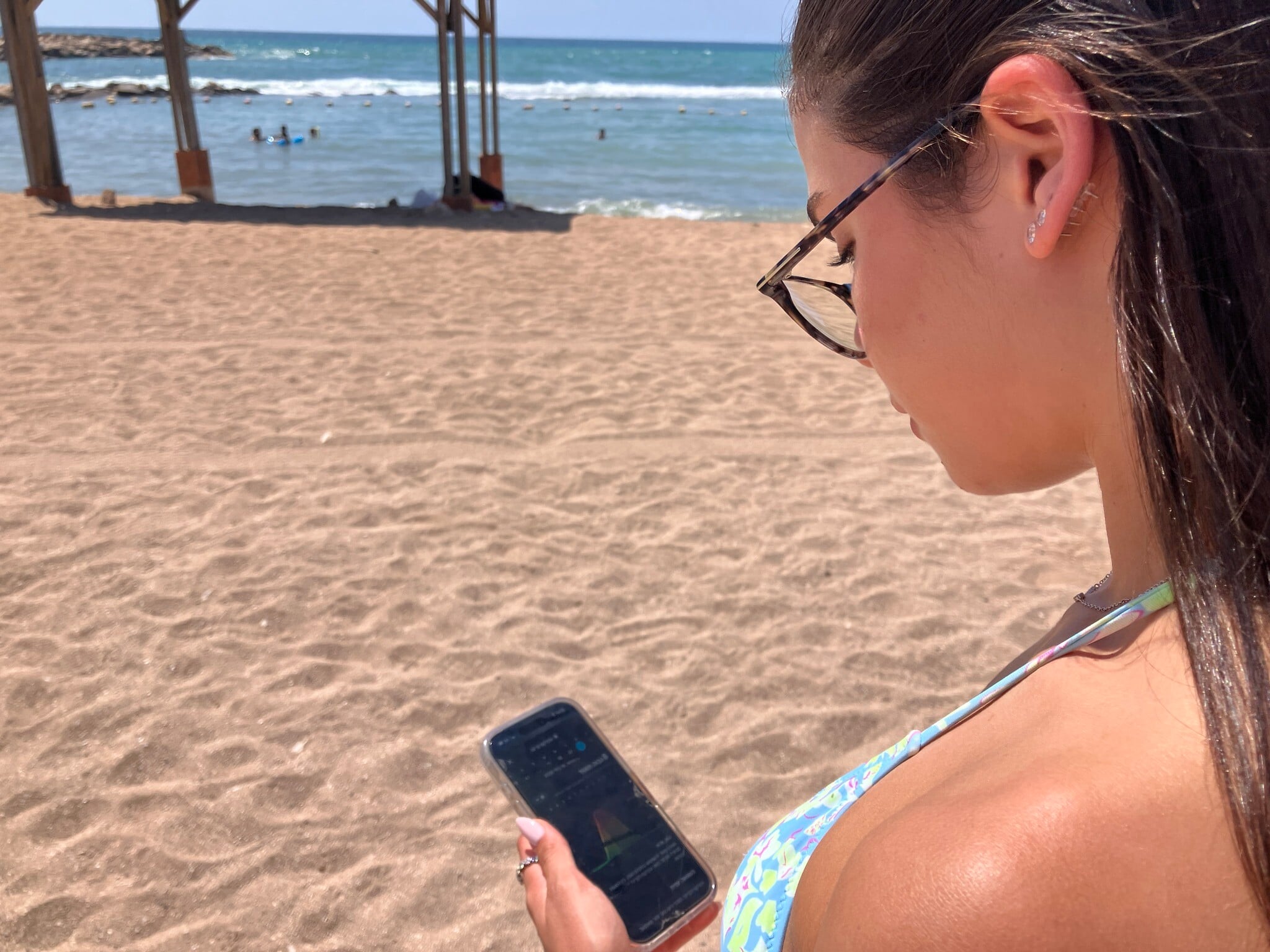
Abigail Wolf checks the UV index on her telephone on the beach in Shavei Zion, Western Galilee, on July 9, 2026. (Diana Bletter/Times of Israel)
How does the skin get tan?
When UV radiation penetrates the skin, Bar-Ilan said, it triggers melanocytes, the specialized cells that create melanin, which is the dark pigment responsible for tanning.
Bar-Ilan said that tanning is caused mostly by UVA rays, the long-wave rays that darken the pigment already in the skin.
However, UVB rays, which are shorter waves, penetrate the upper layers of the skin, causing sunburn and damaging the skin’s cellular DNA.

Dr. Efrat Bar-Ilan, Senior Pediatric Dermatologist, Clalit Health Services (Courtesy/Clalit Health Services/Rami Zarnegar)
“We all know sunburn, when the skin is red, sensitive, and swollen, and starts to peel after a few days,” Bar-Ilan said.
“In the long term, accumulated sun exposure causes premature aging, wrinkles, lower quality of the skin, lower elasticity, and pigmentation,” she said. “It will cause cancer. This is proven. It’s not something that we can negotiate.”
Bar-Ilan said that parents bring their children to see her in the hope that she can convince them not to tan.
“But when I talk to them,” she said, “they say they don’t care about what will happen to them when they’re in their 60s and 70s.”
Types of skin cancer
The vast majority of skin cancer diagnoses, known as basal cell and squamous cell carcinomas, develop in the upper layers of the skin and grow slowly.
When caught early, these are almost always curable through a simple surgical excision.
However, melanoma is a type of skin cancer that originates in the melanocytes, the cells responsible for producing skin pigment.
If left undetected, these malignant cells can penetrate deeper. Once metastasized to vital organs like the lungs, liver, or brain, melanoma can become fatal.
According to the Health Ministry, Israel is 23rd among 30 countries with the highest melanoma rates. However, it also has the lowest mortality rate among the 30 countries on the list.
The Israel Cancer Association states on its website that about 91% of skin cancer cases in Israel are caught at an extremely early stage, which drastically improves the chances of a complete cure.
A Health Ministry spokesperson told The Times of Israel that the latest data from 2022 indicate a decrease in invasive melanoma rates, “while data from 2023, which have not yet been published, indicate a stable and similar trend.”
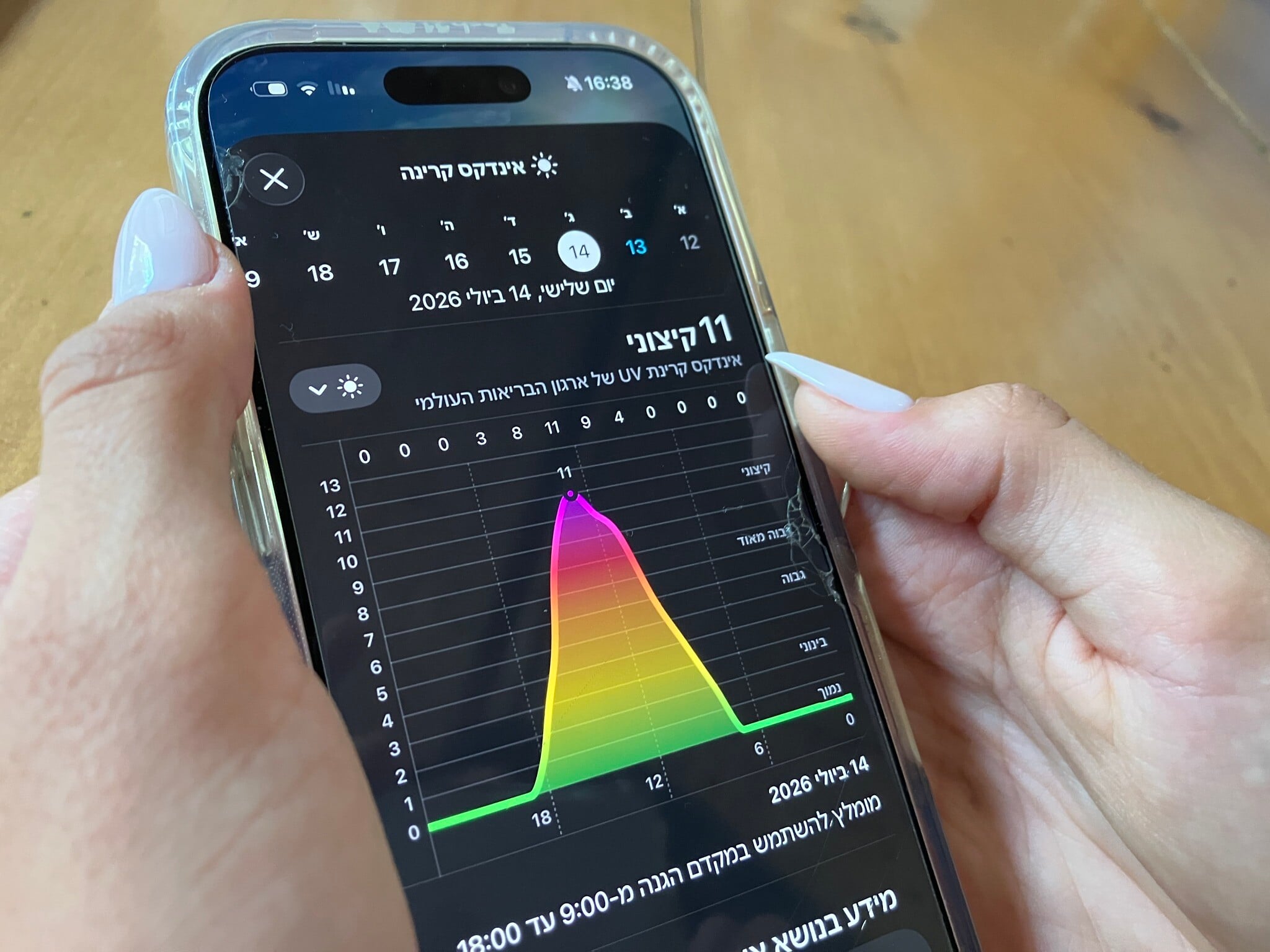
Abigail Wolf checks the UV index on her telephone. (Courtesy)
Yet the trend to get tan, and do it fast, continues to rise.
On a recent afternoon, Michal Peretz was tanning on the beach in Haifa when the UV index was 10.
“I have to start by saying that I know I’m doing exactly the wrong thing,” Peretz said. “I look at a weather app, and it gives the hourly temperature and UV index. I look for extremes. If it’s the highest UV, then I’m getting the most exposure to UV rays, and I’m getting browner faster.”
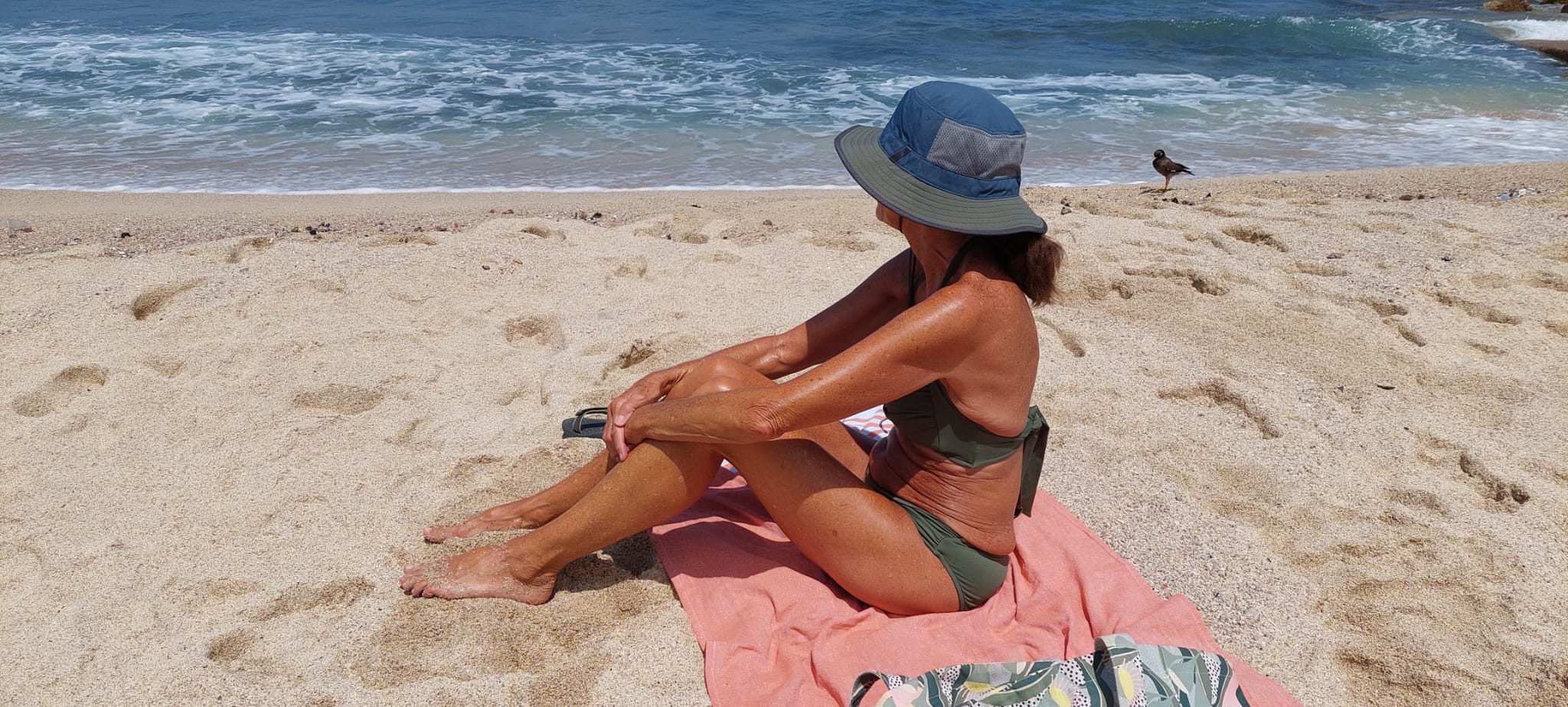
Michal Peretz tans on the beach in Haifa on July 17, 2026. (Diana Bletter/Times of Israel)
“I know I’m putting myself at risk,” Peretz admitted. “But this is one of my pleasures in life: sitting on the beach and getting toasty warm.”
Bar-Ilan confirms that Peretz is potentially harming herself by courting the sun.
“You have to protect yourself with sunscreen, hats, glasses, and protective clothing,” Bar-Ilan said. “When the index is 11, we recommend not going out in the sun. And if you have to, then you have to apply sunscreen every two hours.”
The Health Ministry spokesperson echoed Bar-Ilan’s recommendation.
But three men tanning on the Shavei Zion beach dismissed the suggestions.
“The chemicals in sunscreen are more dangerous than the sun’s rays,” claimed Shon Brener, 23, sitting with his friends, Nitzan Eliyahu and Omer Maoz.
(Countering the dangerous chemicals claim, Bar-Ilan said that “there is no scientific evidence that approved sunscreen ingredients pose any health risk when used as directed.” However, she added, the harmful effects of UV exposure, including premature skin aging and skin cancer, are “well established.”)
“We’re like other animals in the ecosystem,” said Maoz at the beach. “We need our Vitamin D.”
Brener said that in Asia, people don’t want to be tan “because it shows that you work in the sun and you’re considered lower class.”
“Here, it’s the opposite,” Eliyahu said. “The tanner you are, the more beautiful.”