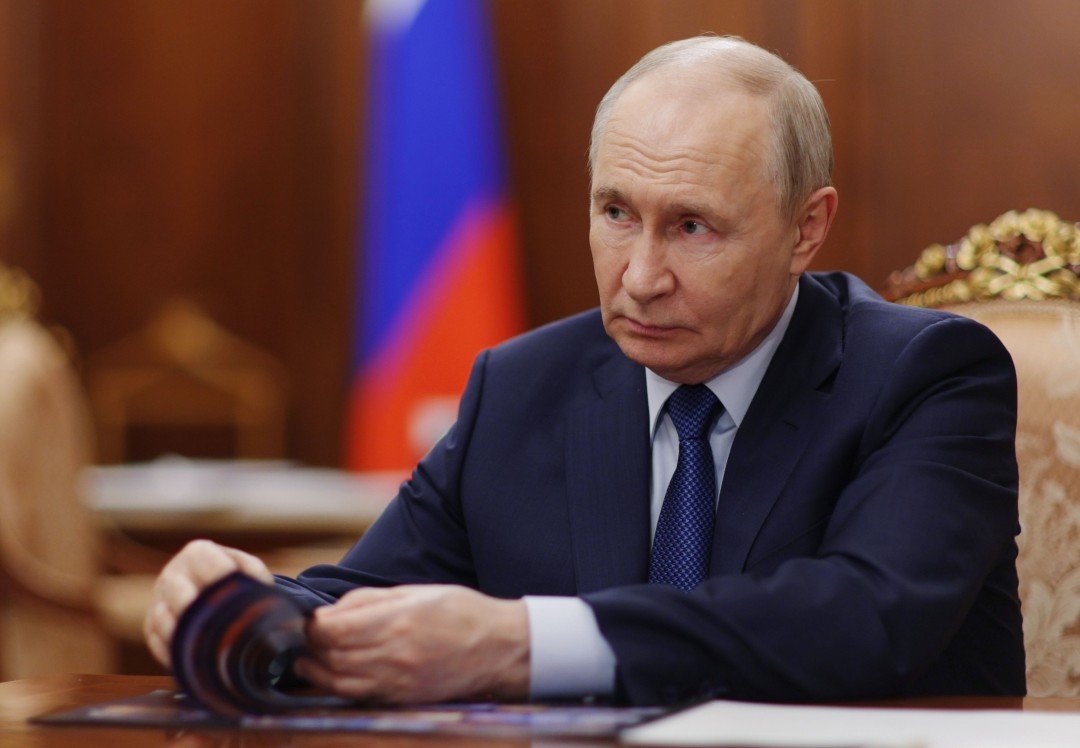
US intelligence officials say Vladimir Putin appears increasingly open to testing NATO’s limits without crossing into full-scale war. CBS News reports new assessments suggest Putin’s “risk calculus” has shifted Russian leader may greenlight cyber operations, sabotage, and other hard-to-trace moves on alliance territory to probe both NATO cohesion and the Trump administration’s appetite to defend its allies. One recent flashpoint: an explosives-packed drone found at Germany’s Leipzig Airport, which US.officials believe originated in Russia.
Officials also cite Russian drone incursions into Romania, a missile that strayed into Poland, and a broader rise in suspected hybrid attacks across Europe. Analysts say the risk of a limited land incursion is low, but rising, the Wall Street Journal reports. “The question mark is how the United States would respond in that case,” says Heather Conley, a senior fellow with the American Enterprise Institute. It’s always been a goal of Russia’s, she says, “to challenge the credibility of NATO and to separate the United States from its allies.”
Under NATO’s Article 5, an attack on one member should be treated as an attack on all. President Trump, however, has expressed doubts about Article 5, saying there are “numerous definitions” of it. The article would be triggered by a Russian land attack, though cyber and hybrid attacks have not generally drawn a collective response, the Journal reports. “This has always been NATO’s challenge to respond to a sub-Article 5 attack, and it’s been very true that to this point, NATO allies have preferred not to escalate,” Conley says. The warnings come as Russia absorbs steep losses in Ukraine—reportedly tens of thousands of troops a month—and as the US is reportedly low on critical munitions.