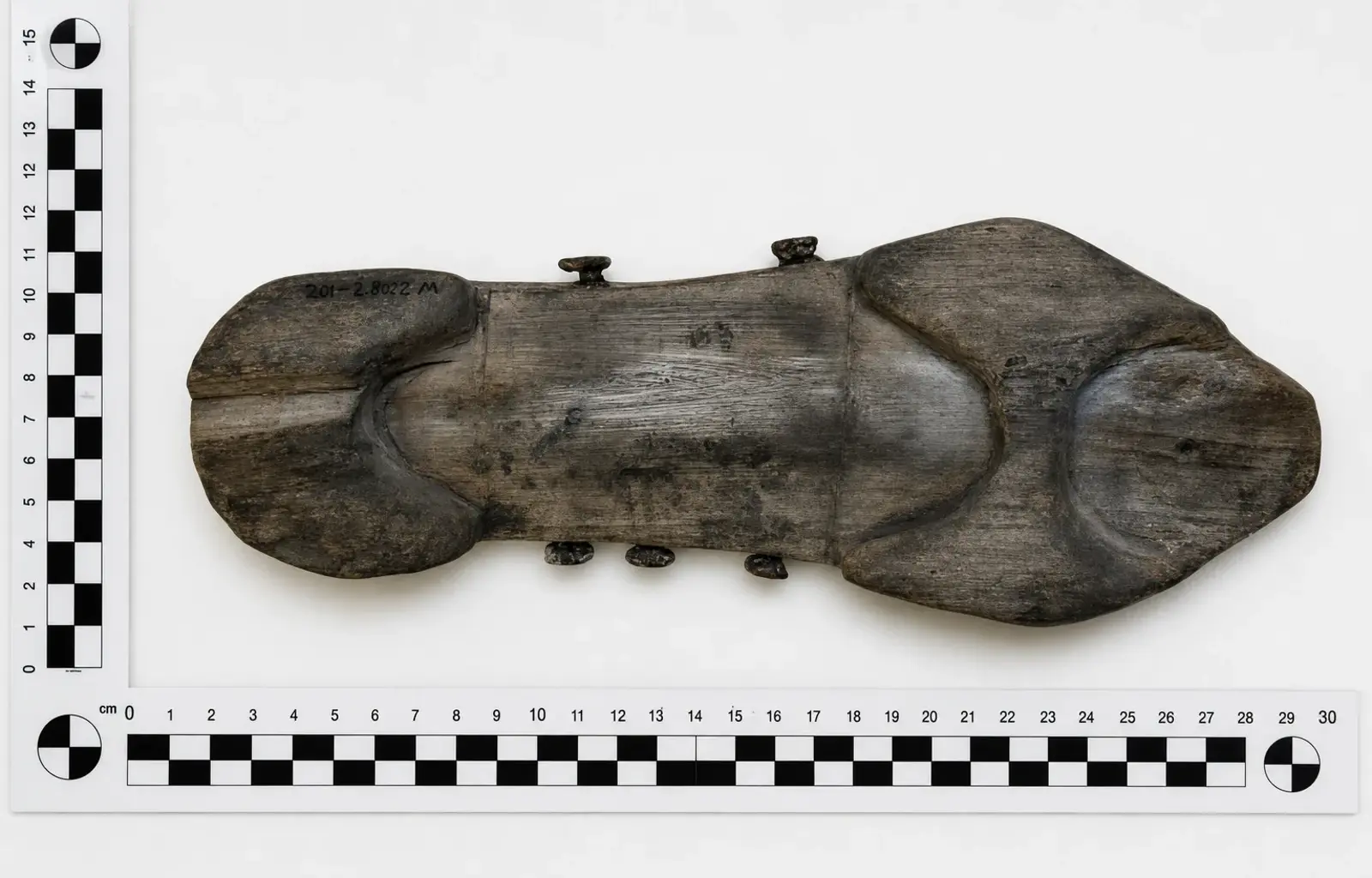
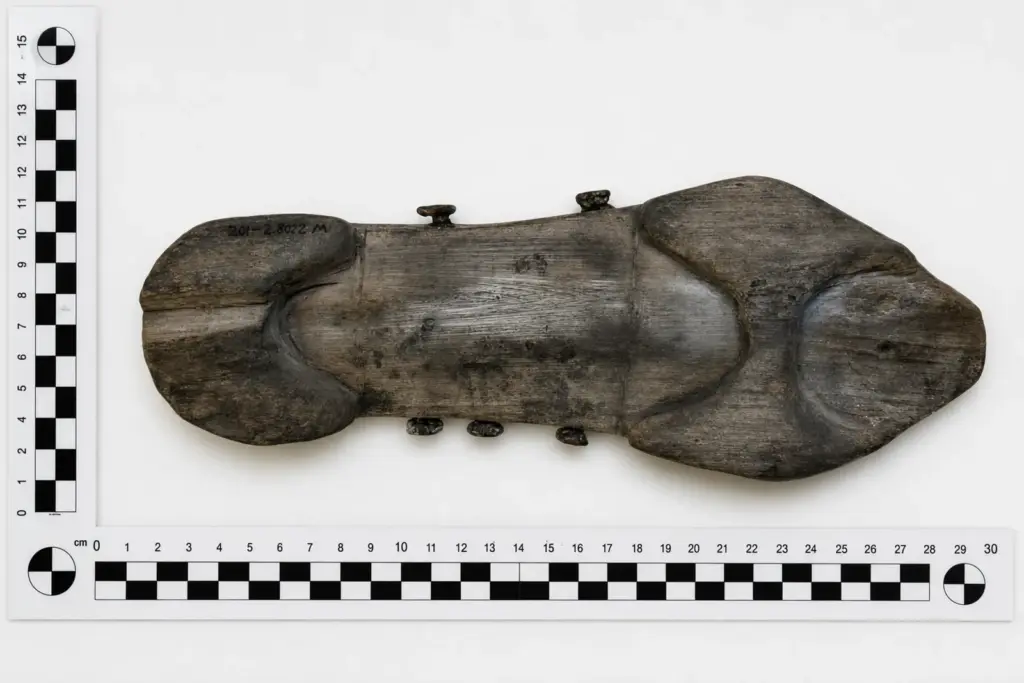
 Roman baths were heated and required a type of footwear to protect the soles of the feet from hot surfaces and slippery floors. Credit: Vindolanda Collection
Archaeologists working at the Roman fort of Vindolanda in northern England have assembled what researchers describe as the largest known collection of Roman wooden bath clogs, bringing together 44 examples recovered during decades of excavations. Preserved in the site’s waterlogged soil, the footwear offers a rare opportunity to examine daily life on Rome’s northern frontier, where soldiers, merchants and their families lived nearly 2,000 years ago.
The collection forms part of the more than 5,000 Roman shoes recovered at Vindolanda since excavations began in the 1970s. Most are leather sandals or boots. Wooden footwear is far less common because it normally decomposes long before archaeologists reach it. At Vindolanda, oxygen-poor soil has preserved wood, leather and textiles that disappeared long ago from most Roman sites across Europe.
Archaeologists Elizabeth Greene of the University of Western Ontario and Maryl Gensheimer of the University of Maryland are leading research into the wooden footwear. By comparing the clogs’ design, construction, and wear, they hope to understand better how they were made, how long they remained in use, and the role they played in everyday life inside the fort.
A collection built over decades
Vindolanda lies just south of Hadrian’s Wall, the frontier the Roman Empire established across northern Britain. Roman troops first occupied the site around AD 85, decades before Hadrian ordered construction of the wall, and the fort remained in use for roughly 300 years. Successive rebuilding phases buried earlier occupation layers beneath new structures, creating the conditions that preserved thousands of everyday objects.
The wooden clogs did not come from a single excavation. Archaeologists recovered them over many seasons while investigating different parts of the settlement. Together, the finds now form the largest documented collection of Roman bath clogs, giving specialists enough material to compare sizes, manufacturing techniques and signs of repair across different periods of occupation.
The footwear also reflects something rarely visible in the archaeological record. Stone buildings, pottery and metal tools usually survive. Wooden household objects rarely do. That makes each preserved clog another piece of evidence for understanding daily routines inside a Roman frontier community.
Why Romans wore wooden clogs in public baths
Researchers link many of the clogs to Vindolanda’s bath complex, one of the busiest places inside the fort. Roman baths served as places to wash, exercise and meet other people, making them part of everyday life throughout the empire.
The buildings relied on a hypocaust, an underfloor heating system that circulated hot air beneath stone floors. Walking barefoot could be uncomfortable, while leather sandals absorbed water and wore out quickly. Wooden clogs provided insulation from the heat and a firmer footing on damp surfaces, making them practical footwear inside the baths.
The collection also highlights why discoveries from Vindolanda receive so much attention. Archaeologists routinely uncover Roman coins, pottery and weapons across Europe, but preserved organic materials remain exceptional. Every wooden object adds information that rarely survives elsewhere.
One of Britain’s richest Roman archaeological sites
The bath clogs join a long list of discoveries made at Vindolanda over the past five decades. Excavations have uncovered leather shoes, textiles, wooden combs, children’s toys, military equipment, boxing gloves and household utensils, all preserved by the site’s unusual soil conditions.
Among the best-known finds are the Vindolanda Tablets, thin wooden writing tablets containing personal letters, military reports and shopping lists written almost 2,000 years ago. The documents have helped historians identify soldiers by name, reconstruct supply networks and understand how families lived along the empire’s northern frontier. More recently, archaeologists recreated a Roman game board found at the site through 3D printing to study how it may have been used.
The wooden clogs add another layer to that picture. Instead of documenting military campaigns or political events, they show the practical solutions Romans adopted in places they visited almost every day. As archaeologists continue excavating Vindolanda, the collection is expected to provide new information about Roman woodworking, footwear production and bathing customs in Britain during the first centuries of imperial rule.