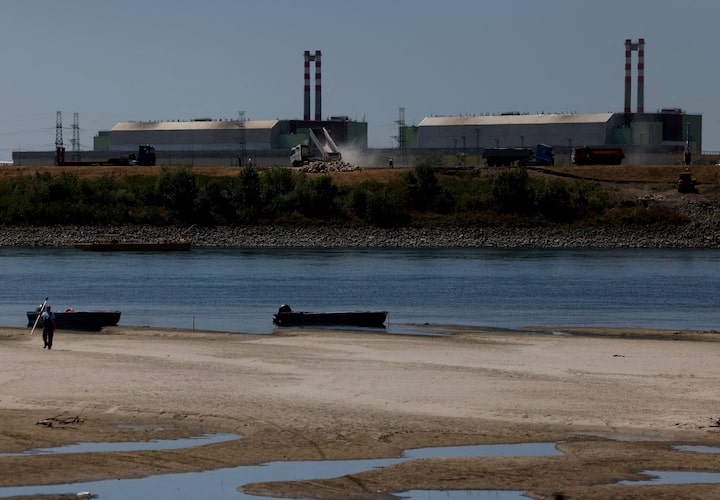
Hungary is taking the unusual step of sinking two large barges in the Danube to raise water levels near the Paks nuclear power plant, as a historic drought threatens to force another reduction in electricity generation.
The barges are being submerged on Saturday in an emergency effort to keep the plant’s remaining operating turbines running as water levels in the river continue to fall, Reuters reported.
Paks currently operates at only around 25% of its capacity because of record-low Danube levels. The nuclear plant relies on river water for cooling.
Prime Minister Peter Magyar said current forecasts showed the Danube could reach a critical level by early Monday, potentially forcing one of the plant’s two remaining operating turbines to shut down.
“The Danube is receding,” Magyar said in a Facebook post, announcing that the controlled sinking of the barges would begin.
The two barges are each about 80 metres (260 feet) long and are being submerged near the plant as a temporary measure. Their purpose is to help raise the water level sufficiently for both turbines to continue operating while authorities work on a longer-term solution.
Hungary announced earlier this week that it would construct a submerged riverbed “sill” across the Danube near the plant. The dam-like structure is designed to regulate water flow and maintain sufficient water levels, but construction is expected to take several weeks.
The emergency measures highlight the growing vulnerability of nuclear power plants that depend on rivers for cooling as extreme drought and record temperatures put pressure on water supplies.
Hungary is not alone in facing the problem. Neighbouring Romania shut down its last operating reactor on Thursday because of the Danube’s low water level.
The situation has raised broader questions about how Hungary and Romania can adapt their nuclear power infrastructure to increasingly extreme climate conditions, particularly as droughts put pressure on the rivers used to cool their reactors.
For Hungary, the immediate priority is to prevent further reductions at Paks while authorities race to maintain enough water around the plant until the new riverbed structure is completed.